Non-Ferrous Application & Knowledge

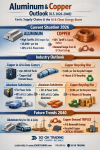
Aluminum & Copper Market Outlook in the U.S.: Costs, Supply Chains, and the Drive of AI & Clean Energy
SO OK TRADING | October 4, 2026
In an era where technology and clean energy are rapidly reshaping the world, the United States is facing immense pressure in the supply chains of strategic metals — Aluminum and Copper. These two metals are not only vital industrial raw materials but also the “core drivers” of future innovation, powering everything from Electric Vehicles (EVs) to AI Data Centers and renewable energy systems.
Import tariffs, supply constraints, and global resource competition are shaking the foundations of the metals industry worldwide. The U.S., in particular, must adapt swiftly to safeguard its economic and technological stability.
This article will explore:
The current situation of the U.S. aluminum and copper markets
The direction of investment and usage in the age of AI and clean energy
The future trends of recycling and material substitution
Together, these insights reveal how aluminum and copper are set to become the pillars of the new global economy.
4 10月 2026

SO OK TRADING CO., LTD.
October 3, 2026 — 4.5 Million Visitors to WWW.SOOKTRADING.COM
FAST • SHARP • RELIABLE
3 10月 2026
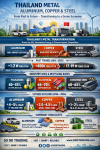
Thailand Metal Outlook 2036: Aluminum, Copper & Steel
SO OK TRADING | 3 OCT 2026
Thailand is entering a major turning point in its metal industry, driven by Electric Vehicles (EVs), renewable energy, and the rapidly growing Green Economy.
This article explores the outlook for aluminum, copper, and steel — three core metals shaping Thailand’s industrial future — analyzing usage trends, growth rates (CAGR), and how industries are adapting toward sustainability.
3 10月 2026
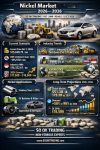
Global Nickel Market Outlook (Nickel Outlook) October 2026 – 2036
SO OK TRADING | FAST | SHARP | RELIABLE | October 2, 2026
✨ Introduction
The year 2026 marks a pivotal turning point for the global nickel market — a strategic metal driving the clean energy economy and future technologies. Nickel is not only a key raw material in the stainless steel industry but also the backbone of electric vehicle (EV) batteries and advanced energy storage systems.
In October, the nickel market is shifting from a state of oversupply to a more balanced and tightening market, reflecting a restructuring of the global supply chain. At the center of this transformation is Indonesia, the dominant producer shaping global price direction.
⚙️ Industry Overview
Supply: Indonesia has cut mining quotas by over 30%, reducing output to 250–270 million tons in 2026 → tightening supply and raising costs.
Demand: Recovery across regions:
Europe +1.8%
United States +0.9%
Africa +26.3%
Geopolitics: With North and South America’s share of production down to just 7%, the U.S. and its allies are accelerating long-term agreements to secure supply chains.
2 10月 2026
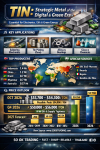
Tin: The Strategic Metal of the Digital and Green Era
SO OK TRADING | October 2, 2026
In an age where technology and clean energy drive global progress, Tin (Sn) has emerged as a strategic metal vital to the world’s supply chain. From electronics and semiconductors to electric vehicles (EVs) and green energy, tin is no longer just an ordinary industrial metal—it has become the backbone of future manufacturing and innovation.
With its outstanding properties—silver-white appearance, softness, high corrosion resistance, and rust-free durability—tin is widely applied across industries. Its uses range from soldering circuits, tin-plating for food and beverage cans, alloy production, and float glass manufacturing, to advanced chemical compounds and stabilizers.
In 2026, the global tin market price has reached USD 53,700–54,300 per metric ton, driven by surging demand in AI and EV sectors. Analysts forecast that prices will remain elevated throughout 2027 amid a structural supply deficit, reinforcing tin’s role as a critical resource in the digital economy.
Tin is no longer a conventional industrial metal—it is a precious resource of the digital era, symbolizing the transformation of the global economy toward a sustainable, technology-driven future.
SO OK TRADING — FAST • SHARP • RELIABLE
Your trusted partner in the non-ferrous metals market
2 10月 2026
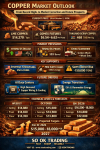
Global Copper Price Analysis | October 2, 2026 : SO OK TRADING
The year 2026 marks a historic turning point for the global metals market, with copper emerging as the strategic centerpiece of the new economy. Driven by the rapid expansion of AI Data Centers and the global Energy Transition, copper prices surged to record highs before entering a short-term correction in October, pressured by a stronger U.S. dollar, rising oil prices, and China’s economic slowdown.
Despite near-term headwinds, structural fundamentals remain robust — from strategic stockpiling in the U.S. and China to rising demand across technology and clean energy sectors. Copper continues to stand as a “strategic metal”, reflecting both risks and opportunities in the evolving global economy.
SO OK TRADING delivers in-depth analysis covering current market conditions, future outlook, and technical evaluations, providing a clear perspective on the global copper market — from record highs to correction, and toward a future that remains undeniably “hot.”
2 10月 2026
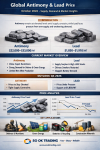
Global Antimony & Lead Price Outlook — October 2026
Supply, Demand, and Strategic Market Insights
By SO OK TRADING | October 1, 2026
In October 2026, the global non‑ferrous metals market reveals two contrasting stories. Antimony remains elevated amid persistent supply constraints and strong demand from defense and clean‑energy sectors, while Lead faces downward pressure from oversupply and slowing battery demand.
This month’s analysis from SO OK TRADING explores the latest price movements, structural drivers, and forward‑looking insights shaping both metals — from China’s export policies to global industrial trends.
Discover how these dynamics define the Q4/2026 outlook, investment opportunities, and strategic implications for manufacturers and traders worldwide.
1 10月 2026
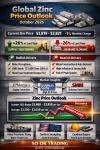
Global Zinc Insight Q4 2026 — Supply Tightness, Demand Slowdown, and Leading Financial Institutions’ Perspectives
By SO OK TRADING | October 1, 2026
Global zinc prices remain elevated, though they have entered a slight correction phase following the September peak season. As of October 1, 2026, zinc is trading at USD 3,819–3,821 per metric ton, down about 1% month‑on‑month, yet still more than 26% higher year‑on‑year. This reflects the persistent supply constraints across the global market.
This analysis explores the bullish and bearish drivers shaping zinc prices, the latest developments in the LME and SHFE markets, and insights from leading financial institutions including JP Morgan, Goldman Sachs, and SMM. All three agree that despite slowing demand, zinc prices are expected to remain at high levels throughout Q4 2026, supported by tight supply and historically low inventories.
Readers will gain a clear view of the expected price range of USD 3,400–3,950 per ton, the average forecast of USD 3,500–3,650 per ton, the impact of rising Asian premiums, and practical risk management strategies for Thai businesses in the non‑ferrous metals industry.
1 10月 2026
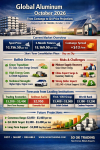
Global Aluminium Outlook October 2026 — Analysis by SO OK TRADING
The global aluminium market (LME) has entered a short-term consolidation phase after a strong rally in the previous quarter. The latest spot price stands at $3,156.50 per ton, while the 3-month futures are quoted at $3,169.50 per ton. The spread of +$13 clearly reflects a Contango structure — signaling that supply is sufficient and there is no immediate rush for physical demand.
Although prices have corrected to $3,170 per ton, the overall sentiment remains a “Buy on Dip” opportunity, as the market continues to face a structural supply deficit. Demand growth driven by the Green Transition — electric vehicles (EVs), solar energy, and renewable infrastructure — underpins the long-term bullish outlook.
This analysis explores bullish drivers and risk factors, provides insights from leading global financial institutions, and outlines the price outlook for Q4 2026, enabling businesses and investors to craft confident procurement strategies in a market that remains strong yet volatile.
1 10月 2026
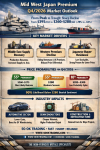
Deep Dive Analysis: Mid West Japan Premium (MJP) Q4/2026
Sharp Decline and Strategic Insights for Buyers
Japan’s aluminum market (Mid West Japan Premium – MJP) is entering a critical turning point in Q4 2026. After surging to a decade-high of $395/mt in Q3, the October–December contract negotiations now reveal a dramatic reversal — shifting decisively from a Seller’s Market to a Buyer’s Market.
Key pressures include the recovery of Middle Eastern supply, falling premiums in Europe and the U.S., and strong resistance from Japanese buyers. Together, these forces are driving prices down by 29–34%, settling within the range of $260–$280/mt. This marks a structural change, highlighting the strongest buyer leverage seen in years.
In this analysis, SO OK TRADING explores every dimension of the market — from the core drivers and precise price outlook to the downstream impacts on Automotive, Semiconductors, and Construction industries. Our insights are designed to empower procurement teams with confidence in cost strategies heading into late 2026.
✨ SO OK TRADING – FAST | SHARP | RELIABLE
Your trusted partner with deep expertise in non-ferrous metals, delivering strategic intelligence for sharper decision-making.
30 9月 2026
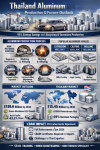
Thailand’s Aluminum Industry: Structure, Production, and Future Outlook
SO OK TRADING | 30 SEP 2026
Thailand’s aluminum industry is emerging as a vital pillar in the global supply chain, particularly in the automotive, construction, and packaging sectors. Although the country does not possess bauxite mines or primary smelters, it has built strong competitiveness through secondary production, recycling aluminum scrap, and producing billets for extrusion. This approach reduces energy consumption by up to 95% compared to primary production, aligning perfectly with global decarbonization and sustainability goals.
As the world accelerates toward a Low‑Carbon Economy and stricter environmental measures such as the EU CBAM (Carbon Border Adjustment Mechanism) take effect, Thailand’s aluminum industry must adapt rapidly. This includes advancing production technologies, improving waste management, and integrating renewable energy to maintain competitiveness in international markets.
SO OK TRADING, as a trusted partner in Thailand’s non‑ferrous metals sector, provides deep insights into production structures, smelting processes, popular aluminum grades, and both global and domestic market outlooks. These perspectives highlight the industry’s transformation toward a sustainable, value‑added future.
30 9月 2026
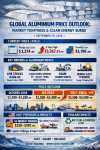
Global Aluminium Market Overview & Outlook — September 29, 2026
SO OK TRADING Insight: From Structural Tightness to a New Price Era in the Clean Energy Transition
✍️ Introduction
By late September 2026, the global aluminium market continues to trade at elevated levels of USD 3,240–3,260 per metric ton, reflecting persistent structural tightness in supply and the accelerating demand for clean energy. Aluminium is now at a pivotal turning point — evolving from a conventional industrial metal into a “strategic metal of the future”, powering electric vehicles, solar energy, wind turbines, and AI data centers.
Despite short-term pressures from China’s economic slowdown and expectations of U.S. Federal Reserve rate hikes, the medium- to long-term outlook remains firmly bullish. Prices are expected to establish a higher base between 2027–2033, driven by clean energy demand and rising carbon costs.
29 9月 2026
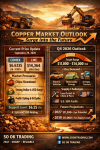
“The Copper Era Has Begun!”
Global copper prices have surged to historic highs, reflecting the unstoppable momentum of the transition toward a green economy and future technologies. From electric vehicles (EVs) and renewable energy to AI data center infrastructure, copper is becoming the strategic asset powering the new century.
In this analysis, SO OK TRADING takes you deep into the copper market outlook for 2026–2030, a period defined by a true Structural Bull Market. We also provide the latest update as of September 29, 2026, along with strategic insights for investors and industry players heading into the final quarter of the year.
Get ready for insights you cannot afford to miss — because today, copper is no longer just a metal. It is the new energy of the global economy
29 9月 2026
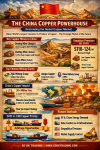
In an era where the world is transitioning toward clean energy and future technologies, copper has emerged as the true strategic metal driving the global economy.
China — the world’s largest consumer and smelter of copper — is now at the center, shaping both pricing and the global supply chain.
From the Dexing Mine in Jiangxi Province to the Chating deposit in Anhui, China has built the most influential copper empire in Asia.
At the same time, through mining giants such as Zijin Mining, Jiangxi Copper, and China Railway Group (CREC), China has expanded its influence globally, investing in copper projects from the Congo to South America.
Meanwhile, the Yangshan Premium has surged to multi‑year highs, reflecting China’s genuine physical demand for copper and the tightening of supply in global markets.
China is therefore not merely a “buyer” but has established itself as the game‑changer of the global copper market in the 21st century.
28 9月 2026
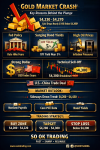
Gold Plunges! Global Good News Turns Into Bad News for Safe Haven
SO OK TRADING | 28 September 2026
✨ Introduction
Global gold prices (Gold Spot) have dropped sharply by nearly $100 per ounce, breaking below the psychological level of $4,300 and moving within the range of $4,230–$4,270. This decline reflects multiple pressures: the U.S. Federal Reserve’s (Fed) hawkish stance, surging bond yields, a stronger dollar, and crude oil prices remaining elevated.
Interestingly, what was seen as “good news for the global economy” — the trade agreement between the U.S. and China — has ironically become “bad news for gold.” As market risks eased, investors shifted back into risk assets, reducing demand for safe-haven assets like gold.
28 9月 2026
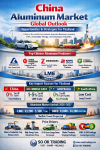
China: The Global Aluminum Powerhouse
SO OK TRADING | 28 SEP 2026
As the world moves toward clean energy and future technologies, aluminum has become one of the most strategic metals of our time. From electric vehicles (EVs) and renewable energy infrastructure to aerospace and sustainable packaging, aluminum plays a vital role across industries.
China, as the world’s largest producer and exporter of aluminum, accounts for more than half of global output. It is also the hub of cutting-edge manufacturing technologies. Unsurprisingly, China is recognized as the “Global Aluminum Powerhouse”, shaping the direction of the international market.
This article by SO OK TRADING provides an in-depth look into China’s aluminum market — covering production structures, key players, pricing references, and market outlook for 2026–2027. It also explores opportunities and strategies for Thai businesses to manage costs and mitigate risks in the evolving global metals landscape.
SO OK TRADING — FAST • SHARP • RELIABLE
Your trusted partner in the world of strategic metals.
28 9月 2026
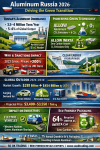
In a world rapidly accelerating toward clean energy and a low‑carbon economy, aluminum has emerged as a strategic metal driving the future of global industries — from electric vehicles (EVs) to renewable energy infrastructure and large‑scale AI data centers.
Among the nations shaping this transformation, Russia stands out as a key player. With an annual production capacity of 3.5–4 million tons, accounting for 5–6% of global output, and led by UC RUSAL, Russia has become the cornerstone of the full‑scale transition into the era of Green Aluminum.
Powered by Siberian hydropower and strengthened by world‑class innovations such as ALLOW and ALLOW INERTA, which reduce carbon emissions to near zero, Russia is not only a major producer but also a global standard‑setter in aluminum — at a time when every country must adapt to increasingly strict environmental regulations.
This article by SO OK TRADING will take you deep into:
The strength and potential of Russia’s aluminum industry
The impact of war and sanctions reshaping global supply chains
Market outlooks for both the global stage and Thailand between 2026–2030
And the critical role of the Green Transition in defining the future of the low‑carbon economy
✨ Aluminum Russia is not just about metal — it is about the future of a world economy driven by clean energy and sustainability.
SO OK TRADING — FAST • SHARP • RELIABLE
27 9月 2026
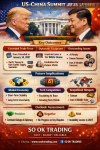
Trade Truce & Global Tensions: US–China Summit September 2026
By SO OK TRADING | September 26, 2026
“From Trade Truce to the Fragile Balance of the Global Economy”
26 9月 2026
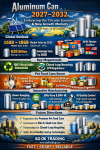
Aluminum Can Industry 2027–2032: Advancing the Circular Economy and Emerging Growth Markets
By SO OK TRADING | September 24, 2026
The global aluminum can packaging industry is entering a pivotal transformation between 2027 and 2032. Once valued primarily for convenience and low cost, aluminum cans are now becoming the cornerstone of the Circular Economy and a key driver toward Net Zero under increasingly stringent global environmental regulations.
In the next 5–6 years, aluminum cans will evolve beyond being simple beverage containers. They will stand as a symbol of sustainability and innovation, expanding into premium beverage categories as well as rapidly growing new markets such as premium pet food cans, which are gaining significant traction worldwide.
Thailand, as a manufacturing hub in the ASEAN region (EEC Hub), is set to play a crucial role in advancing this industry. With a highly efficient closed-loop recycling system and strong domestic producers, Thailand is well-positioned to accelerate its presence in the global market.
SO OK TRADING is ready to be your trusted business partner — FAST • SHARP • RELIABLE — in building a sustainable and globally competitive future for aluminum packaging.
24 9月 2026
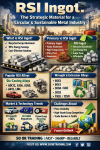
RSI Ingot: The Future Strategic Material for a Sustainable Industrial World
Today, the world is facing unprecedented challenges in energy and the environment. Reducing the use of natural resources and shifting towards recycled materials has become the core of the Circular Economy. One of the most prominent materials in this transformation is RSI Ingot (Remelt Scrap Ingot). In particular, recycled aluminum can save up to 95% of energy compared to traditional production from bauxite ore.
RSI Ingot is no longer just a “low-cost alternative.” It has become a mandatory raw material for businesses seeking sustainability and competitiveness in the new era. From electric vehicles (EVs) to recycled packaging and green construction industries, RSI Ingot is now indispensable.
As a trusted partner in the metal industry in Thailand, SO OK TRADING provides in-depth insights into RSI Ingot — from production characteristics and popular grades to global and ASEAN market outlooks — helping Thai businesses confidently embrace the new trends in the metal industry.
SO OK TRADING | FAST • SHARP • RELIABLE
24 9月 2026
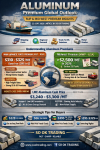
In today’s world, metals are no longer just “raw materials” — they have become indicators of economic strength and geopolitical risk.
Among them, aluminum is increasingly recognized as a strategic metal of the clean energy and digital technology era.
The movement of Premiums is not merely a number on the LME (London Metal Exchange) board. It is a signal reflecting the true cost of industry worldwide — from smelters in Asia to production lines in the United States.
In this article, SO OK TRADING takes you deep into the global aluminum market outlook for Q4/2026 — analyzing both the Main Japanese Ports Premium (MJP) and the Midwest Premium (MWP), while decoding the pressures and supports that are reshaping the cost equation for buyers across the globe.
Get ready for strategic insights that will help you “read the market game ahead of time” and “manage costs with precision” in an era where every ton of metal carries meaning far beyond its price.
23 9月 2026
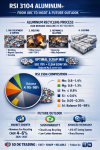
Aluminum: RSI Ingot 3104 Production from UBC and the Global Circular Economy Outlook
SO OK TRADING : September 23, 2026
As the world moves toward sustainability and carbon reduction, the beverage can industry stands out as one of the most complete “model cases” of the Circular Economy.
At its core lies the Aluminum Loop — a system in which used beverage cans (UBC) are returned to the melting process to produce RSI Ingot 3104, which can then be rolled into sheets and continuously manufactured into new cans.
This process not only reduces the consumption of natural resources but also cuts carbon emissions by more than 60% compared to primary aluminum production, while generating tremendous added value across the industrial supply chain.
In this article, SO OK TRADING takes you inside the production of RSI 3104 from UBC scrap — from sorting, melting, and chemical composition adjustment to aluminum ingot casting — and provides an analysis of the future outlook of the Aluminum Loop, which is rapidly becoming a cornerstone of the global circular economy.
✨ RSI 3104 — The Strategic Material of the Future for the Global Packaging Industry
Follow this article to understand how “a single used can” can be reborn as “a brand-new can” within the world’s most sustainable recycling system.
23 9月 2026
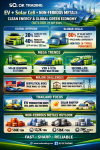
EV + Solar Cell + Non-Ferrous Metals: Clean Energy & Global Green Economy Outlook
SO OK TRADING | 22 SEP 2026
The world is entering the era of the Green Macroeconomy, where clean energy is no longer an alternative — it’s the driving force of global transformation.
From Electric Vehicles (EV) to Solar Cells, and the rising demand for Non-Ferrous Metals, these industries are now interlinked as the backbone of the new sustainable economy.
China dominates the global supply chain, shaping the future of production, pricing, and technology. Meanwhile, nations worldwide are racing to adapt — investing in smart grids, renewable infrastructure, and circular energy systems that redefine how we power our lives.
At SO OK TRADING, we stand at the intersection of these megatrends — connecting the world’s clean energy revolution with the strength of Thailand’s Non-Ferrous metal industry.
Our commitment is simple yet powerful: FAST • SHARP • RELIABLE — delivering trusted partnerships and insights that drive the next wave of green innovation.
✨ Visit us: www.sooktrading.com
22 9月 2026
