SO OK TRADING’S INSIGHT: Chile & Peru – Copper and Zinc Powerhouses Driving the Global Green Economy Supercycle 2026–2030
SO OK TRADING’S INSIGHT: Chile & Peru – Copper and Zinc Powerhouses Driving the Global Metal Supercycle
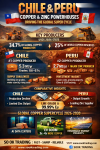
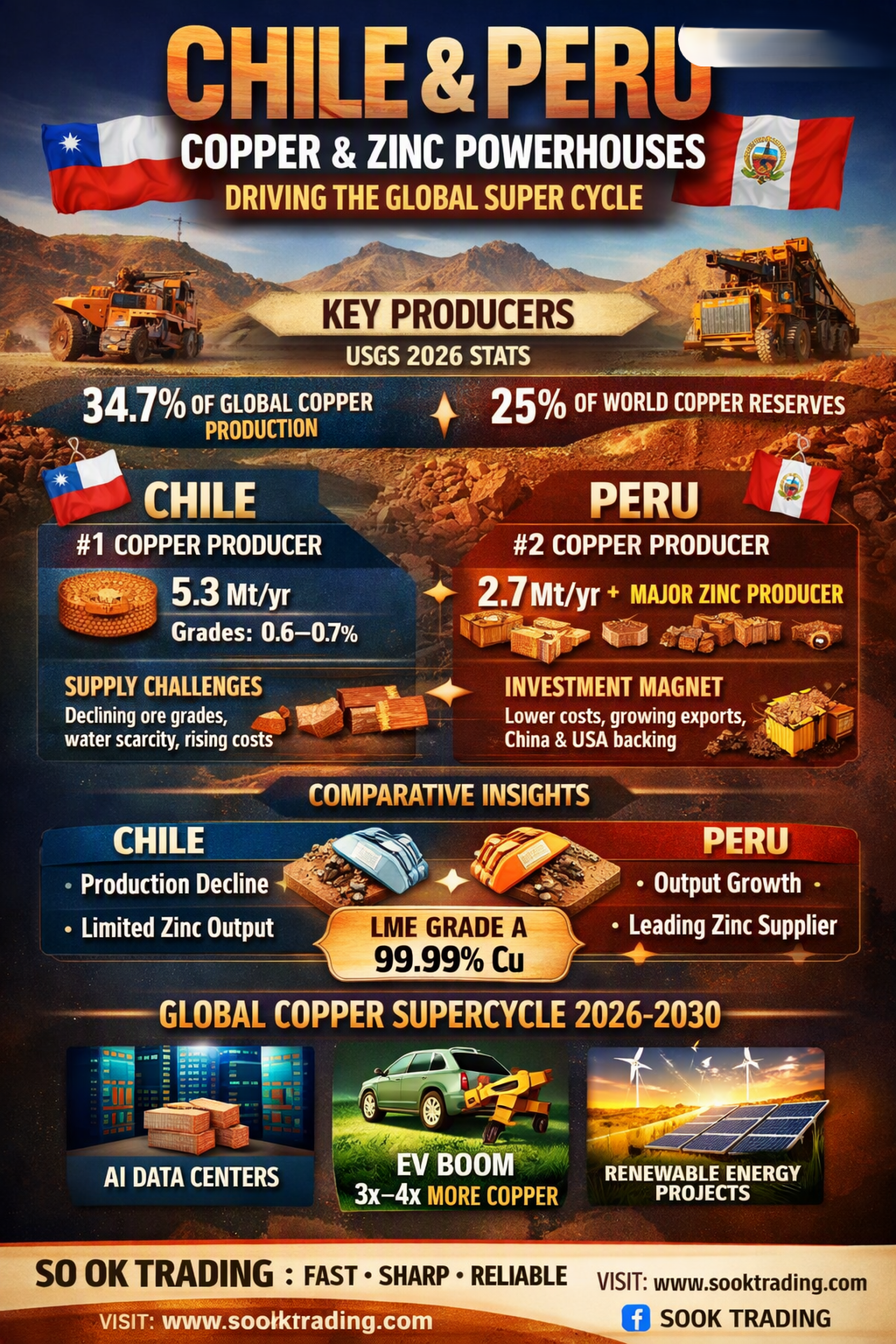
Introduction: Pillars of the Clean Energy Supply Chain Chile and Peru hold a decisive role in the global base metals market. Together, they account for 34.7% of global copper production and more than one-quarter of the world’s proven reserves (USGS 2026). This makes both nations the backbone of future industries, including renewable energy, electric vehicles (EVs), and AI data centers.
⚒️ Chile: The Leading Giant Facing Production Challenges
World’s #1 copper producer (5.3 Mt/year)
Largest reserves (180 Mt, 18.4%)
Key mines: Escondida (world’s largest), Chuquicamata, Spence
Challenges: declining ore grades (0.6–0.7%), severe drought in the Atacama Desert, rising costs, and management issues at state-owned Codelco
2026 output forecast cut by 8.4% to 4.94 Mt, pushing copper prices higher (Cochilco estimates US$5.95–6.18/lb for 2026–2027)
⚒️ Peru: The Global Investment Battleground
World’s #2 copper producer (2.7 Mt/year) with reserves of 85 Mt (8.7%)
Key mines: Antamina (copper–zinc), Cerro Verde, Las Bambas
Strengths: lower costs, strong investment appeal, with China and the U.S. competing in mine development and Chancay port expansion for direct exports to Asia
Copper exports surged 54.8%, while Peru also stands as a major zinc producer supporting galvanized steel demand for renewable energy infrastructure
Strategic Comparison: Chile vs Peru
Chile: production decline, limited zinc output, supply risks
Peru: output growth, investment magnet, leading zinc supplier
Price outlook: Chile strongly bullish due to tight supply; Peru bullish-to-neutral, benefiting from Chinese demand and export premiums
Copper Quality: Ore vs Cathode Despite lower ore grades (0.6–0.7%), refined copper cathodes from Chile and Peru meet LME Grade A (99.99% Cu) standards. With high purity and consistency, they are trusted globally, especially by Chinese buyers.
Global Copper Supercycle 2026–2030 The copper market is entering a new supercycle, with prices expected to reach record highs due to structural deficits. Key demand drivers include:
AI Data Centers & Grid Expansion
EVs (3–4x more copper than ICE vehicles)
Renewable Energy Projects (solar and wind power)
✨ Conclusion Chile and Peru remain the world’s “Premium Copper Brands,” trusted for their quality and strategic role in the clean energy supply chain. Despite challenges in ore grades and political landscapes, both nations are indispensable pillars in the decade-long transition toward a global green economy.
⚙️ SO OK TRADING Your trusted partner in the world of Non-Ferrous Metals FAST • SHARP • RELIABLE www.sooktrading.com Facebook: SOOK TRADING