SO OK TRADING'S INSIGHT The Middle East at a Global Turning Point How War, Energy, and Supply Chains Are Shaping the Future of the Global Economy and Industry 15 November 2026
SO OK TRADING'S INSIGHT
The Middle East at a Global Turning Point
Prolonged Conflict, Energy Risks, Supply Chains, and the Rebalancing of the Global Economy
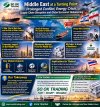
The Middle East at a Fragile Crossroads
Prolonged Conflict, Energy Risks, and Their Impact on the Global Economy
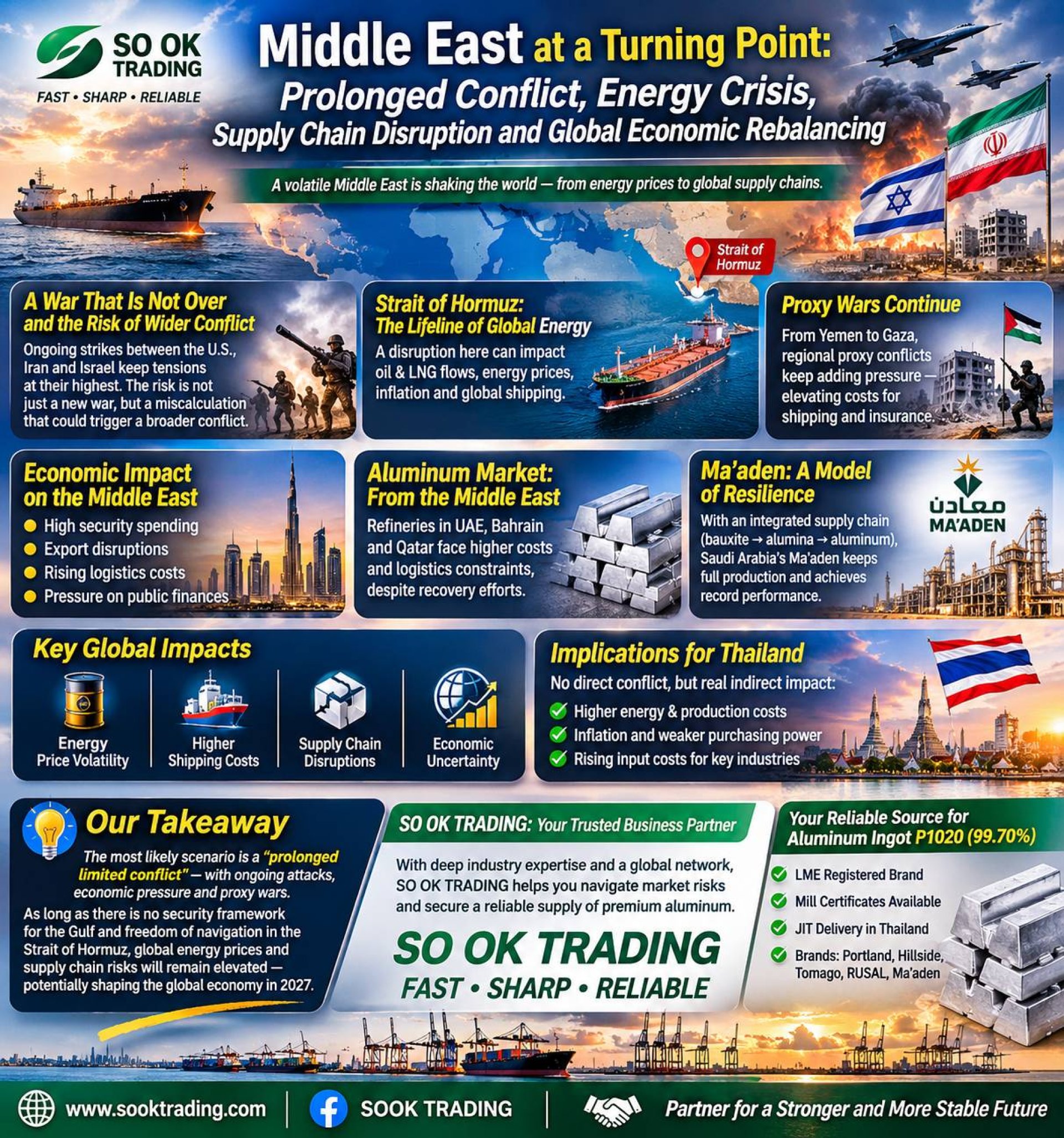
The Middle East has entered a critical phase as diplomatic efforts mediated by regional stakeholders continue to stall. At the same time, confrontations involving the United States, Iran, and Israel remain active across multiple fronts.
What was once a localized conflict has gradually expanded into a broader geopolitical struggle involving proxy wars, attacks on energy infrastructure, and strategic competition that is increasingly affecting the global economy and critical supply chains.
An Unfinished War and the Risk of Escalation
While all parties continue to avoid a full-scale ground war, the ongoing exchange of military strikes between the United States and Iran has once again pushed regional tensions to elevated levels.
With diplomatic channels largely stalled, the United States continues to employ limited military operations aimed at reducing Iran's strategic capabilities. Iran and its regional allies, meanwhile, have responded through drones, missile attacks, and proxy operations across multiple theaters.
Perhaps the greatest risk ahead is not a deliberate decision to expand the conflict, but rather a miscalculation by one or more actors. Such an error could trigger broader retaliation and rapidly transform a contained conflict into a wider regional crisis.
The Strait of Hormuz: The Heart of Global Energy Security
The Strait of Hormuz remains one of the world's most important strategic chokepoints.
As a critical route for global crude oil and liquefied natural gas (LNG) shipments, any disruption to maritime traffic through the strait can affect far more than the energy-exporting nations of the Persian Gulf.
Restrictions on navigation could drive higher energy prices, increase transportation costs, and contribute to inflationary pressures worldwide.
Although oil prices have eased from recent peaks, markets continue to price in a significant geopolitical risk premium. Any major disruption to shipping activities through Hormuz could trigger another sharp increase in global energy prices.
The Expansion of Proxy Wars
Beyond direct confrontations between states, proxy warfare continues to shape the regional security landscape.
In Yemen, Houthi forces persist in targeting energy infrastructure and maritime routes, contributing to higher insurance premiums and rising logistics costs.
In Gaza and Lebanon, there are few signs of a near-term resolution, while international organizations and peacekeeping missions face increasing political pressure.
As a result, Gulf Cooperation Council (GCC) countries are accelerating defense investments, strengthening military cooperation, and reducing dependence on trade routes through the Persian Gulf.
Economic Consequences for the Middle East
Despite elevated energy prices, the conflict has placed significant pressure on regional economies.
Export disruptions, rising transportation costs, and increased defense spending are weighing heavily on government finances, particularly in countries that depend on Persian Gulf export routes.
Many energy-producing nations are experiencing declining revenue due to transportation constraints, while businesses are being forced to absorb higher costs related to energy, insurance, and imports.
The Aluminum Market: Pressure on Middle Eastern Producers
One of the industries most visibly affected by the conflict is the Middle Eastern aluminum sector.
Major smelters in the United Arab Emirates, Bahrain, and Qatar continue to face challenges related to raw material procurement and logistics, preventing them from returning to full production capacity even where physical damage has largely been repaired.
Imports of alumina and bauxite increasingly rely on higher-cost transportation alternatives, while finished aluminum products must be exported through more complex routes outside the Persian Gulf.
As a result, overall production costs have risen significantly.
Yet amid these challenges, one producer has managed to maintain strong operational performance: Ma'aden of Saudi Arabia.
Ma'aden: A Case Study in Supply Chain Resilience
Ma'aden's success during the crisis is not a matter of luck. It is the result of years of investment in a vertically integrated supply chain.
The company controls its own bauxite mines, alumina refineries, aluminum smelters, and domestic logistics infrastructure, reducing its dependence on imported raw materials transported through the Strait of Hormuz.
While many regional smelters have been forced to cut production, Ma'aden has continued operating at full capacity and has benefited from elevated global aluminum prices.
The company's aluminum division has delivered some of the strongest results in its history, highlighting the strategic value of supply chain resilience during periods of geopolitical uncertainty.
Despite higher transportation costs, Ma'aden has successfully adapted by utilizing rail networks and Red Sea ports, demonstrating the importance of proactive risk management in today's increasingly uncertain world.
Implications for Thailand
For Thailand, the primary risks stem not from direct involvement in the conflict but from indirect exposure to global economic disruptions.
Sustained volatility in oil prices may increase production costs, fuel inflation, and affect consumer purchasing power.
Industries that rely heavily on imported metals and raw materials may also face higher input costs and increased uncertainty across global supply networks.
Thai businesses therefore need to closely monitor developments while strengthening supply chain diversification and energy risk management strategies.
Outlook and Conclusion
The most likely scenario in the near term remains a prolonged period of limited conflict.
Rather than engaging in full-scale warfare, the major actors are expected to continue relying on targeted strikes, economic pressure, and proxy operations as their primary tools of competition.
However, until a meaningful security framework is established for the Persian Gulf and freedom of navigation through the Strait of Hormuz is assured, risks to the global economy, energy markets, and international supply chains are likely to remain elevated.
As a result, developments in the Middle East may become one of the most influential geopolitical factors shaping the global economic outlook for 2027.
SO OK TRADING
Your Trusted Business Partner
FAST • SHARP • RELIABLE
www.sooktrading.com
Facebook: SO OK TRADING
SO OK TRADING
Thailand's Trusted Specialist in the Aluminum Industry
Your Trusted Aluminium Business Partner