SO OK TRADING Insight: Zinc Outlook 2026–2027 — Deep Dive into the Zinc Market, Price Surge & Supply Tightness
SO OK TRADING’S INSIGHT
Zinc Market Situation & Outlook in the London Metal Exchange (LME) — November 2026
✦ Current Price Overview
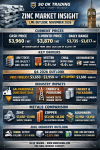
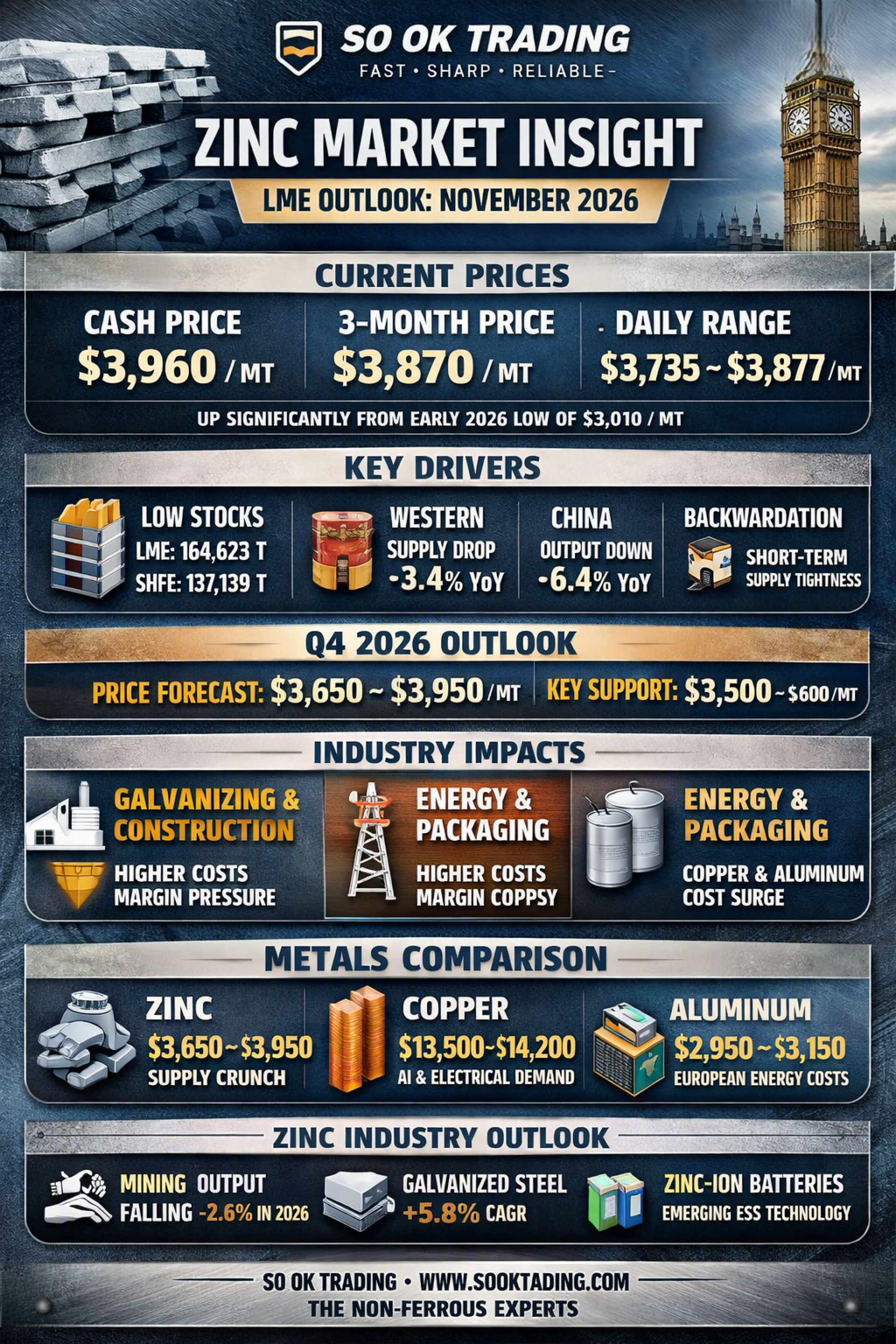
Zinc prices at the London Metal Exchange (LME) remain elevated. The latest cash bid/offer stands at USD 3,959.50 / 3,960.00 per ton, while the 3-month bid/offer is USD 3,868.00 / 3,870.00 per ton. The daily trading range is USD 3,735 – 3,877 per ton. Compared to the early 2026 low of USD 3,010 per ton, current levels are significantly stronger.
✦ Key Price Drivers
Falling Inventories: LME stocks at ~164,625 tons and SHFE at ~137,139 tons reflect tightening supply.
Western Output Decline: Production down ~3.4% YoY due to high energy costs and raw material shortages, notably at Nyrstar’s Budel smelter in the Netherlands.
China Output Decline: Refined zinc production down ~6.4% YoY, further tightening global supply.
Backwardation Structure: Immediate delivery prices exceed 3-month contracts, signaling short-term supply shortages.
✦ Zinc Price Outlook Q4 / 2026
Prices are expected to move within USD 3,650 – 3,950 per ton, supported by supply tightness. Toward the end of the quarter, profit-taking and seasonal slowdown may occur, but strong support remains at USD 3,550 – 3,600 per ton.
✦ Industry Impacts
1. Galvanizing & Construction Producers face margin compression from rising raw material costs. Spot market reliance exposes companies to high premiums and cost disadvantages. Many plants are adjusting processes to reduce zinc losses in galvanizing baths.
2. Energy & Packaging High copper and aluminum prices directly impact costs for cables, transformers, and packaging. Companies are exploring alternative materials and new technologies to mitigate expenses.
✦ Comparison with Other Metals (LME Q4 2026)
Zinc: USD 3,650 – 3,950 per ton. Acute supply shortage drives galvanizing costs higher.
Copper: USD 13,500 – 14,200 per ton. Demand from AI data centers and power systems pushes prices to record highs, raising cable and motor costs.
Aluminum: USD 2,950 – 3,150 per ton. European winter energy costs drive price increases, impacting lightweight structures and packaging.
✦ Zinc Industry Outlook (Midstream & Downstream)
⛏️ Zinc Mining Global mine output in 2026 fell ~2.6% to 12.40 million tons due to lower ore grades and closures such as Lady Loretta in Australia. Treatment charges (TCs) hit multi-year lows. In 2027, new mines and expansions are expected to boost output by ~3%.
️ Galvanized Steel Market continues to grow at a CAGR of ~5.8% – 6.5%, especially in India, the US, and ASEAN-5. Strong demand from solar and wind structures. Adoption of Zinc-Magnesium-Aluminum (ZMA) coatings reduces zinc ingot usage while enhancing corrosion resistance.
⚡ Downstream Applications (Zinc Ingot)
Galvanizing (>50%): Strong growth in clean energy infrastructure.
Automotive (Die-Casting Alloys): EVs increasingly adopt Al-Mg alloys for lightweighting.
Brass & Bronze: Demand remains stable.
Zinc Batteries (Zinc-Ion / Zinc-Air): Emerging as safe, non-flammable, eco-friendly solutions for energy storage systems (ESS).
✦ Strategic Summary
Zinc prices are likely to remain volatile within USD 3,500 – 4,000 per ton. Heavy reliance on the spot market poses risks of supply shortages and high costs. The optimal strategy is long-term contracts combined with hedging, while investing in alternative coating technologies such as ZMA to reduce zinc ingot consumption and strengthen competitiveness.
SO OK TRADING : FAST • SHARP • RELIABLE Your trusted partner in the Non-Ferrous metals industry from Thailand www.sooktrading.com Facebook: SOOK TRADING