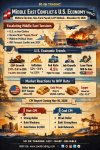
SO OK TRADING INSIGHT: Middle East Conflict vs U.S. Economy – When Geopolitics Shakes Global Finance and Key Variables Midterm, NFP, CPI Reshape America’s Economic Game
SO OK TRADING’S INSIGHT
Middle East Conflict vs U.S. Economy – When Geopolitics Shakes Global Finance
Impact from U.S. Midterm Elections, Non-Farm Payroll, and CPI Inflation Data (to be released November 10, 2026)
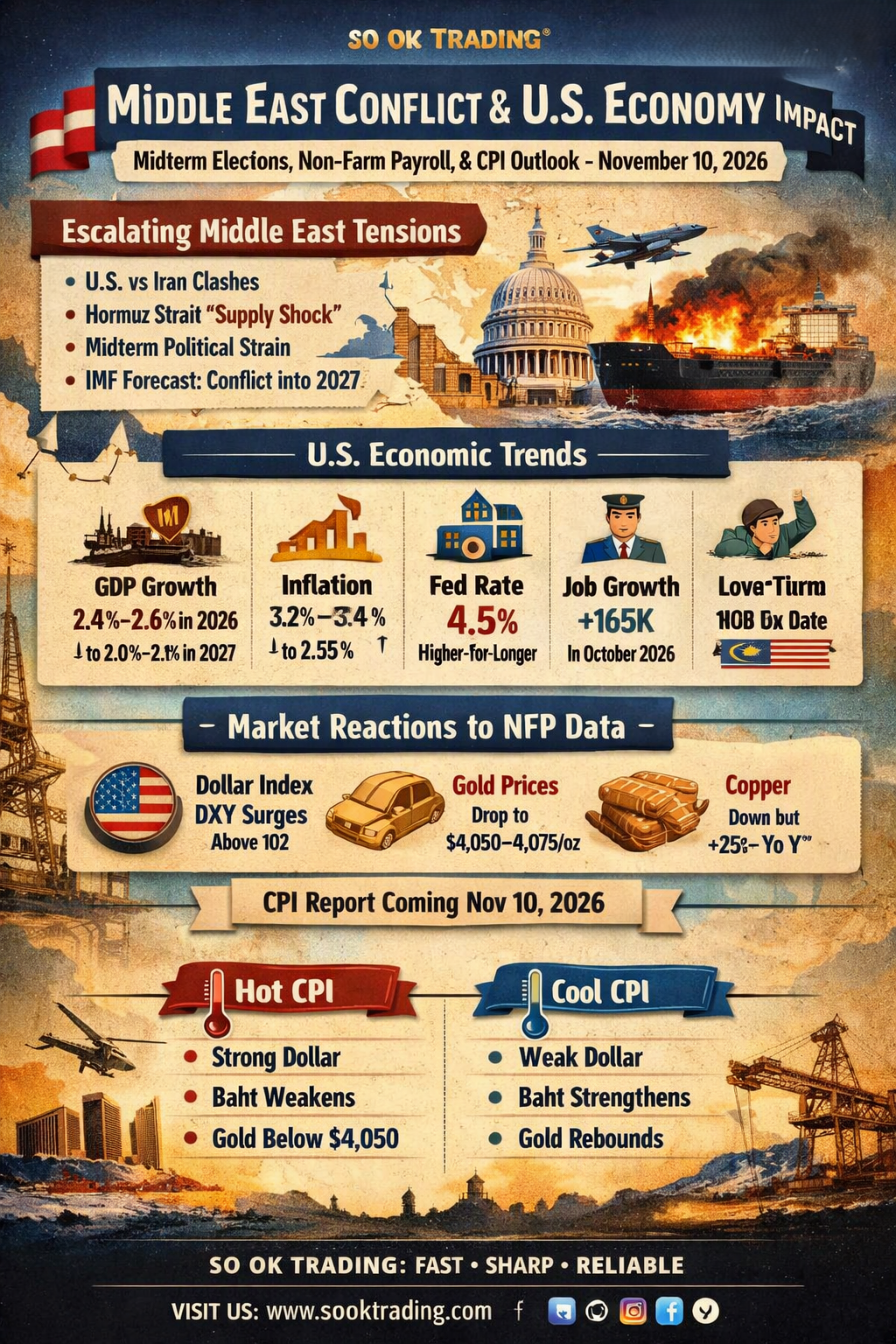
1. Middle East Conflict: Escalation Risks
The confrontation between the United States and Iran continues to intensify:
U.S. forces (CENTCOM) and Iran’s Revolutionary Guard (IRGC), along with allied groups such as the Houthis, have repeatedly targeted energy infrastructure and shipping routes in the Persian Gulf.
The Strait of Hormuz, the world’s most critical oil and LNG transit route, faces threats of closure or disruption, raising the risk of a severe “Supply Shock” that could push oil prices to $80–100 per barrel.
Despite the Democrats’ midterm victory and efforts to limit presidential war powers, the administration maintains a hardline stance against Iran’s nuclear ambitions.
The IMF projects that the conflict may drag on until early 2027 before regional economic recovery begins.
2. U.S. Economy: Strong but Pressured by High Interest Rates
The U.S. economy remains resilient, yet war-driven pressures are forcing cautious growth:
GDP Growth: 2.4–2.6% in 2026, slowing to 2.0–2.1% in 2027.
Core PCE Inflation: Elevated at 3.2–3.4% in 2026, easing to 2.5% in 2027.
Unemployment Rate: Stable at 4.1–4.2%.
Fed Funds Rate: Rising to 4.25–4.50% in 2026, remaining high throughout 2027.
Energy costs and tariffs are fueling inflationary pressures, making the Fed’s 2% target difficult to achieve. Small businesses struggle under financing costs, while AI and technology investments remain a bright spot.
3. Labor Market: Overheating Beyond Expectations (Announced November 6, 2026)
October’s Non-Farm Payrolls surged by 165,000 jobs—nearly triple forecasts.
Average hourly earnings rose 3.1% YoY, reflecting wage-driven inflation pressures.
Markets now expect the Fed may raise rates another 0.25% in early 2027 or keep them elevated longer.
The Dollar Index (DXY) strengthened sharply, gold prices fell, and tech stocks faced immediate headwinds from higher financing costs.
4. Currency and Asset Market Impacts
Dollar: Index surged above 102.
Thai Baht: Weakened to 33.50–33.80 per dollar.
Gold: Spot prices dropped to $4,050–4,075 per ounce as U.S. 10-year bond yields climbed to 4.85%.
Copper: Prices eased slightly but remain over 25% higher year-on-year, supported by structural demand from power grid expansion and AI data centers.
5. CPI Scenarios: A Global Market Turning Point (November 10, 2026)
Hot CPI (above expectations): Stronger dollar, baht weakening past 34, gold slipping below $4,050, copper under pressure.
Cool CPI (below expectations): Weaker dollar, baht strengthening to 33.20–33.40, gold rebounding sharply.
Conclusion
The Middle East conflict is more than a political crisis—it is a shockwave reshaping global economic and financial dynamics. With a strong labor market and persistent inflation, the Fed is compelled to maintain its “Higher-for-Longer” stance, reverberating across currencies, gold, and industrial metals worldwide.
SO OK TRADING: Your Trusted Business Partner SO OK TRADING: FAST • SHARP • RELIABLE www.sooktrading.com Facebook: SOOK TRADING