SO OK TRADING'S INSIGHT | THE GREEN METAL ERA: CBAM, Net Zero, and the Great Transformation of the Global Metals Industry 17 NOV 2026
SO OK TRADING'S INSIGHT
THE GREEN METAL ERA: CBAM, Net Zero, and the Great Transformation of the Global Metals Industry
17 NOV 2026
When Carbon Becomes the New Cost of Global Trade
Why the Aluminum Industry Stands at a Historic Turning Point
The world is entering a new era of economic competition.
In the past, competitiveness was defined by access to raw materials, energy costs, and labor efficiency. Today, however, carbon has emerged as a strategic cost factor that is increasingly as important as traditional production inputs.
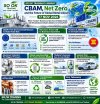
With the European Union's full implementation of the Carbon Border Adjustment Mechanism (CBAM) in 2026, environmental policy has evolved into a powerful trade instrument with direct economic consequences. At the same time, countries around the world are accelerating toward Net Zero targets in an effort to reduce greenhouse gas emissions and transition to a low-carbon economy.
For Thailand and the ASEAN region, this shift represents more than an environmental challenge. It is a strategic turning point for manufacturing and export-oriented industries, particularly for metals such as steel, aluminum, copper, and lead, which are facing growing demands for carbon transparency across global supply chains.
CBAM:
From Environmental Policy to a New Global Trade Rule
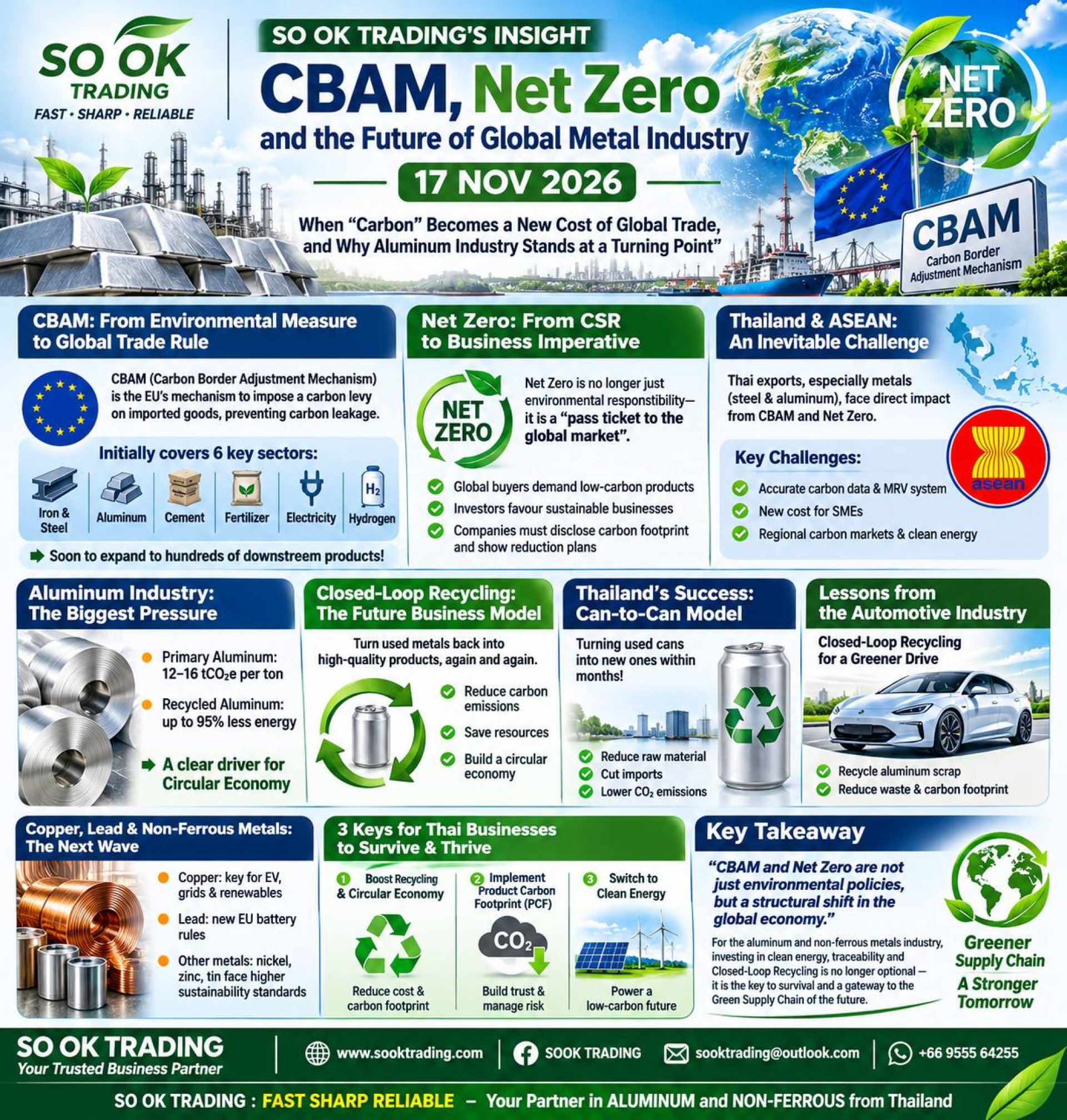
The Carbon Border Adjustment Mechanism (CBAM) is a European Union initiative designed to prevent carbon leakage by ensuring that imported products face carbon costs comparable to those imposed on European producers.
Under the new framework, importers into the EU must report the greenhouse gas emissions embedded in their products and purchase CBAM certificates based on actual carbon emissions generated during production.
In its initial phase, CBAM covers six major sectors:
Iron & Steel
Aluminum
Cement
Fertilizer
Electricity
Hydrogen
The European Union is also preparing to expand CBAM to hundreds of downstream products in the coming years, meaning that a growing number of global industries will become subject to carbon-based trade regulations.
Net Zero:
From Sustainability Goal to Business Requirement
For many years, reducing greenhouse gas emissions was viewed primarily as part of Corporate Social Responsibility (CSR).
Today, Net Zero has become a prerequisite for participating in global markets.
Multinational corporations, electric vehicle manufacturers, renewable energy developers, and international financial institutions are increasingly requiring suppliers to disclose product carbon footprints and demonstrate credible decarbonization pathways.
As a result, companies that cannot verify and manage the carbon profile of their products risk losing export opportunities, access to capital, and positions within global supply chains.
Thailand and ASEAN:
Adapting to a New Competitive Reality
Although products currently covered under CBAM account for a relatively small share of Thailand's total exports, industries such as steel and aluminum are among the most directly affected.
The challenge extends far beyond carbon costs alone.
Companies must now develop the capability to measure, report, and verify carbon emissions in accordance with international standards.
For many small and medium-sized enterprises (SMEs), implementing Carbon Footprint systems, monitoring energy consumption, and establishing MRV (Monitoring, Reporting, and Verification) practices have become essential investments.
Across ASEAN, countries including Singapore, Malaysia, Vietnam, and Indonesia are accelerating the development of carbon markets, carbon pricing mechanisms, and clean energy infrastructure to maintain competitiveness in global supply chains.
The Aluminum Industry:
The Center of Carbon Competitiveness
Among all industrial sectors, aluminum is arguably one of the most affected by CBAM and Net Zero policies.
Primary aluminum production is one of the most electricity-intensive industrial processes in the world. When powered by fossil-fuel-generated electricity, producing one ton of primary aluminum can generate between 12 and 16 tons of CO₂ equivalent emissions.
In contrast, secondary aluminum production using recycled material consumes up to 95% less energy and produces significantly lower carbon emissions.
For this reason, aluminum has become one of the clearest examples of how circular economy principles can align economic value creation with decarbonization goals.
Closed-Loop Recycling:
The Future Business Model for Metals
One of the most important strategies gaining momentum across the global metals industry is Closed-Loop Recycling.
This approach involves collecting end-of-life products or manufacturing scrap and returning them to the production process to create the same type of product without compromising material quality.
Unlike downcycling, Closed-Loop Recycling preserves material value while dramatically reducing energy consumption and carbon emissions.
For the aluminum industry, it has become one of the most effective tools for addressing both CBAM requirements and Net Zero ambitions.
Thailand's Success Story:
The Can-to-Can Model
Thailand has emerged as one of ASEAN's pioneers in developing a fully integrated Closed-Loop Recycling system for aluminum beverage cans.
Through collaboration among can manufacturers, aluminum sheet producers, recycling companies, and supporting organizations, used aluminum cans are collected, sorted, remelted, and transformed into new cans within a matter of months.
This model helps:
Reduce demand for virgin raw materials
Lower import dependency
Cut greenhouse gas emissions
Strengthen the circular economy
while simultaneously creating economic value throughout the supply chain.
Lessons from the Global Automotive Industry
The automotive sector has taken Closed-Loop Recycling even further.
Aluminum scrap generated during vehicle body manufacturing is carefully segregated according to alloy grades and returned to smelters to produce new automotive-grade aluminum sheets.
The results include:
Lower raw material costs
Near-zero manufacturing waste
Reduced vehicle carbon footprints
These advantages are becoming increasingly important as electric vehicle manufacturers in Europe and North America pursue aggressive sustainability targets.
Copper, Lead, and Other Non-Ferrous Metals:
The Next Wave of Transformation
Although copper and lead are not yet covered under the first phase of CBAM, they are already experiencing growing market pressure.
Copper plays a critical role in electric vehicles, renewable energy systems, power grids, and energy storage applications, driving increasing demand for low-carbon or "Green Copper."
Meanwhile, the lead industry faces stricter requirements under the EU Battery Regulation, including recycled content mandates and carbon footprint disclosure obligations.
Other non-ferrous metals such as nickel, zinc, and tin are also likely to face greater sustainability and carbon reporting requirements in the years ahead.
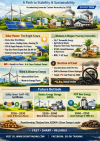
Three Strategic Priorities for Thai Businesses
1. Accelerate the Circular Economy
Increasing the use of recycled materials can simultaneously reduce energy consumption, raw material dependency, and carbon emissions.
2. Build Product Carbon Footprint (PCF) Systems
Accurate, traceable, and verifiable carbon data are essential for CBAM compliance and customer confidence.
3. Transition to Clean Energy
Solar Rooftop systems, renewable electricity procurement, Direct PPAs, Green Hydrogen, and Carbon Capture technologies will become critical foundations for future industrial competitiveness.
Conclusion
CBAM and Net Zero are no longer simply environmental policies.
They represent a structural transformation of the global economy.
In the near future, competitiveness will be measured not only by price but also by the amount of carbon embedded in every product.
For the aluminum and non-ferrous metals industries, investments in clean energy, supply chain transparency, and Closed-Loop Recycling will no longer be optional. They will become fundamental requirements for survival and success in global markets.
Companies that move first will not only reduce exposure to CBAM-related risks but will also position themselves as key participants in the emerging global Green Supply Chain and the rapidly growing low-carbon economy.
SO OK TRADING
Your Trusted Business Partner
FAST • SHARP • RELIABLE
www.sooktrading.com
Facebook: SO OK TRADING
SO OK TRADING
Thailand's Trusted Expert in Aluminum and Non-Ferrous Metals