泰国木薯的光明前景 泰国的木薯制品(木薯片、木薯颗粒)正在不断扩大出口版图。 从泰国远销至 中国、中东以及全球市场,进一步巩固了泰国作为世界领先木薯出口国的地位。 需求持续增长,涵盖 饲料产业、生物能源、食品与化工领域,泰国木薯凭借稳定的供应与优良的品质,正受到全球高度关注。
Last updated: 24 Jan 2026
1725 Views
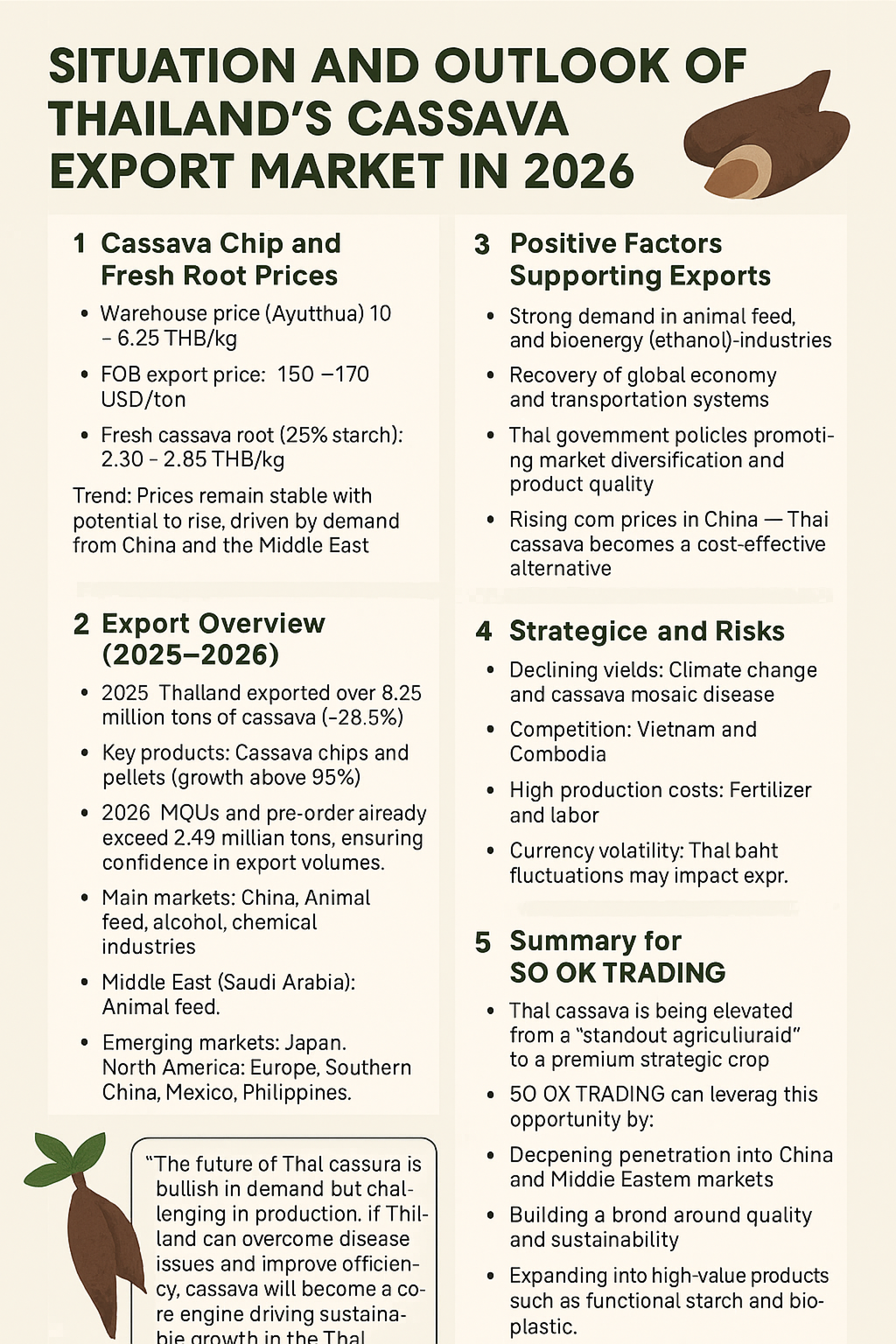
泰国木薯出口市场的现状与趋势(2026年)
1. 木薯片与鲜薯价格
仓库价格(大城府): 6.10 – 6.25 泰铢/公斤
FOB出口价格: 160 – 170 美元/吨
鲜木薯根(淀粉含量25%): 2.30 – 2.85 泰铢/公斤
趋势: 价格稳定,并因中国与中东需求而有上升空间
2. 出口概况(2025–2026年)
2025年: 泰国木薯出口总量超过 825万吨(同比+26.53%)
主要产品: 木薯片与木薯颗粒(增长率超过95%)
2026年: 已签署MOU与预订单超过 246万吨,出口前景稳固
主要市场:
中国:饲料、酒精、化工产业
中东(沙特阿拉伯):饲料用途
新兴市场: 日本、北美、欧洲、中国南部、墨西哥、菲律宾
3. 出口利好因素
饲料与生物能源(乙醇)产业需求旺盛
全球经济与运输复苏
泰国政府推动市场多元化与产品质量提升
中国玉米价格上涨 → 泰国木薯成为更具成本优势的替代品
4. 挑战与风险
产量下降: 气候变化与木薯花叶病影响
竞争压力: 来自越南与柬埔寨
生产成本高: 化肥与劳动力
泰铢汇率波动: 可能影响出口收入
5. 战略展望(2026–2027年)
市场分散: 减少对中国(80–90%)的依赖,拓展至沙特、日本与欧盟
产品升级:
功能性淀粉:用于医药、化妆品、健康食品
生物塑料:环保型塑料
技术驱动生产: 精准农业与抗病品种提升单产
产业链投资: 乙醇、饲料、化工、胶水、造纸
6. SO OK TRADING 总结
泰国木薯正从 “明星农产品” 迈向 “战略性高端作物”。
SO OK TRADING 的战略包括:
深耕中国与中东市场
以质量与可持续性打造差异化品牌
向功能性淀粉与生物塑料等高附加值产品延伸
战略定位:从 “木薯出口商” 转型为 “全球产业价值创造者”
✨ 关键信息
“泰国木薯的未来在需求端持续上升,但生产端面临挑战。若能解决病害并提升生产效率,木薯将成为推动泰国农业经济可持续发展的核心引擎。”
1. 木薯片与鲜薯价格
仓库价格(大城府): 6.10 – 6.25 泰铢/公斤
FOB出口价格: 160 – 170 美元/吨
鲜木薯根(淀粉含量25%): 2.30 – 2.85 泰铢/公斤
趋势: 价格稳定,并因中国与中东需求而有上升空间
2. 出口概况(2025–2026年)
2025年: 泰国木薯出口总量超过 825万吨(同比+26.53%)
主要产品: 木薯片与木薯颗粒(增长率超过95%)
2026年: 已签署MOU与预订单超过 246万吨,出口前景稳固
主要市场:
中国:饲料、酒精、化工产业
中东(沙特阿拉伯):饲料用途
新兴市场: 日本、北美、欧洲、中国南部、墨西哥、菲律宾
3. 出口利好因素
饲料与生物能源(乙醇)产业需求旺盛
全球经济与运输复苏
泰国政府推动市场多元化与产品质量提升
中国玉米价格上涨 → 泰国木薯成为更具成本优势的替代品
4. 挑战与风险
产量下降: 气候变化与木薯花叶病影响
竞争压力: 来自越南与柬埔寨
生产成本高: 化肥与劳动力
泰铢汇率波动: 可能影响出口收入
5. 战略展望(2026–2027年)
市场分散: 减少对中国(80–90%)的依赖,拓展至沙特、日本与欧盟
产品升级:
功能性淀粉:用于医药、化妆品、健康食品
生物塑料:环保型塑料
技术驱动生产: 精准农业与抗病品种提升单产
产业链投资: 乙醇、饲料、化工、胶水、造纸
6. SO OK TRADING 总结
泰国木薯正从 “明星农产品” 迈向 “战略性高端作物”。
SO OK TRADING 的战略包括:
深耕中国与中东市场
以质量与可持续性打造差异化品牌
向功能性淀粉与生物塑料等高附加值产品延伸
战略定位:从 “木薯出口商” 转型为 “全球产业价值创造者”
✨ 关键信息
“泰国木薯的未来在需求端持续上升,但生产端面临挑战。若能解决病害并提升生产效率,木薯将成为推动泰国农业经济可持续发展的核心引擎。”


Related Content
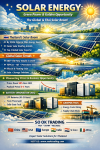
太阳能电池:未来的能源,低成本、高效率,绿色能源的全球与泰国黄金机遇
世界正在全面进入清洁能源时代,而“太阳能电池”正是这一转型的核心。
从曾经的可选技术,如今已成为各国实现 Net Zero 目标、减少对高成本化石燃料依赖的主要能源。
泰国也正在迈入 太阳能的黄金时代 —— 政府政策使安装更加便利,价格更易于接受,并具备成为全球生产中心的潜力。
与此同时,全球正在加速开发新技术,如 TOPCon、HJT、钙钛矿 (Perovskite)、以及 Solar + Storage (ESS),不断提升效率并降低成本。
这是全球与泰国共同迎来的关键时刻 —— 太阳能是“黄金机遇”,不仅推动清洁能源发展,更为商业与环境创造可持续的未来。
7 Apr 2026
铜板:战略性原材料与2026年全球铜价展望
来自 SO OK TRADING
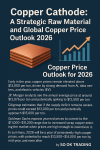
2026年,铜从普通的大宗商品升级为“战略性资产”。随着人工智能(AI)、电动汽车(EV)以及清洁能源的快速发展,铜的需求达到前所未有的高度,价格突破每吨 13,000 美元,创下历史新高。
在供应方面,全球市场正面临严重短缺,预计缺口约 15万至33万吨。主要原因包括印尼、智利和刚果的大型矿山停产,以及新矿开发的延迟。
SO OK TRADING 专注于提供高品质的铜板(阴极铜 99.99%),广泛应用于:
- 电动汽车用母排(EV Busbars)
- 印刷电路板(PCB)
- 热交换器(Heat Exchangers)
- 配电柜与开关板(Switchboards)
- 高端建筑装饰材料
26 Jan 2026
