✨《NICKEL 知识 BY SO OK TRADING:深度解析2026年全球镍市场与绿色镍——未来清洁能源的战略金属》✨
最后更新: 21 10月 2026
77 浏览量
镍知识 : SO OK TRADING : 2026年10月21日
镍 (Nickel: Ni) —— 电动汽车时代的战略金属
镍 (Ni) 是一种过渡金属,原子序数28。它呈银白色光泽,坚固耐用,耐腐蚀,导电性能优良。1751年由瑞典化学家阿克塞尔·弗雷德里克·克朗斯泰特首次发现。名称来源于德语 Kupfernickel(“魔鬼的铜”),因为当时矿工常将镍矿误认为铜矿,但冶炼后并未得到铜,因此称之为“魔鬼的铜”。
特性
物理性质: 银白色金属,易加工成型
磁性: 室温下具有磁性,仅有少数金属具备此特性(铁、钴、钆)
熔点/沸点: 熔点 1,455°C,沸点 2,913°C
主要用途
不锈钢: 增强强度并防止生锈
电池: 电动汽车 (EV) 和锂离子电池 (NMC/NCA) 的关键材料
电镀: 用于美观和防腐蚀
超合金: 应用于喷气发动机和航空工业
镍小知识
地球内部储量丰富,但地壳中稀少
室温下表现出强磁性
EV 电池的核心材料
美国的“镍币”实际上含铜75%,镍仅25%
是最容易引发接触性皮肤炎的金属之一
镍与电动汽车产业
延长续航: 一辆EV电池可能需要高达40公斤的纯镍
电池化学之争:
NMC/NCA: 轻量、高容量,适用于豪华车与高性能车
LFP: 价格低、安全性高,适用于大众车型
印尼的崛起: 占全球产量的三分之二,强制要求在国内进行冶炼
未来挑战: 供过于求、LFP竞争、环境压力与电池回收
全球市场展望 (2026–2027)
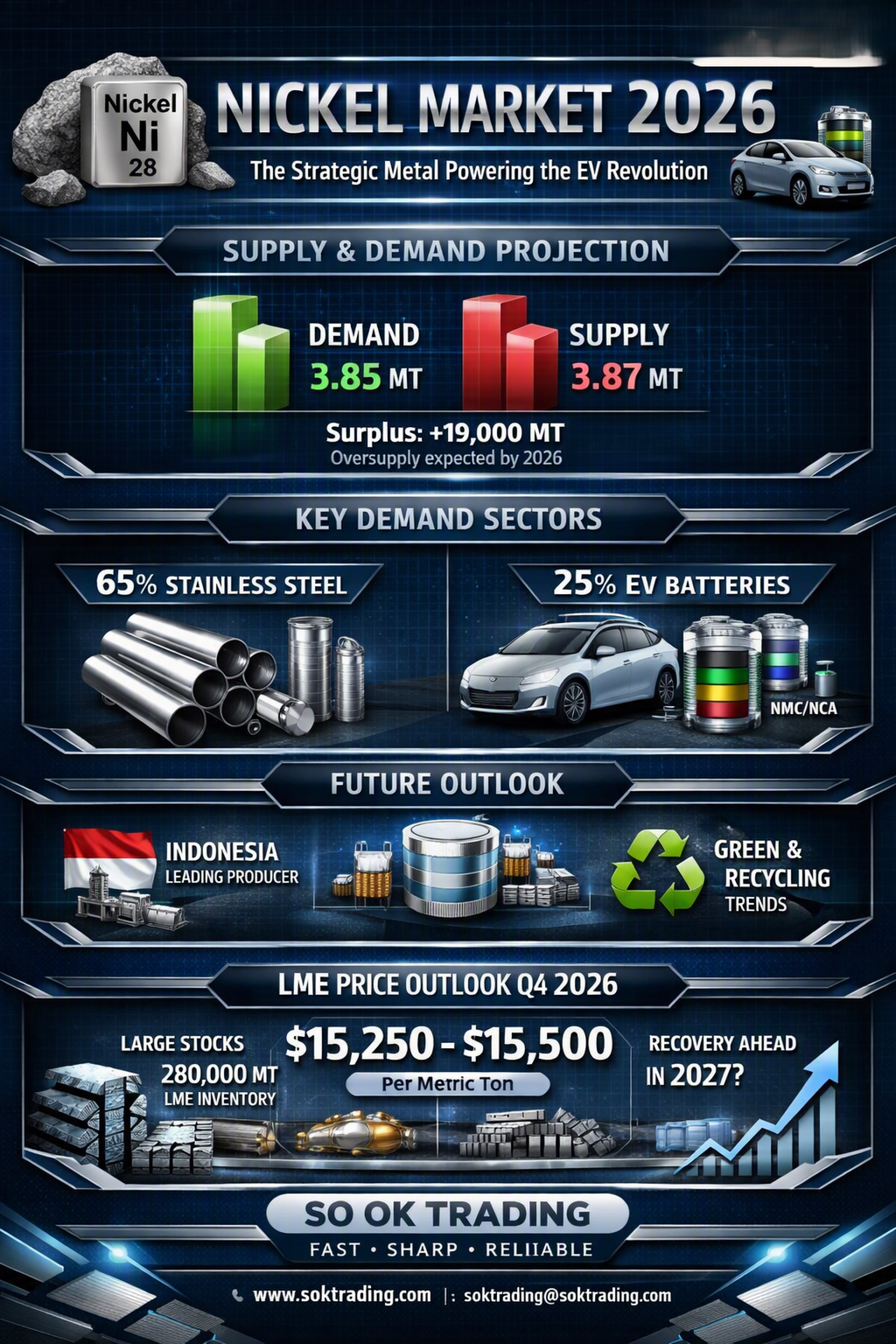
供需平衡: 2026年需求 385万吨,产量 387万吨(过剩1.9万吨);2027年过剩扩大至7万吨
需求驱动:
不锈钢 65–70%
EV电池增长放缓(低价车采用LFP)
未来方向:
低品位NPI供过于求,高纯度Class I镍和硫酸镍仍紧缺
高镍技术继续主导高性能EV
绿色镍与回收将成为关键趋势
LME价格走势 (2026年10月)
价格跌至每吨15,250–15,500美元(年初接近19,000美元)。主要原因是印尼和菲律宾的过剩供应,以及28万吨的库存。然而价格已接近生产成本,预计2027年可能出现有限回升。
✨ 总结: 镍不仅是普通金属,而是决定全球产业方向的“战略金属”,从不锈钢到电动汽车电池都不可或缺。
SO OK TRADING : 您的商业合作伙伴 SO OK TRADING : FAST • SHARP • RELIABLE
www.sooktrading.com sooktrading@outlook.com Facebook: SO OK TRADING
相关文章


he Thai baht in Q1 2026 is expected to strengthen against the US dollar, driven primarily by a weaker dollar globally, a seasonal tourism boost, and expectations of US Federal Reserve rate cuts. This strength is occurring despite a weak domestic economic outlook and the Bank of Thailand's (BoT) likely continued easing of its policy rate.
Exchange Rate Drivers and Forecast
External Factors: The primary driver for the strengthening baht is external, mainly the broad weakness of the US dollar as global markets price in expected Fed rate cuts. The baht is also correlated with global gold prices, which have been climbing.
Tourism High Season: The period extending into Q1 2026 is the high season for tourism, which typically brings in foreign currency and supports the baht's value.
Policy Divergence: The BoT is expected to continue its easing cycle, potentially cutting the policy rate further to 1.00% by Q1 2026 to stimulate the sluggish domestic economy. This divergence from a potentially less aggressive US Fed in Q1 could support the baht in the short term, though some analysts warn the currency could weaken later in 2026.
Forecasts: Projections for 2026 generally place the baht in a range of 30.80–33.00 per US dollar. Some models estimate it could trade around 31.06 by the end of Q1. A persistently strong baht below 31 per US$ is seen as a significant risk to the Thai export and tourism sectors.
Key Economic Context
Weak Growth: Thailand's economy is expected to slow down to a 5-year low growth rate of around 1.6-1.8% in 2026, pressured by US tariffs, global trade tensions, and high household debt. The central bank chief expects an improvement in Q1 2026 after a weak second half of 2025.
Political Uncertainty: A general election expected in February 2026 could also introduce volatility, though some historical trends suggest the baht may strengthen following the formation of a new government.
Low Inflation: Headline inflation is projected to remain subdued or even negative, providing the central bank with justification for further rate cuts to stimulate demand.
In summary, Q1 2026 is characterized by a strong and volatile baht driven by external factors, contrasting sharply with a weak domestic economy and accommodative monetary policy.
1 1月 2026
