แชร์

Global Energy Crisis 2026: จุดเดือดช่องแคบฮอร์มุซ – Supply Shock ที่โลกจับตา : วิเคราะห์ฉากทรรศน์ By SO OK TRADING
อัพเดทล่าสุด: 7 มี.ค. 2026
618 ผู้เข้าชม

วิกฤตพลังงานโลก: เมื่อช่องแคบฮอร์มุซถูกปิด : บทความ และ การวิเคราะห์ฉากทรรศน์ โดย SO OK TRADING

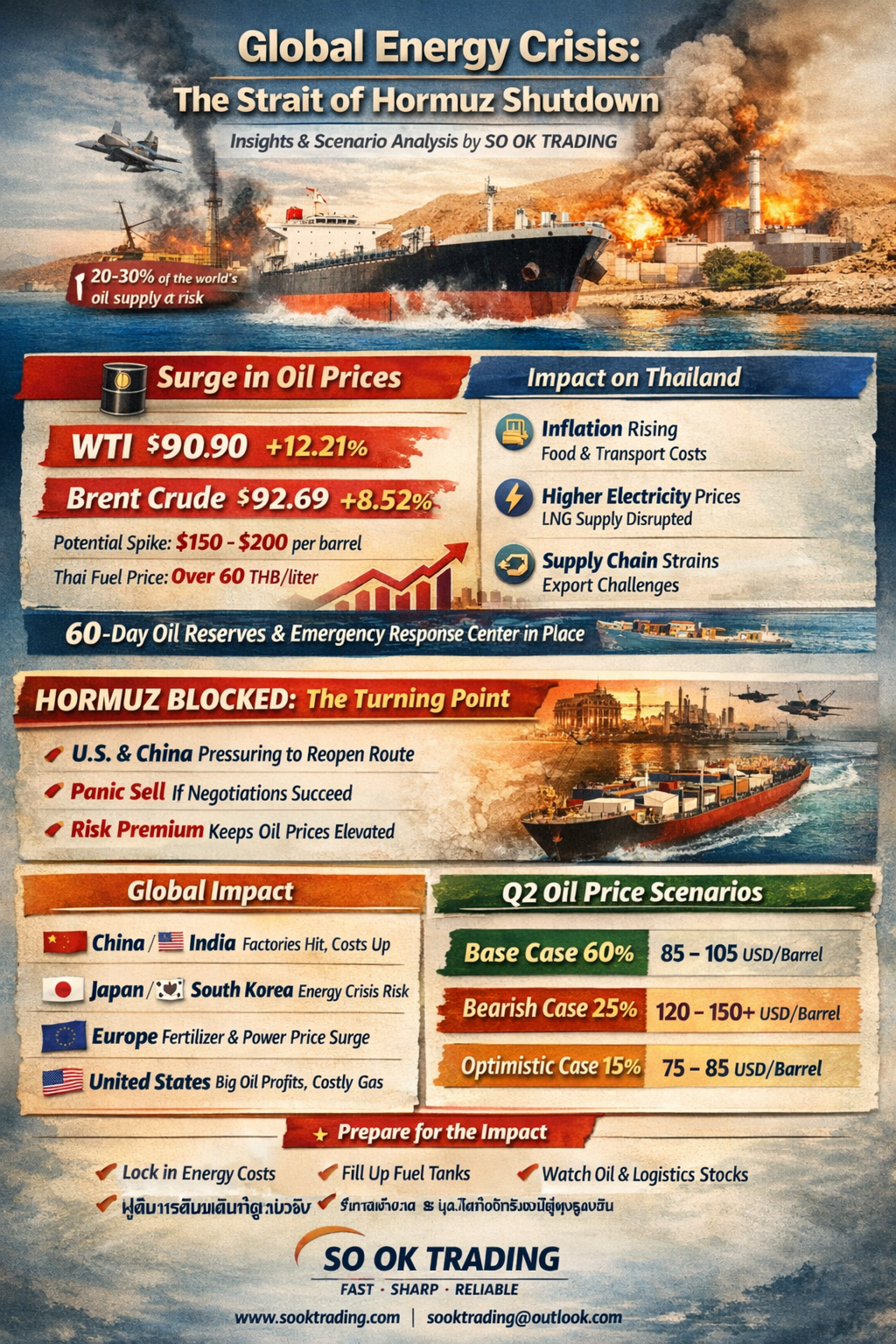
Strait of Hormuz เส้นทางยุทธศาสตร์ที่ลำเลียงน้ำมันดิบกว่า 20–30% ของโลก กำลังกลายเป็น “จุดเดือด” ของเศรษฐกิจโลกในเดือนมีนาคม 2569 หลังจากอิหร่านประกาศปิดทางเดินเรือเพื่อตอบโต้การโจมตี ส่งผลให้ราคาน้ำมันพุ่งทะยานและสร้างแรงสั่นสะเทือนต่อทุกภาคส่วน ตั้งแต่ตลาดพลังงานไปจนถึงราคาสินค้าในชีวิตประจำวัน


⛽ ราคาน้ำมันพุ่งทะยานแบบไม่เคยมีมาก่อน

WTI ปิดตลาดที่ 90.90 ดอลลาร์/บาร์เรล (+12.21%)
Brent Crude ปิดที่ 92.69 ดอลลาร์/บาร์เรล (+8.52%)
นักวิเคราะห์เตือน หากการปิดช่องแคบยืดเยื้อ ราคาน้ำมันอาจทะลุ 150–200 ดอลลาร์/บาร์เรล และราคาขายปลีกในไทยอาจพุ่งเกิน 60 บาท/ลิตร แม้รัฐบาลยังตรึงราคาดีเซลไว้ที่ 29.94 บาท/ลิตร แต่แรงกดดันจากตลาดโลกกำลังถาโถมเข้ามาอย่างต่อเนื่อง

ผลกระทบต่อเศรษฐกิจไทย

เงินเฟ้อ: ต้นทุนขนส่งสูงขึ้น ดันราคาสินค้าและอาหาร
ค่าไฟฟ้า: LNG ที่นำเข้าผ่านเส้นทางนี้สะดุด ทำให้ค่าไฟมีแนวโน้มปรับขึ้น
ห่วงโซ่อุปทาน: กระทบการส่งออกและราคาปุ๋ยทั่วโลก
รัฐบาลไทยยืนยันมีน้ำมันสำรองใช้ได้ราว 60 วัน และตั้ง “ศบก.” เพื่อติดตามสถานการณ์และวางแผนเส้นทางขนส่งสำรอง

 
ปิดช่องแคบ HORMUZ : Turning Point – จุดเปลี่ยนที่โลกจับตา

สหรัฐฯ และจีน กดดันให้เปิดเส้นทางเร็วที่สุด เพราะต่างก็ได้รับผลกระทบหนัก
หากมีการเจรจาและเรือเริ่มผ่าน ราคาน้ำมันอาจร่วงลงแรงจาก Panic Sell
แต่ในระยะสั้น “Risk Premium” จะยังคงอยู่ ทำให้ราคาน้ำมันไม่กลับไปต่ำเหมือนเดิมทันที
 

ภาพรวมผลกระทบระดับโลก

จีน/อินเดีย: ฐานการผลิตโลกสะดุด ต้นทุนพุ่ง
ญี่ปุ่น/เกาหลีใต้: พึ่งพาน้ำมันจากช่องแคบนี้กว่า 85–90% เสี่ยงวิกฤตพลังงาน
ยุโรป: เผชิญราคาปุ๋ยและค่าไฟสูงจากการขาด LNG
สหรัฐฯ: บริษัทพลังงานกำไรพุ่ง แต่ผู้บริโภคเจอราคาน้ำมันแพง
 

ประเมินฉากทัศน์ราคาน้ำมัน Q2/2569

Base Case (60%): 85–105 ดอลลาร์/บาร์เรล หากปิดช่องแคบไม่เกิน 1 เดือน
Bearish Case (25%): 120–150+ ดอลลาร์/บาร์เรล หากสงครามยืดเยื้อและ Supply หายไปจริง
Optimistic Case (15%): 75–85 ดอลลาร์/บาร์เรล หากมีการหยุดยิงหรือเจรจาสันติภาพเร็ว
 

✨ บทสรุป วิกฤติพลังงานจากการปิดช่องแคบ Hormuz

การปิดช่องแคบฮอร์มุซครั้งนี้คือ Supply Shock ที่รุนแรงที่สุดในรอบหลายทศวรรษ และสร้างผลกระทบแบบ “โดมิโน” ต่อเศรษฐกิจโลก ไทยเองแม้มีน้ำมันสำรอง แต่ก็ต้องเตรียมรับมือกับราคาพลังงานและสินค้าอุปโภคบริโภคที่พุ่งสูงขึ้น

ผู้ประกอบการขนส่ง - อุตสาหกรรม ควร ล็อกต้นทุนพลังงานล่วงหน้า และหาทางเลือกพลังงานหมุนเวียน
ผู้บริโภคควร เติมน้ำมันเต็มถังเมื่อมีโอกาส เพราะมีโอกาสสูงที่ราคาจะปรับขึ้นอีกใน 1–2 สัปดาห์
นักลงทุนควรจับตา หุ้นพลังงาน โลจิสติกส์ และสินค้าโภคภัณฑ์ ซึ่งจะได้รับผลกระทบโดยตรง
 
SO OK TRADING พันธมิตรทางธุรกิจของคุณ 

SO OK TRADING : "FAST SHARP RELIABLE"

ติดต่อเราได้ที่ www.sooktrading.com หรือ ส่งอีเมลล์หาเราได้ที่ sooktrading@outlook.com


บทความที่เกี่ยวข้อง
ALUMINUM PRICE TREND 2026
An analysis of the aluminum market in 2026 indicates a likely continued market deficit and upward price pressure, driven by constrained supply and resilient demand from green energy sectors. However, significant volatility is expected due to policy uncertainties and the potential for new Indonesian supply to eventually balance the market. Key Drivers and Projections for 2026 Supply Side Analysis Capacity Constraints: China's primary aluminum output is approaching its self-imposed 45 million-tonne capacity cap, limiting global supply growth. Power Challenges: Smelters outside of China face intense competition for power from energy-intensive sectors like AI data centers, which are willing to pay higher prices for long-term contracts. This has kept significant capacity offline in Europe and the US. Production Disruptions: Outages and potential shutdowns at existing smelters in Iceland and Mozambique further tighten the market. Scrap Supply Pressure: The EU's planned implementation of the Carbon Border Adjustment Mechanism (CBAM) and potential scrap export tariffs in spring 2026 are expected to impact global scrap flows, creating regional shortages and price volatility. New Capacity: Indonesia is a key source of new supply, with several projects in the pipeline. However, analysts suggest the pace of the ramp-up may be slower than expected due to infrastructure and policy challenges, meaning it is unlikely to fully offset near-term tightness. Demand Side Analysis Green Transition Demand: Demand from "green" sectors such as solar panels, new energy vehicles, and energy transition infrastructure remains strong, providing fundamental support for the market. Substitution Effect: Aluminum's wide price discount relative to copper has encouraged substitution in electrical applications, acting as a tailwind for demand and prices. Construction and Automotive: The construction and automotive industries continue to be major consumers, with growing demand for lightweight, low-carbon aluminum products. Price Forecasts and Volatility The market is expected to remain in a deficit in 2026, with estimates ranging from 200,000 to 600,000 tonnes. This structural tightness is leading most analysts to forecast sustained or rising prices. Bullish Views: Analysts at Bank of America project prices of $3,000/tonne as early as 2026. J.P. Morgan also expects prices to approach $3,000/tonne in Q1 2026. ING forecasts an average price of $2,900/tonne for the year. Bearish/Conservative Views: Goldman Sachs is an outlier, forecasting prices to decline to $2,350/tonne by Q4 2026, anticipating a market surplus later in the year. SMM forecasts a "high first, then lower" pattern, with prices finding equilibrium in the $2,700–$2,800/tonne range by year-end. Premiums: Regional premiums, particularly the US Midwest premium, are expected to remain high and volatile due to tariffs and regional supply dynamics, creating a disconnect from the LME benchmark price. In essence, 2026 is projected to be a year of high volatility where participants need to focus on scenario readiness rather than relying on a single price forecast, as geopolitical and energy policies significantly influence regional supply and costs
31 ธ.ค. 2025
ZINC INGOT สังกะสีแท่ง และ การใช้งาน
สังกะสีแท่ง (Zinc Ingot) ส่วนใหญ่ใช้ในงานอุตสาหกรรม เช่น ทำแผ่นสังกะสีสำหรับชิ้นส่วนยานยนต์เพื่อลดน้ำหนักและประหยัดน้ำมัน, ทำสังกะสีสำหรับเคลือบกันสนิม (Galvanizing), และใช้ในการผลิตสังกะสีอัลลอยด์ ในการใช้งานกับโลหะ สังกะสีจะทำหน้าที่เป็นขั้วบวกเพื่อป้องกันการกัดกร่อน (Zinc Anode) การใช้งานหลักของ Zinc Ingot อุตสาหกรรมยานยนต์: ใช้ทำชิ้นส่วนต่างๆ เพื่อให้น้ำหนักเบาและประหยัดน้ำมันเชื้อเพลิง การเคลือบกันสนิม: นิยมนำไปใช้ในกระบวนการเคลือบสังกะสี (Galvanizing) เพื่อป้องกันการผุกร่อนของโลหะ เช่น เหล็ก สังกะสีอัลลอยด์: ใช้ในการผลิตสังกะสีอัลลอยด์สำหรับงานต่างๆ
26 พ.ย. 2025
This website uses cookies for best user experience, to find out more you can go to our นโยบายความเป็นส่วนตัว และ นโยบายคุกกี้
เปรียบเทียบสินค้า
0/4
ลบทั้งหมด
เปรียบเทียบ
Powered By MakeWebEasy Logo MakeWebEasy