Copper Usage and Trend of it use and price
Copper Usage Future Trend and Demand
Demand for copper, a vital metal for economic growth and the energy transition, is set to expand over the coming decades. In fact, global resources company BHP estimates that the red metals demand will surge by approximately 70% between 2021 and 2050.
In this graphic, we partnered with BHP to visualize the projected sources of copper demand through to 2050.
Key Sources of Copper Demand
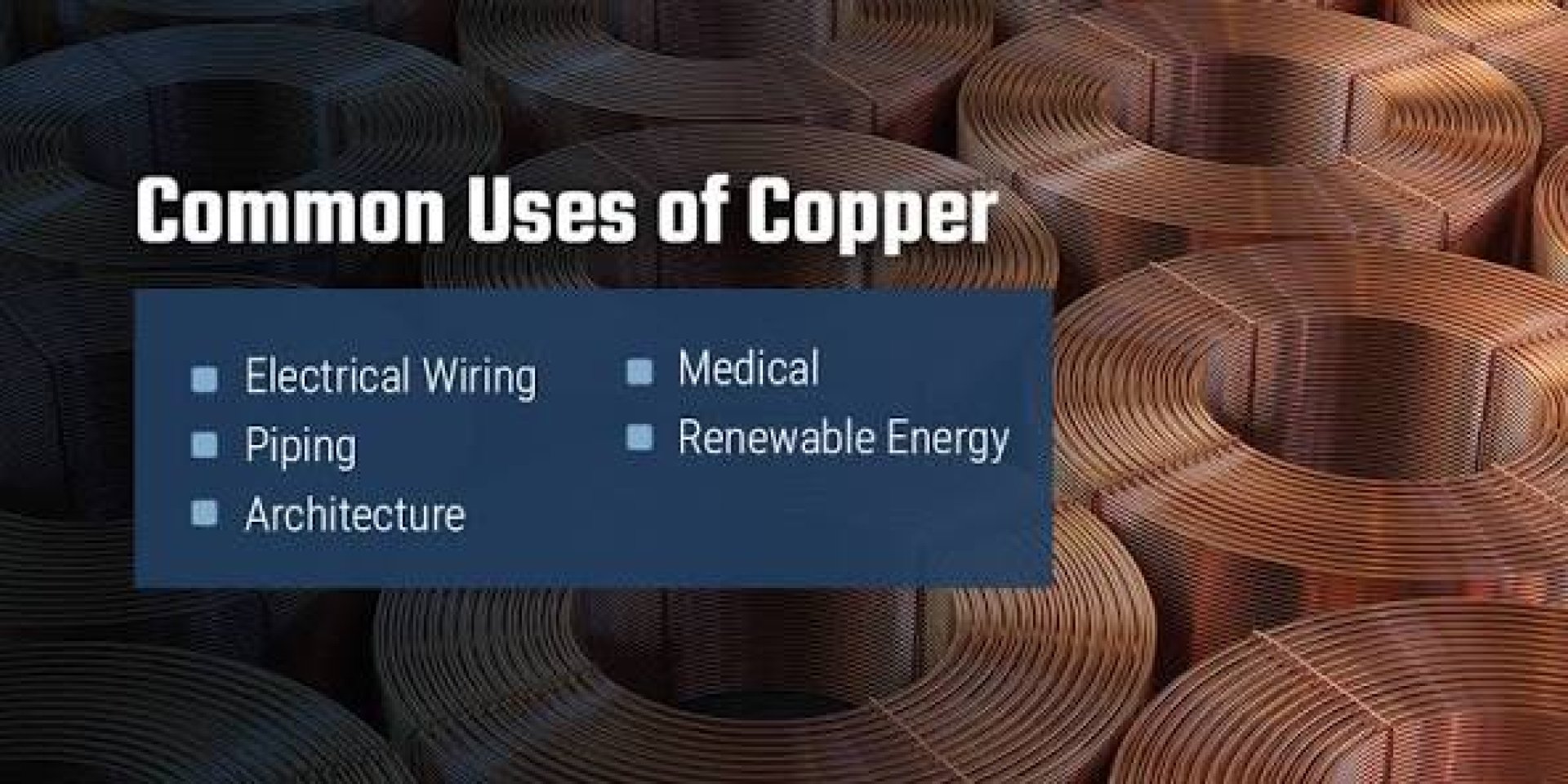
Copper has diverse and widespread applications across many sectors. This mean that, as the global economy grows, demand for the metal tends to follow.
As living standards rise globally, demand is expected to follow suit for products like washing machines and smartphones. Developing economies, which have nearly five times the population of high-income countries, will increasingly strive to achieve the same high standard of living found in developed nations. This transition will naturally lead to a greater need for the red metal.
Another key source of demand is from the energy transition. Shifting the global economy away from fossil fuels towards electricity from renewable sources should lead to greater demand for copper. In fact, in a deeply decarbonizing world BHP envisages cumulative primary copper demand over the next 30 years to be around double the amount consumed in the previous 30.
Finally, the worlds rapid adoption of AI is leading to a surge in demand for data centers. Coppers superior electrical and thermal conductivity make it an essential material for computer circuitry, power delivery, cooling, and data transfer.
The Impact of Substitution and Thrifting
While coppers growth story is very promising, substitution and thrifting is expected to have a moderating effect on future demand.
These trends of substitution and thrifting have been with the metal for decades. While it means that a rapid reduction in copper demand is unlikely, there will likely be steady losses over time.
The Future of the Red Metal
Copper will play an integral role in the economy of tomorrow. As a metal with widespread applications that is essential both in technological advancements and the energy transition, consumption is set to expand.
Despite some relief provided by substitution and thrifting, copper suppliers could have their work cut out for them
------
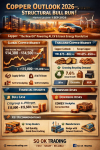
Copper Price Trend Toward Year 2030
Copper price forecasts for 2030 vary, but generally point to a significant upward trend driven by clean energy/EV demand, with projections ranging from Goldman Sachs suggesting strong long-term growth beyond $15,000/tonne (in 2025 dollars) towards 2035, while other models like Wallet Investor and Gov Capital suggest prices potentially hitting $6.30/lb to $7/lb (around $13,900 - $15,400/mt) by 2030, anticipating supply deficits to push prices higher as demand outpaces new production.
Key Drivers for 2030 Price Increases:
Energy Transition: Massive grid expansion, renewable energy projects, and electric vehicles (EVs) will significantly boost copper demand.
Supply Constraints: New mines struggle to meet demand, creating potential shortages and pushing prices up.
China's Role: China is expected to remain a major driver of copper demand growth through 2030.
Specific Forecasts & Estimates:
Goldman Sachs: Expects strong demand growth, with prices potentially reaching $15,000/tonne (in 2025 dollars) by 2035, indicating high long-term levels.
Wallet Investor: Projected prices upwards of $5.70/lb by 2030.
Gov Capital: Forecasted prices potentially reaching $7/lb (around $15,400/mt) by 2030.
Commodity Insights: Predicts steady demand growth to 31.1 Mt by 2030.
BloombergNEF: Estimates a copper supply gap could approach 10 million tonnes by 2030.
In Summary:
While short-term fluctuations occur, the consensus points to a tightening copper market by 2030, with rising demand from the green energy transition colliding with constrained supply, leading to significantly higher prices than historical averages
------
Copper Price Break down from year 2025-2030
Copper prices are forecast to remain strong through 2030, driven by green energy transition demand (AI, EVs, grid upgrades) and tight supply from mine disruptions, with projections ranging from $10,000-$12,500+/mt in the near term (2025-2026), with significant long-term growth potential towards $15,000+/mt by 2030 as deficits widen, though some models see consolidation before a steeper rise. Key factors include U.S. tariffs, supply shocks (like Grasberg), and rising demand for power infrastructure.
Near-Term (2025-2026) Forecasts:
Highs Expected: Prices surged in late 2025, with projections for 2026 suggesting averages around $12,075/mt (J.P. Morgan) or remaining in the $10,000-$11,000/mt range (Goldman Sachs) due to ongoing deficits.
Supply Factors: Mine disruptions (Chile, Indonesia) and strong demand from AI/defense sectors are key drivers.
Surplus vs. Deficit: While some forecasts saw a 2025 surplus, the market is rapidly tightening for 2026, moving towards significant deficits.
Mid- to Long-Term (Beyond 2026):
Growing Deficits: Analysts anticipate persistent supply shortages extending through the decade as demand from energy transition far outstrips new mine supply.
Demand Surge: Renewables targets alone could add millions of tons of demand by 2030, pushing prices significantly higher.
Potential Levels: Some reports suggest prices could hit $15,000/mt or more by 2030 as structural deficits widen, though forecasts vary.
Key Drivers & Wildcards:
Demand: Green energy (EVs, wind, solar) and data centers (AI) are massive demand catalysts.
Supply: Mine production growth is slow; major disruptions (Grasberg mine) create shocks.
U.S. Tariffs: Uncertainty around potential U.S. import tariffs creates volatility.
Cobre Panama Restart: A potential restart could significantly ease supply tightness.
In Summary: Expect copper prices to stay elevated, driven by strong structural demand and limited new supply, with significant upward potential towards 2030, despite near-term volatility from tariffs and mine restarts