「再生铜:泰国绿色经济的新动力 —— 从废金属到全球舞台上的千亿机遇,SO OK TRADING 展望 2026–2035 年全球铜废料市场」
Last updated: 31 Jul 2026
1492 Views
铜废料与全球市场概览 : SO OK TRADING 撰文 | 2026年7月31日
泰国的铜废料种类
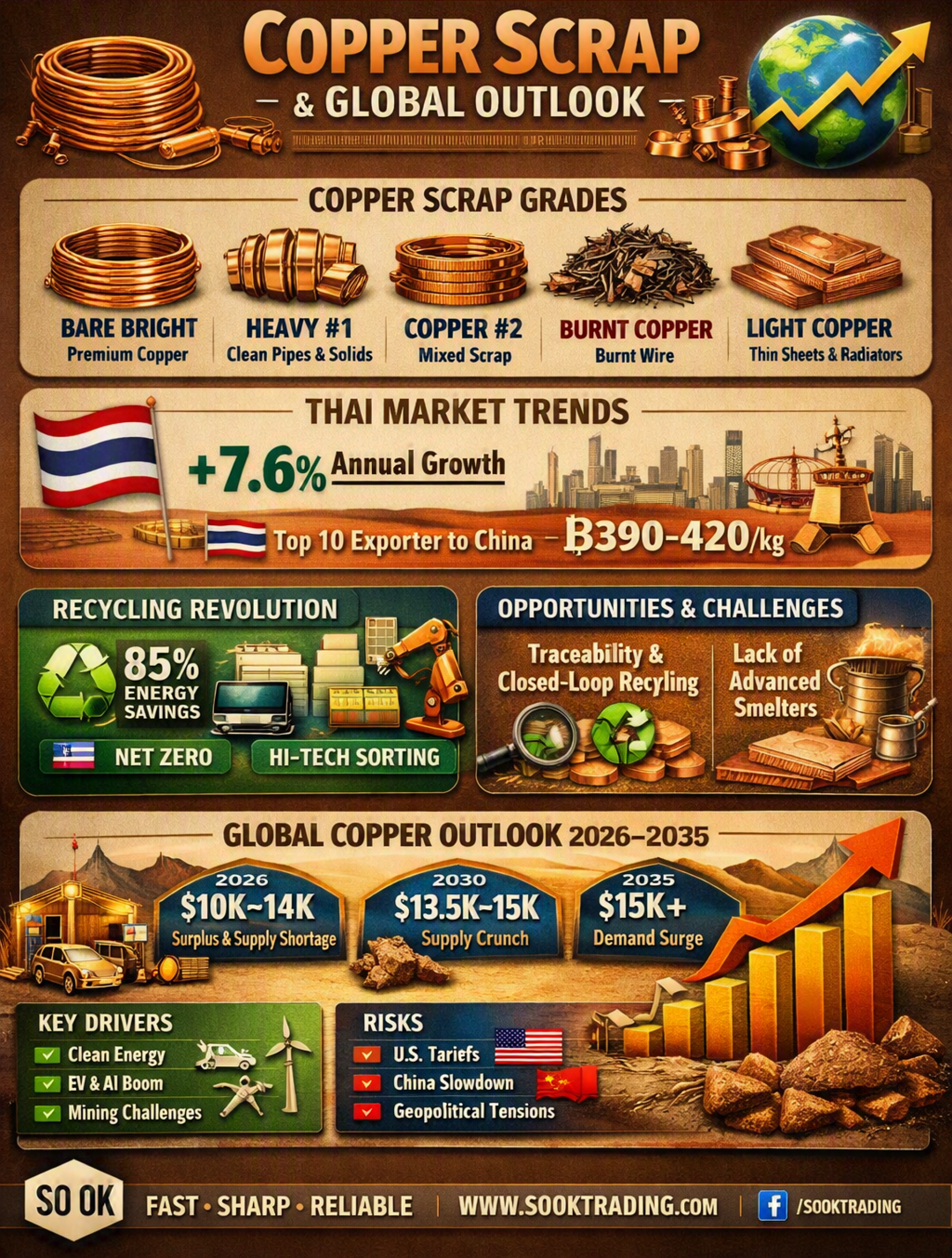
铜废料按照国际标准分为多个等级。例如,纯度最高、价格最优的 Bare Bright Copper(亮铜线);无杂质的厚管或板材 No.1 Heavy Copper;允许少量污染或氧化的 No.2 Copper;因燃烧而变黑脆弱的 Burnt Copper;以及容易受污染的薄板或散热器 Light Copper。此外,还有被覆电线和工业废料,如车床屑和冲压片,其中一些接近 No.1 级别的高纯度。
泰国市场趋势
泰国铜废料市场正进入 结构性上升期(Structural Uptrend),年均增长率达 7.6%。清洁能源、电动汽车和数据中心需求是主要驱动力。泰国已跻身全球前十的铜废料出口国,并成为中国的重要供应商。2026年亮铜线价格飙升至 390–420 泰铢/公斤,创下历史新高。国内冶炼厂和贸易商竞争激烈,争夺高等级废料以替代昂贵的进口电解铜。
♻️ 回收方向
铜回收相比新冶炼可节省 85% 的能源,符合 净零(Net Zero)和 ESG 要求。泰国工厂增加了再生铜的使用,并出台了禁止燃烧铜的政策以防止污染。市场转向使用自动剥线机,同时引入 LIBS 和高光谱成像 等先进技术,将纯度提升至 98%。
机遇与挑战
企业可通过 可追溯性和闭环回收 创造附加值,但泰国仍缺乏先进冶炼厂,无法完全从电子废料中提取铜,因此仍依赖出口未加工废料。
泰国铜废料价格展望(2027–2031 年)
2027年: 320–350 泰铢/公斤
2028–2029年: 360–400 泰铢/公斤
2030–2031年: 420–460 泰铢/公斤
全球铜市场展望(2026–2035年)
全球铜市场规模约 2700 万吨/年。智利占全球矿山产量约 24%,中国占精炼铜产量约 51%。市场正进入长期 超级周期(Supercycle)。
2026年: 受供需不平衡影响,价格在 $10,000–14,000/吨
2027年: 供过于求,价格略有下降
2030年: 供应短缺显现,价格升至 $13,500–15,000/吨
2035年: 结构性需求推动价格突破 $15,000/吨
⚙️ 推动因素
清洁能源投资(电网、太阳能、风能)
AI 与数据中心的巨大需求
电动汽车热潮(铜用量是传统汽车的 3–4 倍)
矿山限制(矿石品位下降,新矿开发需 10–15 年)
⚠️ 风险因素
美国关税政策(可能对精炼铜进口征收 25% 关税)
中国经济放缓
地缘政治风险(印尼、刚果、智利矿山的不确定性)
总结
无论是泰国市场还是全球市场,都正处于 结构性上升期。电动汽车、人工智能、数据中心和清洁能源是强劲的推动力。中长期来看,铜价预计保持上涨趋势。采用清洁回收技术和可追溯体系的企业将获得明显的竞争优势,并能在国内外市场创造更高价值。
SO OK TRADING : 您值得信赖的商业伙伴 SO OK TRADING : FAST • SHARP • RELIABLE www.sooktrading.com Facebook: SO OK TRADING
泰国的铜废料种类
铜废料按照国际标准分为多个等级。例如,纯度最高、价格最优的 Bare Bright Copper(亮铜线);无杂质的厚管或板材 No.1 Heavy Copper;允许少量污染或氧化的 No.2 Copper;因燃烧而变黑脆弱的 Burnt Copper;以及容易受污染的薄板或散热器 Light Copper。此外,还有被覆电线和工业废料,如车床屑和冲压片,其中一些接近 No.1 级别的高纯度。
泰国市场趋势
泰国铜废料市场正进入 结构性上升期(Structural Uptrend),年均增长率达 7.6%。清洁能源、电动汽车和数据中心需求是主要驱动力。泰国已跻身全球前十的铜废料出口国,并成为中国的重要供应商。2026年亮铜线价格飙升至 390–420 泰铢/公斤,创下历史新高。国内冶炼厂和贸易商竞争激烈,争夺高等级废料以替代昂贵的进口电解铜。
♻️ 回收方向
铜回收相比新冶炼可节省 85% 的能源,符合 净零(Net Zero)和 ESG 要求。泰国工厂增加了再生铜的使用,并出台了禁止燃烧铜的政策以防止污染。市场转向使用自动剥线机,同时引入 LIBS 和高光谱成像 等先进技术,将纯度提升至 98%。
机遇与挑战
企业可通过 可追溯性和闭环回收 创造附加值,但泰国仍缺乏先进冶炼厂,无法完全从电子废料中提取铜,因此仍依赖出口未加工废料。
泰国铜废料价格展望(2027–2031 年)
2027年: 320–350 泰铢/公斤
2028–2029年: 360–400 泰铢/公斤
2030–2031年: 420–460 泰铢/公斤
全球铜市场展望(2026–2035年)
全球铜市场规模约 2700 万吨/年。智利占全球矿山产量约 24%,中国占精炼铜产量约 51%。市场正进入长期 超级周期(Supercycle)。
2026年: 受供需不平衡影响,价格在 $10,000–14,000/吨
2027年: 供过于求,价格略有下降
2030年: 供应短缺显现,价格升至 $13,500–15,000/吨
2035年: 结构性需求推动价格突破 $15,000/吨
⚙️ 推动因素
清洁能源投资(电网、太阳能、风能)
AI 与数据中心的巨大需求
电动汽车热潮(铜用量是传统汽车的 3–4 倍)
矿山限制(矿石品位下降,新矿开发需 10–15 年)
⚠️ 风险因素
美国关税政策(可能对精炼铜进口征收 25% 关税)
中国经济放缓
地缘政治风险(印尼、刚果、智利矿山的不确定性)
总结
无论是泰国市场还是全球市场,都正处于 结构性上升期。电动汽车、人工智能、数据中心和清洁能源是强劲的推动力。中长期来看,铜价预计保持上涨趋势。采用清洁回收技术和可追溯体系的企业将获得明显的竞争优势,并能在国内外市场创造更高价值。
SO OK TRADING : 您值得信赖的商业伙伴 SO OK TRADING : FAST • SHARP • RELIABLE www.sooktrading.com Facebook: SO OK TRADING

Related Content

铜价飙升!2026年4月
全球铜价在短短一周内急涨至 13,300美元/吨(+6.4%),
背后原因包括 中东战争、贸易政策以及中国对硫酸出口的限制。
全球铜市场正处于 “强劲上涨但高度波动” 的阶段。
投资者纷纷买入以规避供应紧张的风险。
与此同时,摩根大通(J.P. Morgan)、高盛(Goldman Sachs)、花旗(Citigroup)、德意志银行(Deutsche Bank) 等主要金融机构
均预测若局势未能缓解,价格可能冲击 14,000美元/吨。
15 Apr 2026
清洁能源,迈向可持续未来
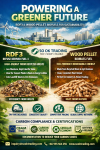
在全球积极推动碳减排与高效能源利用的时代,SO OK TRADING 致力于成为您值得信赖的清洁能源合作伙伴。我们提供高品质的 RDF3(Refuse Derived Fuel 3) 与 木颗粒燃料(Wood Pellet) —— 兼顾环境与经济效益的生物质燃料解决方案。
我们承诺为您提供能够降低生产成本、提升价值的替代能源,助力企业实现可持续发展。凭借精准的物流体系,我们确保 准时交付;通过严格的质量检测,我们保证 稳定一致的品质;同时以 具竞争力的价格,帮助您的企业在市场中保持优势。
FAST | SHARP | RELIABLE —— 这是我们坚守的核心原则,确保 SO OK TRADING 的国际标准与客户信赖。
15 Jul 2026
