“Aluminum Russia 2026–2030: Unveiling the Global Metal Giant, Transforming Industry Toward a Green Transition and the Low-Carbon Future” SO OK TRADING | 27 SEP 2026
Aluminum Russia 2026–2030: The Global Metal Giant Driving Industry Transformation Toward a Green Transition and a Low‑Carbon Future
SO OK TRADING | 27 SEP 2026
Introduction
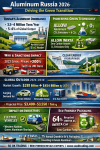
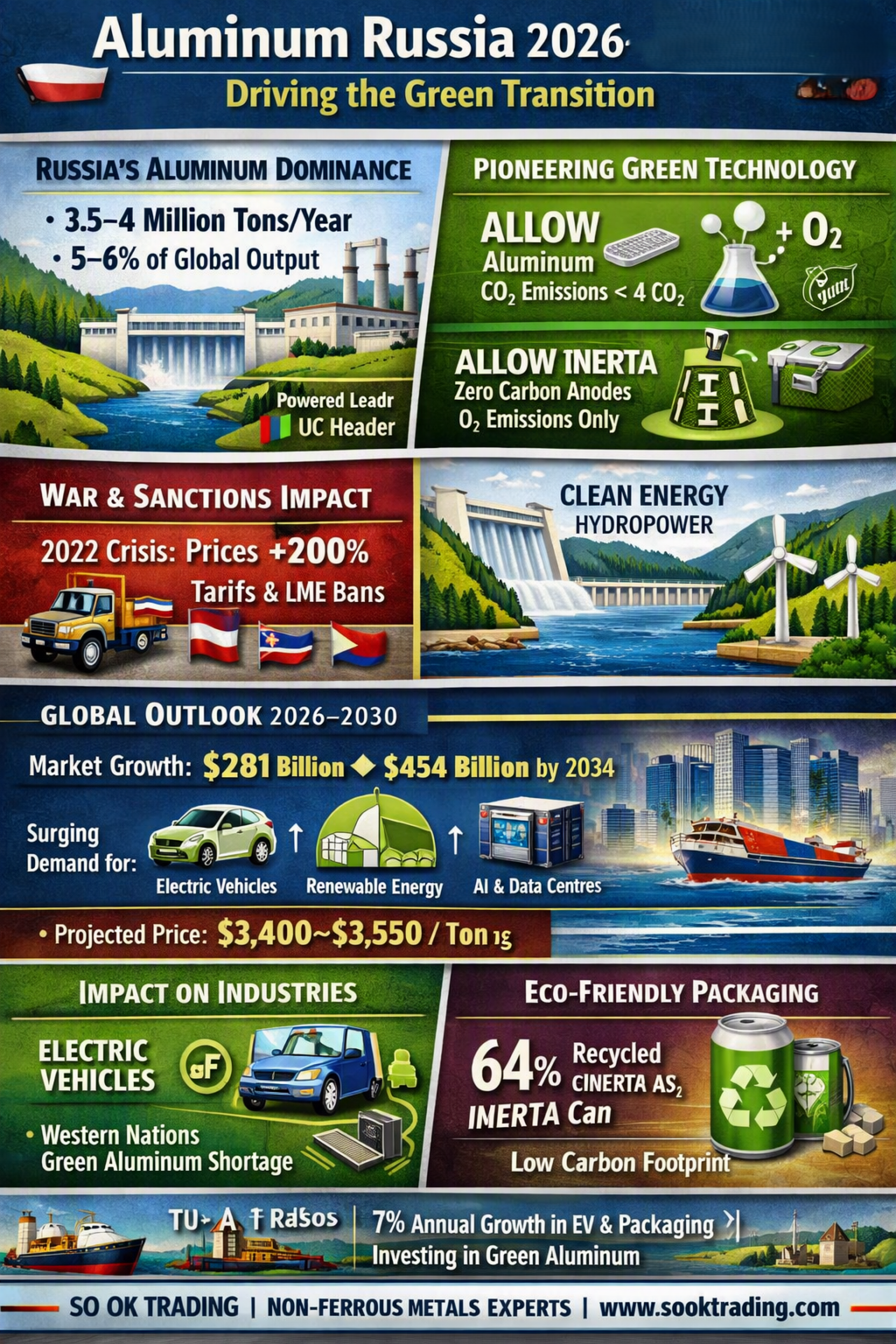
Russia’s aluminum industry stands as one of the most influential pillars of the global metals market. With an annual production capacity of 3.5–4 million tons, accounting for 5–6% of global output, and led by UC RUSAL, Russia remains the number one producer outside of China, shaping the direction of the industry across multiple dimensions.
What sets Russia apart is its near‑monopoly under a single company and its reliance on clean hydropower from Siberia. This makes Russia a global leader in Green Aluminum, closely watched by industries worldwide.
Strengths and Innovations
Clean Energy: Smelters in Siberia are powered by massive hydropower, significantly reducing carbon emissions.
ALLOW Brand: Low‑carbon aluminum with CO₂ emissions below 4 tons per ton of metal (global average ~16.6 tons).
ALLOW INERTA: Inert anode technology that releases oxygen instead of carbon, cutting CO₂ emissions to nearly zero, certified by TÜV AUSTRIA.
These innovations position Russia not only as a producer but also as a standard‑setter for Green Aluminum in the era of circular economies and clean energy transitions.
Impact of War and Sanctions
The Russia–Ukraine war in 2022 drove aluminum prices to a 14‑year high. Sanctions from the U.S. and Europe — including tariffs of up to 200% and bans on Russian aluminum deliveries in LME/CME markets — disrupted global supply chains.
Russia lost over 40% of its alumina supply from Australia and Ukraine but turned the crisis into opportunity by pivoting to China and India, while investing in Indonesia to build large‑scale bauxite mines and alumina refineries, securing long‑term raw material stability.
Outlook and Future Directions
The global aluminum market is entering a critical transition:
Market Value: $281.39 billion in 2026, projected to surpass $454 billion by 2034 (CAGR 6.2%).
Key Demand Drivers:
Electric Vehicles (EVs) requiring lightweight, low‑carbon materials.
Renewable energy infrastructure such as solar and wind power.
AI and Data Centers needing aluminum for cooling systems and structural components.
Price Forecast: $3,400–$3,530 per ton, driven by tight supply and stricter environmental policies.
Impact on Automotive and Packaging Industries
Electric Vehicles (EVs):
Western nations face shortages of Green Aluminum, forced to pay premium prices.
Asian markets gain cost advantages through access to Russian aluminum.
Packaging: Russia has launched eco‑friendly cans made with 64% recycled aluminum plus 10.5% ALLOW INERTA, achieving the world’s lowest carbon footprint (<3 tons per lifecycle).
Thailand’s Outlook
Thailand has no bauxite mines and relies on 100% imported raw materials. Yet growth opportunities remain strong in:
Beverage cans and packaging (+7% YoY).
Construction and real estate.
EV manufacturing, supported by Chinese and Japanese automakers establishing production bases in Thailand.
Challenges include higher U.S. import tariffs and Europe’s carbon tax. However, Thai producers are adapting — for example, Thai Metal Aluminum has introduced Green Aluminum, reducing CO₂ emissions by over 60% through recycling and clean energy.
Conclusion
Russia’s aluminum industry is at a turning point — evolving from a major producer into a global leader of the Green Transition. Despite geopolitical pressures, Russia has turned crisis into opportunity through low‑carbon innovation and new partnerships in Asia.
For Thailand, entering the era of Green Aluminum is not optional but essential. To remain competitive in a global market shifting toward a low‑carbon economy, rapid adaptation is the only path forward.
✨ Aluminum Russia is not just about metal — it is about the future of a world economy driven by clean energy and sustainability. SO OK TRADING — FAST • SHARP • RELIABLE