“RDF3: Clean Energy from Waste – The Rising Star of Renewable Power Driving the World Toward a Green Future” SO OK TRADING: June 28, 2026
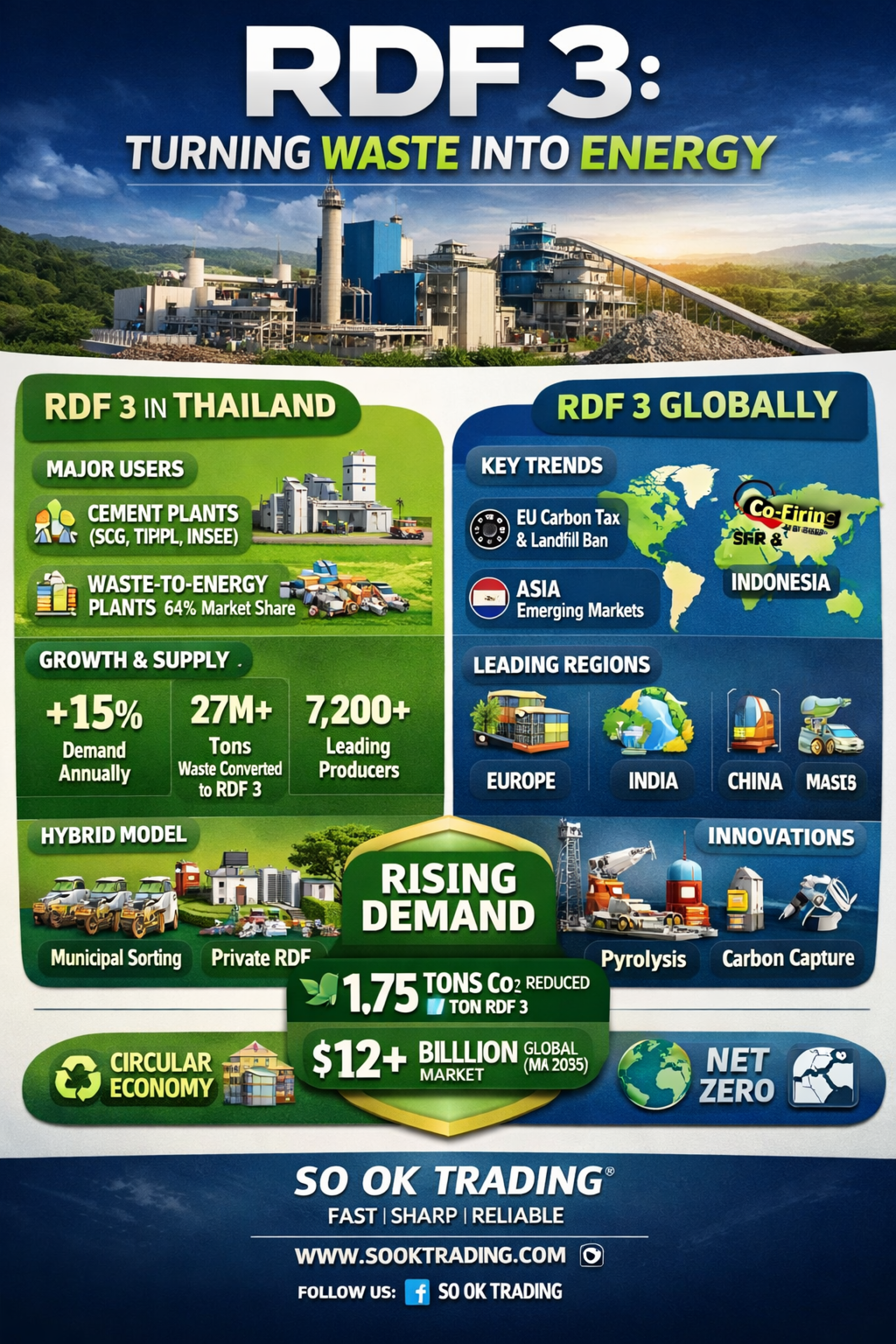
RDF3: Waste-to-Energy Transforming the World
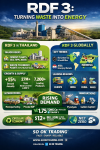
Refuse Derived Fuel 3 (RDF3), also known as Fluff RDF, is rapidly emerging as the rising star of renewable energy both in Thailand and globally. It is not just about waste disposal—it is about turning waste into clean energy with real economic value.
Key Features of RDF3
Low moisture
High calorific value
Complete combustion
Thanks to these advantages, RDF3 is increasingly chosen as a substitute for coal in heavy industries, especially cement plants and waste-to-energy facilities.
Trends in Thailand
Major cement producers such as SCG, TPIPL, and INSEE are expanding RDF3 use in kilns to reduce carbon emissions and imported coal costs.
Waste-to-Energy plants account for 64% of the market, preferring RDF3 over raw waste for cleaner combustion and easier pollution control.
Hybrid municipal-private models: local governments sort waste at the source, then private factories process it into standardized RDF3 for large-scale users.
Global Trends
Europe (EU): Carbon Border Adjustment Mechanism (CBAM) and landfill bans drive industries toward RDF3 and SRF.
Asia’s emerging markets: India, Indonesia, and Vietnam promote RDF3 to tackle urban waste overflow and cut emissions (1.75 tons CO₂ reduced per ton of RDF3).
New innovations: Co-firing, Pyrolysis, and Carbon Capture technologies convert RDF3 into syngas or hydrogen.
Demand & Supply
Thailand: Demand grows at 15% annually, with the power sector leading at 16.8% under PDP and AEDP plans.
Global: Demand surges under Net Zero pressure, CBAM, and landfill restrictions, especially in Europe and Asia.
Supply: Global production expands from 28 million tons → 47–60 million tons.
China: +8 million tons
India: +3 million tons
ASEAN: +1 million tons, with potential for +15 million tons
Outlook 2030–2035
Global Market: $5.8 billion (2026) → $12–15 billion (2035), CAGR 6–8%
Thailand Market: 15% annual growth, driven by power and cement sectors
Future Directions
Economics-led scaling: RDF3 is more cost-effective than imported coal + carbon credits
Co-firing & co-processing: 10–30% RDF3 blended with primary fuels without new system investment
Advanced conversion: Pyrolysis/Gasification to produce syngas and bio-oil
Key Industries Using RDF3
Cement: RDF3 blended with coal at 1,400°C, destroying toxins; ash reused in cement production
Waste-to-Energy power plants: RDF3 used 100% or co-fired with coal, reducing odor and moisture, boosting efficiency
Heavy industries: Paper, textiles, chemicals—RDF3 in boilers lowers carbon footprint
Challenges
Thailand’s high-moisture waste → higher RDF3 production costs
Rising demand for recycled high-quality plastics → competition for RDF3 feedstock
Long-term sustainability questioned compared to pure clean energy sources like solar, due to combustion and emissions
Conclusion
RDF3 is evolving from “waste disposal energy” into a commercial fuel that delivers both economic value and real carbon reduction. Thailand and the world are entering an era where RDF3 will stand as a pillar of the Circular Economy and Net Zero future.
SO OK TRADING Your trusted business partner in the clean energy era FAST | SHARP | RELIABLE
Interested in RDF3 products? Contact us today. We are ready to supply high-quality RDF3. www.sooktrading.com Facebook: SO OK TRADING