“Hormuz Heats Up! Global Oil Shock, Energy Lifeline Trembles — Thai Businesses Must Adapt to a World Crisis” SO OK TRADING : 22 MAY 2026
HORMUZ HEATS UP!
The World’s Oil Lifeline Trembles UPDATED: 22 MAY 2026 | BY SO OK TRADING
Why the Strait of Hormuz Matters
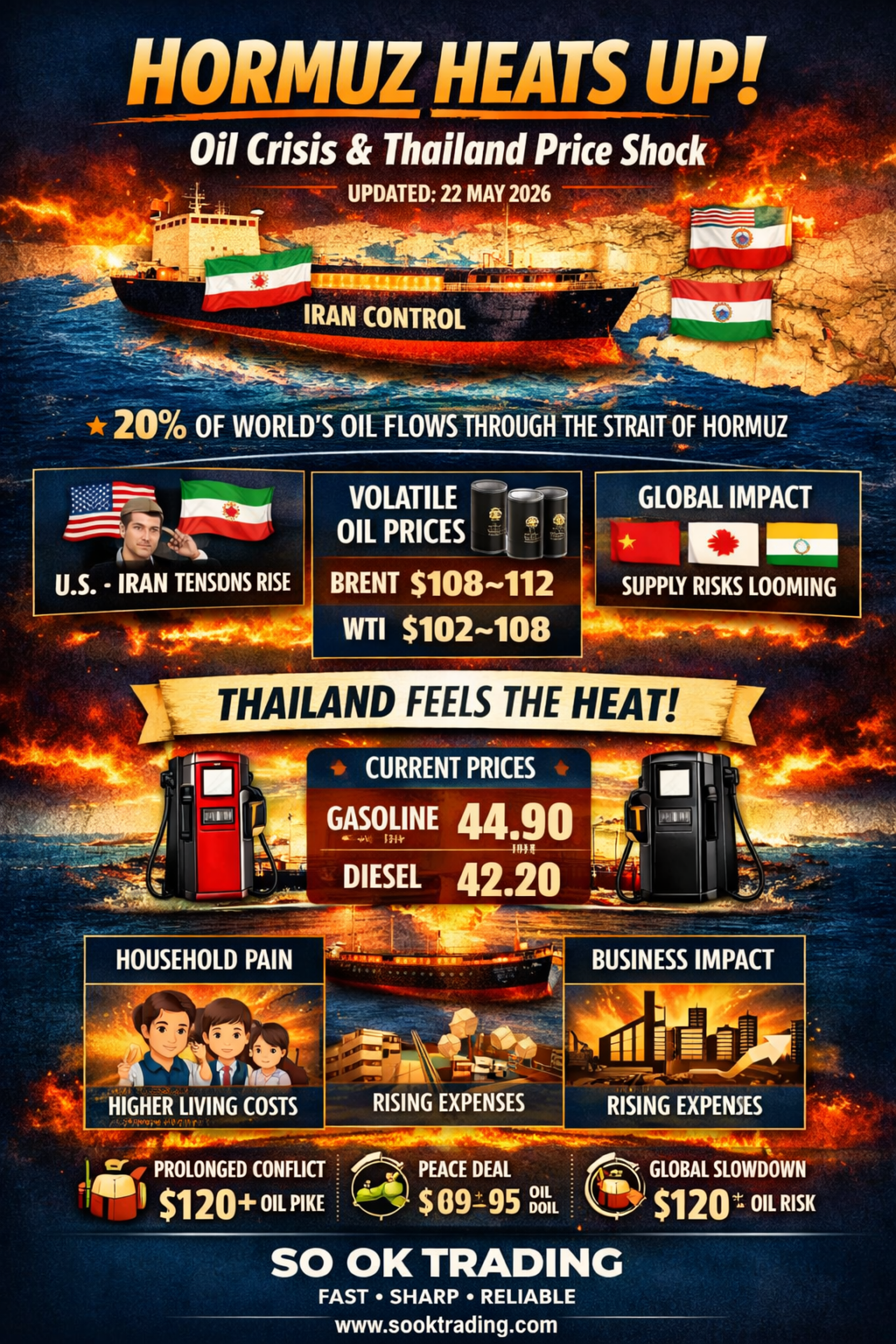
The Strait of Hormuz is the world’s most strategic oil route — over 20% of global crude supply passes through it daily. Controlled by Iran, this narrow passage is the chokepoint of global energy. Even minor instability can send oil prices soaring worldwide.
Latest Situation – 22 MAY 2026
Political and military tensions remain high, though signs of peace talks between the U.S. and Iran have emerged. Naval patrols have intensified, raising risks for oil shipments. Major importers — China, Japan, and India — are securing backup energy supplies to hedge against disruption.
Economic and Market Impact
Global oil prices remain volatile:
Brent: $108–112 per barrel
WTI: $102–108 per barrel
Import-dependent nations face rising costs, while global financial and commodity markets adjust to persistent uncertainty.
Oil Prices in Thailand
As of 19 May 2026:
Gasoline: 44.90 THB/L (+0.85)
Diesel: 42.20 THB/L (+0.75)
Next week (25–29 May): Gasoline may rise another 0.30–0.50 THB/L, while diesel is expected to remain stable thanks to the Fuel Fund subsidy.
War Outlook and Price Scenarios
The U.S.–Iran conflict remains unresolved. If peace talks fail, oil prices could surge to $120–130 per barrel. If negotiations succeed, prices may ease below $90 per barrel.
Scenario Forecasts:
Prolonged Conflict: Brent $115–130 → Thai gasoline >46 THB/L → soaring costs and inflation.
Peace Progress: Brent $85–95 → Thai gasoline <43 THB/L → lower costs and restored confidence.
Conflict + Global Slowdown: High prices but weak demand → risk of stagflation.
Strategic Takeaways for Businesses
Companies should lock in fuel costs early and explore alternative energy sources such as LNG and renewables. Exporters with secure routes will gain a competitive edge. Above all, maintaining supply chain stability is now critical for every industry reliant on oil.
⚙️ Summary: The Strait of Hormuz remains the world’s “hot zone.” Every movement here ripples through global oil prices and economic stability. Proactive strategies and strong supply chain communication are key to staying resilient in this volatile market.
SO OK TRADING — Your Trusted Business Partner FAST • SHARP • RELIABLE www.sooktrading.com Facebook: SO OK TRADING