แชร์

“สมรภูมิแห่งโลหะเดือด! Non‑Ferrous Metals มิถุนายน 2026 :จับตาสัญญาณฟื้นตัวหลังพายุราคาพฤษภาคม – ทองแดง‑อะลูมิเนียมกำลังสร้างฐานใหม่แห่งปี 2026”
อัพเดทล่าสุด: 7 มิ.ย. 2026
6437 ผู้เข้าชม

ตลาดโลหะนอกกลุ่มเหล็ก (Non-Ferrous Metals) เดือนมิถุนายน 2026 : บทความโดย SO OK TRADING : 7 JUNE 2026 

---------------------

ตลาดโลหะนอกกลุ่มเหล็ก (LME) เดือนมิถุนายน 2026 กำลังเป็น “สมรภูมิแห่งความผันผวน” ที่สะท้อนทั้งแรงกดดันทางเศรษฐกิจมหภาคและปัจจัยภูมิรัฐศาสตร์ ราคาทองแดงและอะลูมิเนียมที่เคยพุ่งทะยานสูงสุดในรอบหลายปี กลับปรับฐานร่วงแรงช่วงปลายเดือนพฤษภาคม ก่อนจะเริ่มสร้างฐานใหม่ในต้นเดือนมิถุนายน ขณะที่โลหะอื่น ๆ อย่างตะกั่ว ดีบุก นิกเกิล และสังกะสีก็มีทิศทางเฉพาะตัวที่น่าจับตา

---------------------
 
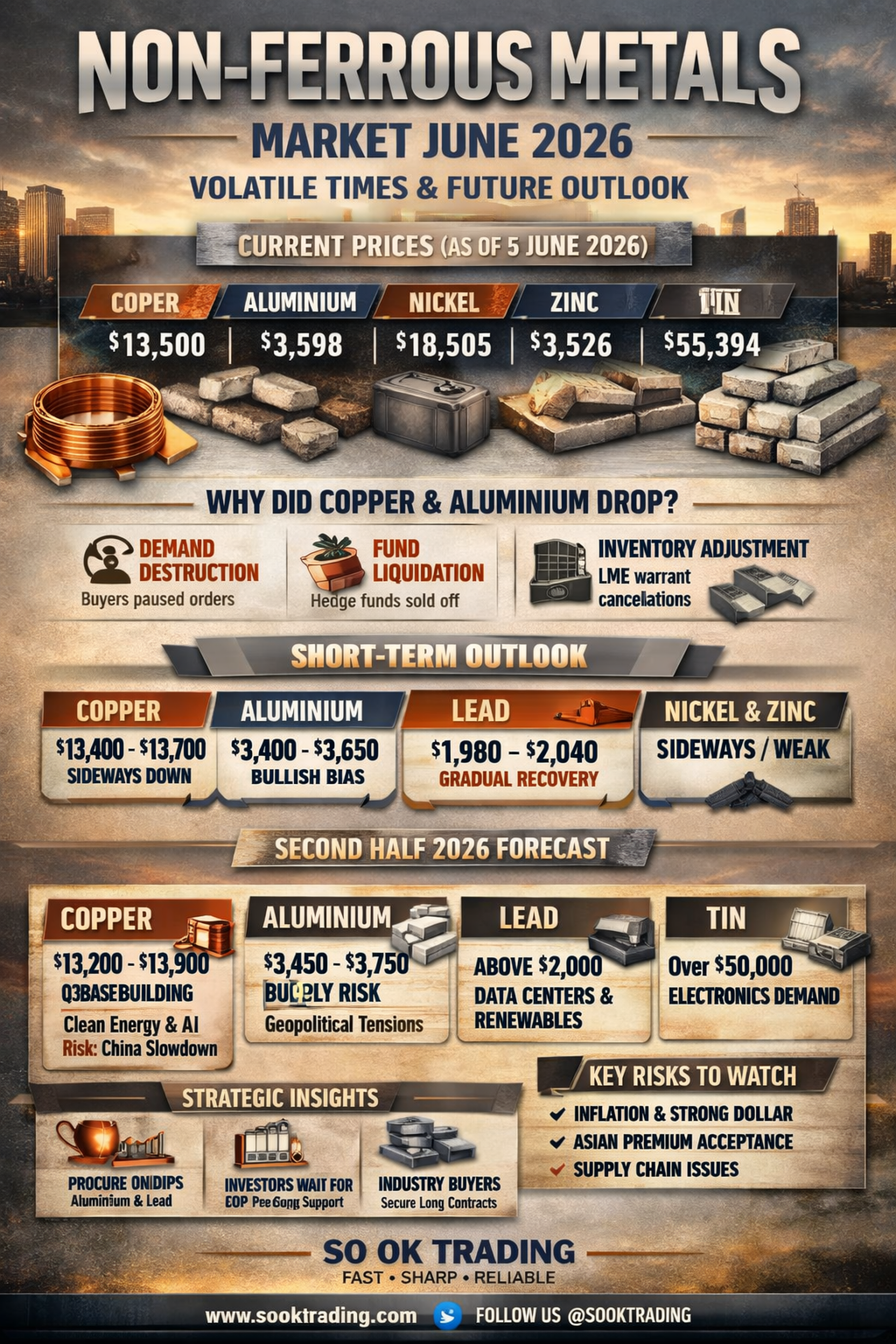
ภาพรวมราคาล่าสุด (5 มิ.ย. 2026)

Copper (ทองแดง): $13,500 ต่อตัน

Aluminium (อะลูมิเนียม): $3,598 ต่อตัน

Nickel (นิกเกิล): $18,505 ต่อตัน

Zinc (สังกะสี): $3,526 ต่อตัน

Tin (ดีบุก): $55,394 ต่อตัน

Lead (ตะกั่ว): $2,006 ต่อตัน

--------------------

“Copper & Aluminium: ภาพรวมตลาดยังเกิดภาวะ Backwardation… แสดงถึงความต้องการใช้สินค้าในตลาดส่งมอบทันทีที่ยังคงตึงตัว”
 
ทำไมทองแดงและอะลูมิเนียมถึงร่วงแรง?

Demand Destruction: ราคาทองแดงแตะเกือบ $14,000 ทำให้ผู้ซื้อจริงชะลอการสั่งซื้อ

Funds Long Liquidation: กองทุนเก็งกำไรเทขายล็อกกำไรเมื่อเศรษฐกิจจีนชะลอตัว

Inventory Management: การยกเลิกใบสำคัญรับสินค้าในคลัง LME สะท้อนการปรับสมดุลซัพพลาย

ผลลัพธ์คือการ “ปรับฐานเพื่อลดความร้อนแรง” มากกว่าจะเป็นขาลงถาวร

--------------------
 
แนวโน้มสัปดาห์ 8–12 มิ.ย. 2026 : ราคา NON FERROUS

Copper: Sideways Down ในกรอบ $13,400 – $13,700

Aluminium: Bullish Bias / High Volatility $3,400 – $3,650

Lead: Gradual Recovery $1,980 – $2,040

Nickel & Zinc: Sideways to Weak or stable

--------------------
 
ประเมินสถานการณ์ในอนาคต (ครึ่งหลังปี 2026) - NON FERROUS PRODUCT

Copper (ทองแดง): คาดว่าจะสร้างฐานในกรอบ $13,200 – $13,900 ในไตรมาส 3 ก่อนมีโอกาสทดสอบแนวต้านสำคัญปลายปี

แรงหนุน: ความต้องการจากอุตสาหกรรมพลังงานสะอาด, AI และ Data Center
ความเสี่ยง: หากเศรษฐกิจจีนชะลอตัว อาจเห็นราคาลงไปทดสอบ $12,800 ชั่วคราว


Aluminium (อะลูมิเนียม): คาดว่าจะยืนระดับสูงต่อเนื่องในกรอบ $3,450 – $3,750

แรงหนุน: ปัญหาภูมิรัฐศาสตร์, ช่องแคบฮอร์มุซ, มาตรการควบคุมการส่งออกแร่โบไซต์จากกินี
ความเสี่ยง: หากสถานการณ์ตะวันออกกลางคลี่คลายเร็วกว่าคาด อาจเกิดแรงเทขายทางเทคนิค


Lead (ตะกั่ว): มีโอกาสฟื้นตัวจากแรงหนุนใหม่ในตลาดแบตเตอรี่ตะกั่ว-กรดสำหรับ Data Center และระบบพลังงานสะอาด

คาดว่าราคาจะพยายามยืนเหนือ $2,000 อย่างมั่นคง


Tin (ดีบุก): ราคายังคงสูงและมีแนวโน้มทรงตัวเหนือ $50,000 จากความต้องการในอุตสาหกรรมอิเล็กทรอนิกส์
 
⚠️ ปัจจัยเสี่ยงที่ต้องจับตา
CPI และเงินเฟ้อสหรัฐฯ/ยุโรป → หากดอลลาร์แข็งค่า ราคาจะถูกกดดันทันที
Physical Premium ในเอเชีย → ผู้ซื้อจีนและอาเซียนจะยอมรับราคาปัจจุบันหรือไม่
ซัพพลายจากเหมืองและเส้นทางเดินเรือ → ความไม่แน่นอนยังคงเป็นตัวแปรสำคัญ
 
--------------------

ฝ่ายจัดซื้อ: Aluminium และ Lead ควรทยอยปิดความเสี่ยงหรือจองสิทธิ์ราคาเมื่อมีจังหวะอ่อนตัว
นักลงทุนระยะสั้น: Copper ควรรอสร้างฐานราคาที่มั่นคงก่อนเข้าซื้อใหม่

ธุรกิจอุตสาหกรรม: ใช้โอกาสราคาร่วงเข้าซื้อสัญญาระยะยาว และจับตาตลาด Scrap ที่ราคาลดลงตาม

--------------------
 
สรุปเชิงการตลาด - NON FERROUS 

ตลาดโลหะนอกกลุ่มเหล็กกำลังเข้าสู่ “โซนสร้างฐานใหม่” หลังการปรับฐานแรงในเดือนพฤษภาคม โดยมีโอกาสฟื้นตัวในครึ่งหลังปี 2026 หากปัจจัยเศรษฐกิจโลกเอื้ออำนวย สำหรับผู้ประกอบการและนักลงทุน การวางแผนเชิงรุกและการบริหารความเสี่ยงอย่างชาญฉลาด จะเป็นกุญแจสำคัญในการคว้าโอกาสจากความผันผวนที่เกิดขึ้น

--------------------

SO OK TRADING : พันธมิตรทางธุรกิจของคุณ

SO OK TRADING : FAST SHARP RELIABLE 

VISIT US AT : WWW.SOOKTRADING.COM

FACEBOOK : SO OK TRADING

-------------------

บทความที่เกี่ยวข้อง
“น้ำมันโลกดิ่งแรง WTI หลุด 75 – จุดเปลี่ยนเศรษฐกิจโลก ไทยได้อานิสงส์เต็มๆ”
“น้ำมันโลกดิ่งแรง–เศรษฐกิจทั่วโลกสะเทือน ไทยได้อานิสงส์เต็มๆ” ราคาน้ำมันดิบโลกดิ่งลงแตะระดับ 75 ดอลลาร์ต่อบาร์เรล หลังสหรัฐฯ–อิหร่านบรรลุข้อตกลงหยุดยิงและเปิดช่องแคบฮอร์มุซอีกครั้ง ส่งผลให้ตลาดคลายความกังวลเรื่องอุปทานขาดแคลน และเกิดแรงเทขายทั่วโลก ⛽ WTI ปิดที่ 74.82 ดอลลาร์ / Brent 77.90 ดอลลาร์ / Dubai 81.29 ดอลลาร์ ภาวะ Oversupply กลับมาอีกครั้ง กดดันราคาน้ำมันทั่วโลกให้ร่วงแรง
23 มิ.ย. 2026
ADC12: โลหะที่หล่ออนาคตสู่ปี 2040 — กระดูกสันหลังแห่ง EV และเศรษฐกิจหมุนเวียน เมื่อความคุ้มค่าและความยั่งยืนมาบรรจบกัน
แนวโน้มการใช้งาน ADC12 กำลังเปลี่ยนแปลงอย่างมีนัยสำคัญ จากวัสดุหล่อที่เน้นต้นทุนต่ำ สู่บทบาทเชิงกลยุทธ์ในอุตสาหกรรมที่ขับเคลื่อนด้วยความยั่งยืนและเทคโนโลยีขั้นสูง โดยเฉพาะในกลุ่มยานยนต์ไฟฟ้า (EV), พลังงานหมุนเวียน และโครงสร้างอิเล็กทรอนิกส์อัจฉริยะ อินโฟกราฟิกนี้สรุปภาพรวมของ ADC12 ทั้งในด้านคุณสมบัติเด่น การใช้งานในอุตสาหกรรมหลักทั่วโลก ราคาตลาด และเทรนด์การพัฒนาในอนาคต ตั้งแต่การหล่อแบบสูญญากาศ (Vacuum Casting) ไปจนถึงการผลิตแบบ Zero-defect ด้วย AI หากคุณเป็นผู้ผลิตหรือผู้จัดซื้อที่กำลังมองหาวัสดุหล่ออลูมิเนียมคุณภาพสูงที่ตอบโจทย์ทั้งด้านต้นทุนและความยั่งยืน บริษัท SO OK TRADING พร้อมเป็นพันธมิตรที่คุณไว้วางใจได้ ด้วยความเชี่ยวชาญด้านโลหะ อโลหะ สินค้าเกษตร และพลังงานสีเขียว พร้อมบริการที่โปร่งใส ติดต่อเราได้ที่ www.sooktrading.com หรือส่งอีเมลมาที่ sooktrading@outlook.com เพื่อสอบถามข้อมูลหรือขอใบเสนอราคา ADC12 ได้ทันทีครับ
25 ก.พ. 2026
ALUMINUM PRICE TREND 2026
An analysis of the aluminum market in 2026 indicates a likely continued market deficit and upward price pressure, driven by constrained supply and resilient demand from green energy sectors. However, significant volatility is expected due to policy uncertainties and the potential for new Indonesian supply to eventually balance the market. Key Drivers and Projections for 2026 Supply Side Analysis Capacity Constraints: China's primary aluminum output is approaching its self-imposed 45 million-tonne capacity cap, limiting global supply growth. Power Challenges: Smelters outside of China face intense competition for power from energy-intensive sectors like AI data centers, which are willing to pay higher prices for long-term contracts. This has kept significant capacity offline in Europe and the US. Production Disruptions: Outages and potential shutdowns at existing smelters in Iceland and Mozambique further tighten the market. Scrap Supply Pressure: The EU's planned implementation of the Carbon Border Adjustment Mechanism (CBAM) and potential scrap export tariffs in spring 2026 are expected to impact global scrap flows, creating regional shortages and price volatility. New Capacity: Indonesia is a key source of new supply, with several projects in the pipeline. However, analysts suggest the pace of the ramp-up may be slower than expected due to infrastructure and policy challenges, meaning it is unlikely to fully offset near-term tightness. Demand Side Analysis Green Transition Demand: Demand from "green" sectors such as solar panels, new energy vehicles, and energy transition infrastructure remains strong, providing fundamental support for the market. Substitution Effect: Aluminum's wide price discount relative to copper has encouraged substitution in electrical applications, acting as a tailwind for demand and prices. Construction and Automotive: The construction and automotive industries continue to be major consumers, with growing demand for lightweight, low-carbon aluminum products. Price Forecasts and Volatility The market is expected to remain in a deficit in 2026, with estimates ranging from 200,000 to 600,000 tonnes. This structural tightness is leading most analysts to forecast sustained or rising prices. Bullish Views: Analysts at Bank of America project prices of $3,000/tonne as early as 2026. J.P. Morgan also expects prices to approach $3,000/tonne in Q1 2026. ING forecasts an average price of $2,900/tonne for the year. Bearish/Conservative Views: Goldman Sachs is an outlier, forecasting prices to decline to $2,350/tonne by Q4 2026, anticipating a market surplus later in the year. SMM forecasts a "high first, then lower" pattern, with prices finding equilibrium in the $2,700–$2,800/tonne range by year-end. Premiums: Regional premiums, particularly the US Midwest premium, are expected to remain high and volatile due to tariffs and regional supply dynamics, creating a disconnect from the LME benchmark price. In essence, 2026 is projected to be a year of high volatility where participants need to focus on scenario readiness rather than relying on a single price forecast, as geopolitical and energy policies significantly influence regional supply and costs
31 ธ.ค. 2025
This website uses cookies for best user experience, to find out more you can go to our นโยบายความเป็นส่วนตัว และ นโยบายคุกกี้
Powered By MakeWebEasy Logo MakeWebEasy