最終更新: 20 10月 2026
162 閲覧数
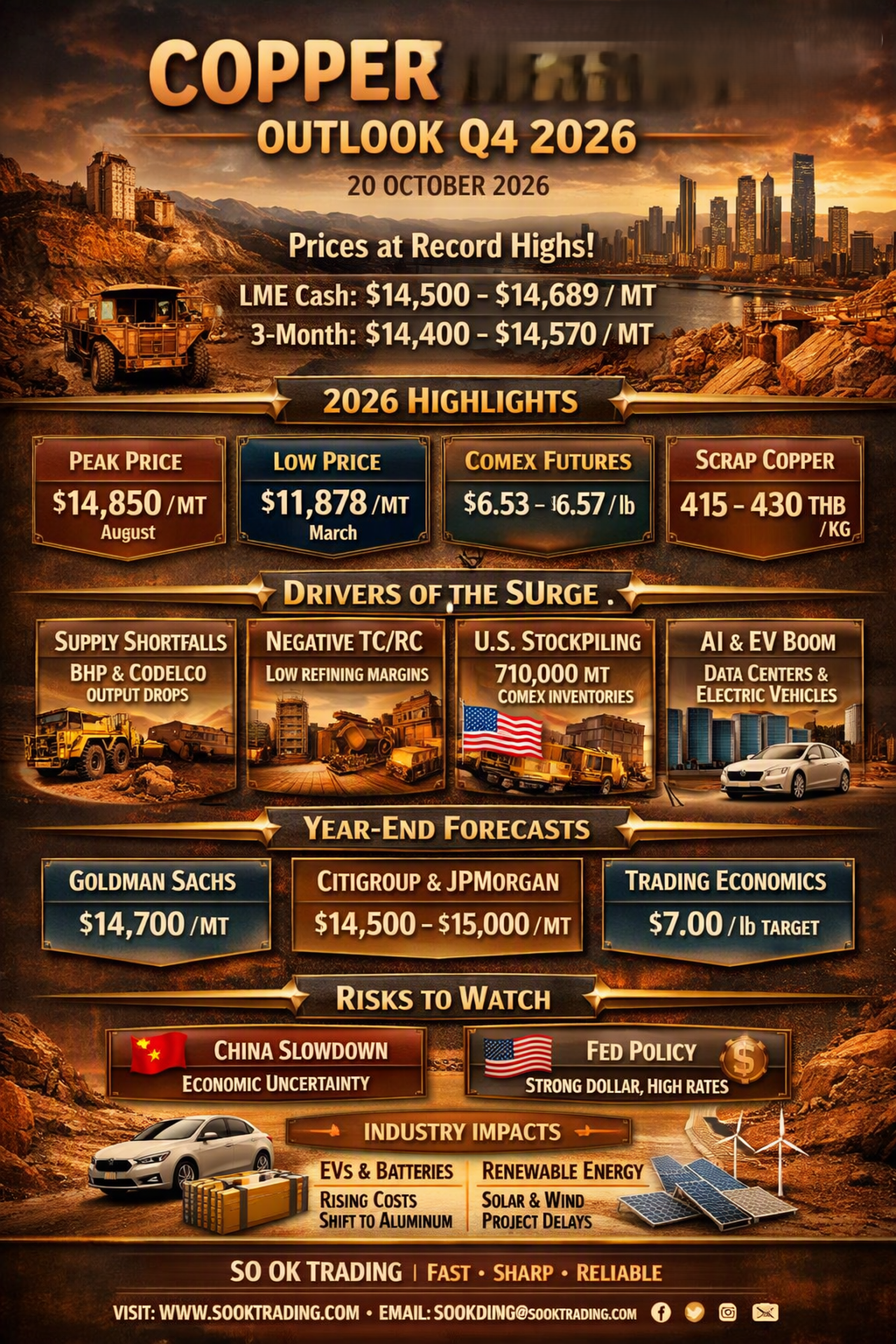
銅価格の世界動向 Q4/2026 : 2026年10月20日 : SO OK TRADING
銅価格は史上最高水準へ! 2026年、世界の銅市場は記録的な高値を更新し続けています。 ロンドン金属取引所(LME)では、キャッシュ決済価格が 14,500〜14,689ドル/トン、3か月先物が 14,400〜14,570ドル/トン と、今年の最高レンジを維持。これは供給不足と、クリーンエネルギー・電気自動車(EV)・スマートインフラ産業からの旺盛な需要を反映しています。
2026年の動向
最高値:14,850ドル/トン(8月)
最安値:11,878ドル/トン(3月)
COMEX先物:6.53〜6.57ドル/ポンド(9月の最高値6.89ドルから小幅下落)
タイ国内スクラップ銅価格:415〜430バーツ/キログラム
なぜ銅価格は高騰しているのか?
供給不足:BHPやCodelcoなど大手鉱山の生産減少と鉱石品位の低下
製錬費(TC/RC)のマイナス化:コスト高騰により製錬所が減産
米国での在庫積み増し:関税回避のためCOMEX在庫が71万トン超に急増
新たな需要:AIデータセンターやEVが大量の銅を消費(EV1台あたり平均53.2kg)
2026年末の予測
ゴールドマン・サックス:14,700ドル/トン
シティグループ & JPモルガン:14,500〜15,000ドル/トン
トレーディング・エコノミクス:6.65ドル/ポンドのサポートライン、突破すれば7.00ドル/ポンドへ
⚠️ 注目すべきリスク
中国経済:高値水準での買い控え
米国FRBの金融政策:高金利維持によるドル高が商品価格を一時的に圧迫
産業への影響
EV & バッテリー:銅コスト上昇によりアルミニウム代替の研究加速
再生可能エネルギー & 電力網:ソーラー・風力発電プロジェクトがコスト増で遅延
✨ 2026年の銅市場は「高水準での変動」 年末にかけて再び上昇する可能性が高く、14,000ドル/トン付近への調整は買い増しの好機。供給不足とAI・EV・クリーンエネルギーといったメガトレンドが、銅を今後10年で最も重要な戦略資源へと押し上げています。
SO OK TRADING あなたのビジネスパートナー FAST | SHARP | RELIABLE
www.sooktrading.com sooktrading@sooktrading.com Facebook: SOOKTRADING

関連コンテンツ

An analysis of the aluminum market in 2026 indicates a likely continued market deficit and upward price pressure, driven by constrained supply and resilient demand from green energy sectors. However, significant volatility is expected due to policy uncertainties and the potential for new Indonesian supply to eventually balance the market.
Key Drivers and Projections for 2026
Supply Side Analysis
Capacity Constraints: China's primary aluminum output is approaching its self-imposed 45 million-tonne capacity cap, limiting global supply growth.
Power Challenges: Smelters outside of China face intense competition for power from energy-intensive sectors like AI data centers, which are willing to pay higher prices for long-term contracts. This has kept significant capacity offline in Europe and the US.
Production Disruptions: Outages and potential shutdowns at existing smelters in Iceland and Mozambique further tighten the market.
Scrap Supply Pressure: The EU's planned implementation of the Carbon Border Adjustment Mechanism (CBAM) and potential scrap export tariffs in spring 2026 are expected to impact global scrap flows, creating regional shortages and price volatility.
New Capacity: Indonesia is a key source of new supply, with several projects in the pipeline. However, analysts suggest the pace of the ramp-up may be slower than expected due to infrastructure and policy challenges, meaning it is unlikely to fully offset near-term tightness.
Demand Side Analysis
Green Transition Demand: Demand from "green" sectors such as solar panels, new energy vehicles, and energy transition infrastructure remains strong, providing fundamental support for the market.
Substitution Effect: Aluminum's wide price discount relative to copper has encouraged substitution in electrical applications, acting as a tailwind for demand and prices.
Construction and Automotive: The construction and automotive industries continue to be major consumers, with growing demand for lightweight, low-carbon aluminum products.
Price Forecasts and Volatility
The market is expected to remain in a deficit in 2026, with estimates ranging from 200,000 to 600,000 tonnes. This structural tightness is leading most analysts to forecast sustained or rising prices.
Bullish Views: Analysts at Bank of America project prices of $3,000/tonne as early as 2026. J.P. Morgan also expects prices to approach $3,000/tonne in Q1 2026. ING forecasts an average price of $2,900/tonne for the year.
Bearish/Conservative Views: Goldman Sachs is an outlier, forecasting prices to decline to $2,350/tonne by Q4 2026, anticipating a market surplus later in the year. SMM forecasts a "high first, then lower" pattern, with prices finding equilibrium in the $2,700–$2,800/tonne range by year-end.
Premiums: Regional premiums, particularly the US Midwest premium, are expected to remain high and volatile due to tariffs and regional supply dynamics, creating a disconnect from the LME benchmark price.
In essence, 2026 is projected to be a year of high volatility where participants need to focus on scenario readiness rather than relying on a single price forecast, as geopolitical and energy policies significantly influence regional supply and costs
31 12月 2025
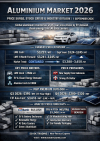
世界アルミニウム市場 2026年:価格急騰・在庫危機・産業の未来
1 9月 2026
