好的,这里是您提供的标题的中文翻译: 炭黑:驱动性能,推动可持续发展 从烟尘到解决方案:炭黑的未来
最后更新: 4 2月 2026
2950 浏览量
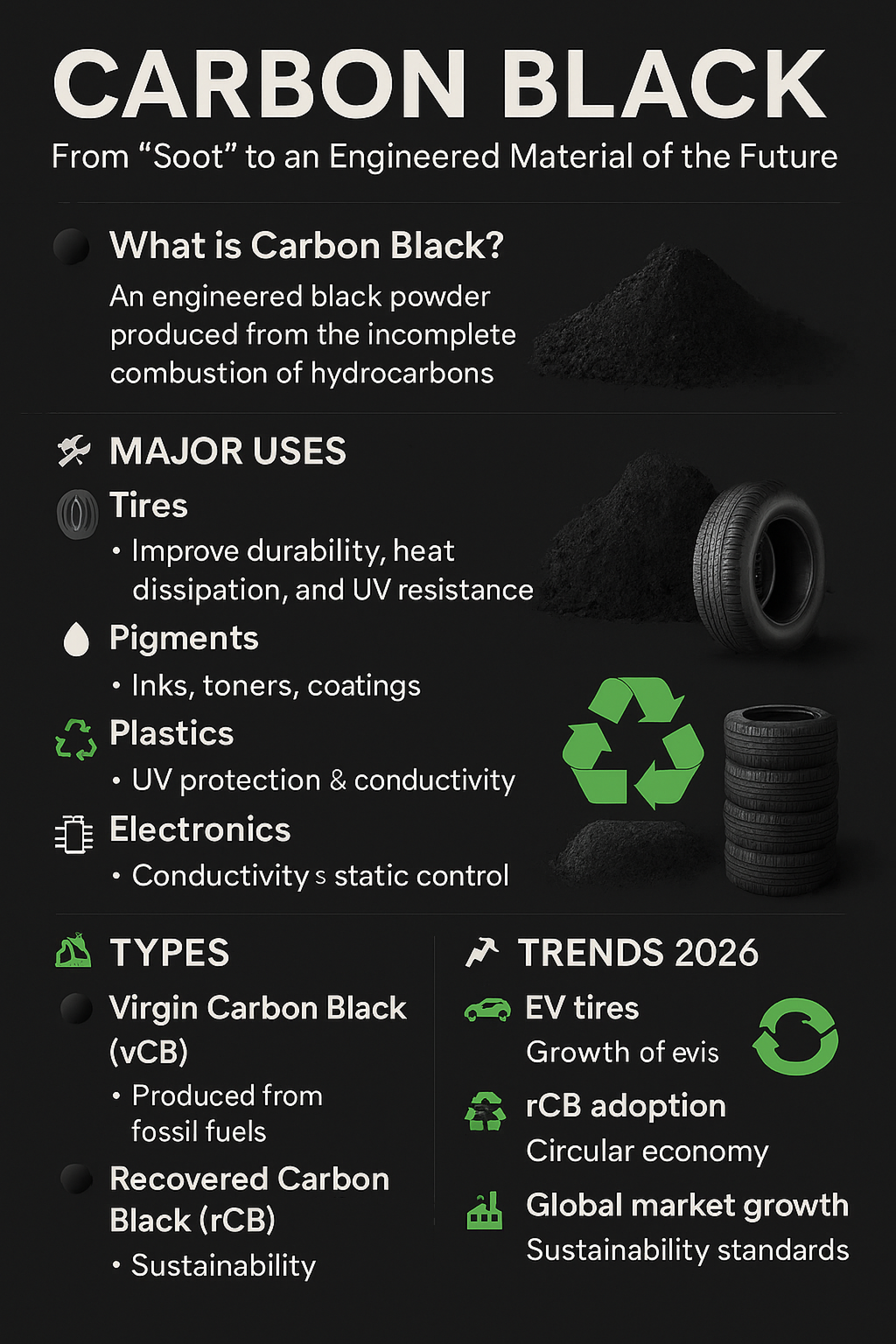
炭黑:从“烟尘”到未来的工程材料
炭黑(Carbon Black)不仅仅是不完全燃烧产生的黑色粉末,而是一种在全球产业中发挥重要作用的工程材料。它能提升产品的强度、耐久性,并改善整体性能。
主要用途
轮胎产业(70–90%)
增强强度和耐磨性
帮助散热,降低胎面温度
防止紫外线导致橡胶老化
颜料(Pigment)
用于油墨、碳粉和涂料,呈现深黑色并保持持久性
塑料产业
在农用管道和薄膜中防止紫外线破坏
提供导电性和防静电功能
⚖️ 注意事项
健康:大量吸入炭黑粉末可能刺激呼吸系统
环境:若不加控制排放,会成为“黑碳”,加剧全球变暖
两种原料:Virgin vs Recovered
原生炭黑 (vCB)
由化石燃料燃烧制成
质量高、颜色均匀,但二氧化碳排放量大
再生炭黑 (rCB)
通过热解工艺从废旧轮胎中提取
减少废弃物、降低化石燃料使用,并减少79–84%的温室气体排放
受 ASTM D8178 标准管控
常以“混合”方式使用,掺入10–30%,以降低成本并提升可持续性
泰国市场趋势(2026年)
汽车与轮胎产业增长
预计年均增长率为6.25%
EEC地区工厂扩张与电动车轮胎需求增加
向 rCB 转型
符合循环经济(BCG模式)
降低成本并创造碳信用机会
可持续与出口标准
工厂开始采用 ISCC PLUS 认证
通过余热回收减少温室气体排放
全球市场趋势(2026年)
市场规模:约259.5–306.5亿美元
rCB市场:约7.58亿美元
亚太地区:占全球收入的60%以上
关键洞察:未来需求不仅在于“数量”,更在于“功能质量”——如更好的导电性、更高的纯度,以及更环保的来源。
✨ SO OK TRADING:泰国炭黑与出口的全球合作伙伴
如果您正在寻找兼顾质量与可持续性的原料供应商,SO OK TRADING 是理想的合作伙伴。我们致力于将泰国的优质产品——水果、稻米、金属与清洁能源——推向全球市场。
SO OK TRADING 不仅让您的产品脱颖而出,更能建立信任与可持续性,为 Net Zero 时代提供真正的解决方案。
炭黑(Carbon Black)不仅仅是不完全燃烧产生的黑色粉末,而是一种在全球产业中发挥重要作用的工程材料。它能提升产品的强度、耐久性,并改善整体性能。
主要用途
轮胎产业(70–90%)
增强强度和耐磨性
帮助散热,降低胎面温度
防止紫外线导致橡胶老化
颜料(Pigment)
用于油墨、碳粉和涂料,呈现深黑色并保持持久性
塑料产业
在农用管道和薄膜中防止紫外线破坏
提供导电性和防静电功能
⚖️ 注意事项
健康:大量吸入炭黑粉末可能刺激呼吸系统
环境:若不加控制排放,会成为“黑碳”,加剧全球变暖
两种原料:Virgin vs Recovered
原生炭黑 (vCB)
由化石燃料燃烧制成
质量高、颜色均匀,但二氧化碳排放量大
再生炭黑 (rCB)
通过热解工艺从废旧轮胎中提取
减少废弃物、降低化石燃料使用,并减少79–84%的温室气体排放
受 ASTM D8178 标准管控
常以“混合”方式使用,掺入10–30%,以降低成本并提升可持续性
泰国市场趋势(2026年)
汽车与轮胎产业增长
预计年均增长率为6.25%
EEC地区工厂扩张与电动车轮胎需求增加
向 rCB 转型
符合循环经济(BCG模式)
降低成本并创造碳信用机会
可持续与出口标准
工厂开始采用 ISCC PLUS 认证
通过余热回收减少温室气体排放
全球市场趋势(2026年)
市场规模:约259.5–306.5亿美元
rCB市场:约7.58亿美元
亚太地区:占全球收入的60%以上
关键洞察:未来需求不仅在于“数量”,更在于“功能质量”——如更好的导电性、更高的纯度,以及更环保的来源。
✨ SO OK TRADING:泰国炭黑与出口的全球合作伙伴
如果您正在寻找兼顾质量与可持续性的原料供应商,SO OK TRADING 是理想的合作伙伴。我们致力于将泰国的优质产品——水果、稻米、金属与清洁能源——推向全球市场。
SO OK TRADING 不仅让您的产品脱颖而出,更能建立信任与可持续性,为 Net Zero 时代提供真正的解决方案。


相关文章

美国生产者物价指数(PPI)2026年8月
全球市场的重要转折点,投资者必须密切关注!
美国PPI同比上涨 5.4%,高于市场预期,显示通胀压力依然强劲。能源价格飙升,WTI原油突破 100美元,布伦特原油超过 105美元,生产成本急剧上升。这一变化对黄金、非铁金属、汇率以及全球股市产生了广泛影响。
美国股指期货和黄金价格纷纷下跌,市场担心美联储(Fed)将在 9月15–16日会议 上再次加息。
今晚(2026年9月11日),全球市场正等待消费者物价指数(CPI)的公布,这将成为决定短期利率政策和市场走向的关键时刻。
11 9月 2026
