黄金价格飙升!目标锁定5,000美元/盎司」 「2026年第一季度:黄金冲向新高点」 By SO OK TRADING
最后更新: 19 1月 2026
3966 浏览量
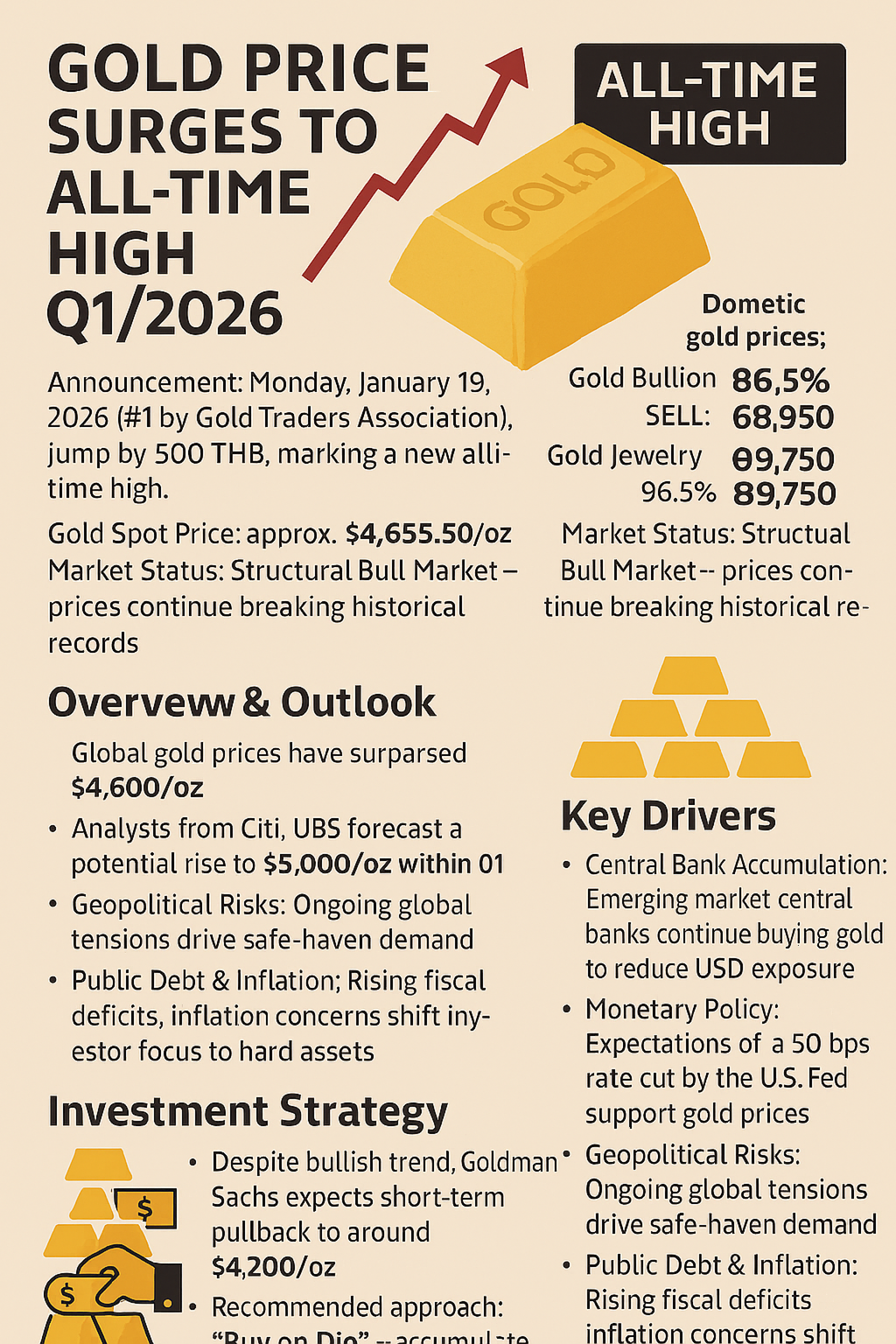
2026年第一季度 黄金价格创历史新高
2026年1月19日,泰国国内黄金价格单日上涨 500泰铢,刷新历史纪录。黄金条(96.5%)卖出价 68,950泰铢,黄金饰品突破 69,750泰铢。与此同时,国际金价(Gold Spot)突破 4,655美元/盎司,上午10:15更升至 4,700美元/盎司,标志着全球市场进入 结构性牛市(Structural Bull Market)。
市场概况与趋势
国际金价突破4,600美元,目前约4,670美元。Citi与UBS预测第一季度有望触及 5,000美元/盎司。
泰国黄金价格逼近 70,000泰铢,部分机构预计可能升至 72,000泰铢。
主要推动因素
全球央行持续购金,降低对美元依赖
美国联邦储备局(Fed)预计降息50个基点,美元走弱利好黄金
地缘政治风险与经济不确定性(如格陵兰争端、欧洲加征10%关税)推动避险需求
财政赤字与通胀压力加剧,投资者转向“硬资产”
投资策略与预测
Goldman Sachs认为短期可能在 4,200美元附近调整,但整体趋势依然强劲。多数分析师建议 “逢低买入” (Buy on Dip),年底目标在 4,900–5,000美元,Jefferies更预测最高可达 6,600美元。
SO OK TRADING 预计:
泰国黄金条在第一季度可能突破 73,000泰铢,年底或达 75,000泰铢(取决于汇率走势)。
国际金价在第一季度有望触及 5,000美元/盎司,年底可能升至 5,200–5,300美元/盎司。
SO OK TRADING 认为,这一轮黄金上涨是泰国企业与投资者的战略机遇。通过合理的风险管理与投资策略,您将能够在全球舞台上稳健前行。即使市场波动,机会依然闪耀。
2026年1月19日,泰国国内黄金价格单日上涨 500泰铢,刷新历史纪录。黄金条(96.5%)卖出价 68,950泰铢,黄金饰品突破 69,750泰铢。与此同时,国际金价(Gold Spot)突破 4,655美元/盎司,上午10:15更升至 4,700美元/盎司,标志着全球市场进入 结构性牛市(Structural Bull Market)。
市场概况与趋势
国际金价突破4,600美元,目前约4,670美元。Citi与UBS预测第一季度有望触及 5,000美元/盎司。
泰国黄金价格逼近 70,000泰铢,部分机构预计可能升至 72,000泰铢。
主要推动因素
全球央行持续购金,降低对美元依赖
美国联邦储备局(Fed)预计降息50个基点,美元走弱利好黄金
地缘政治风险与经济不确定性(如格陵兰争端、欧洲加征10%关税)推动避险需求
财政赤字与通胀压力加剧,投资者转向“硬资产”
投资策略与预测
Goldman Sachs认为短期可能在 4,200美元附近调整,但整体趋势依然强劲。多数分析师建议 “逢低买入” (Buy on Dip),年底目标在 4,900–5,000美元,Jefferies更预测最高可达 6,600美元。
SO OK TRADING 预计:
泰国黄金条在第一季度可能突破 73,000泰铢,年底或达 75,000泰铢(取决于汇率走势)。
国际金价在第一季度有望触及 5,000美元/盎司,年底可能升至 5,200–5,300美元/盎司。
SO OK TRADING 认为,这一轮黄金上涨是泰国企业与投资者的战略机遇。通过合理的风险管理与投资策略,您将能够在全球舞台上稳健前行。即使市场波动,机会依然闪耀。


相关文章


在当今世界,金属不仅仅是“原材料”,更是“经济与地缘政治的风向标”。
其中,铝 正逐渐成为清洁能源与数字科技时代的战略性金属,备受全球关注。
溢价(Premium) 的波动,不只是 LME(伦敦金属交易所)上的数字,而是反映了全球产业的真实成本信号——从亚洲的冶炼厂到美国的生产线。
在本文中,SO OK TRADING 将带您深入解析 2026 年第四季度全球铝市场的趋势,重点分析 日本主要港口溢价 (MJP) 与 美国中西部溢价 (MWP),并剖析推动与压制因素,这些力量正在重塑全球采购者的成本结构。
我们将提供战略性视角,帮助您 “抢先洞察市场走势”,并 “精准管理成本”。在这个时代,每一吨金属的意义都远远超越了价格本身。
23 9月 2026

he Thai baht in Q1 2026 is expected to strengthen against the US dollar, driven primarily by a weaker dollar globally, a seasonal tourism boost, and expectations of US Federal Reserve rate cuts. This strength is occurring despite a weak domestic economic outlook and the Bank of Thailand's (BoT) likely continued easing of its policy rate.
Exchange Rate Drivers and Forecast
External Factors: The primary driver for the strengthening baht is external, mainly the broad weakness of the US dollar as global markets price in expected Fed rate cuts. The baht is also correlated with global gold prices, which have been climbing.
Tourism High Season: The period extending into Q1 2026 is the high season for tourism, which typically brings in foreign currency and supports the baht's value.
Policy Divergence: The BoT is expected to continue its easing cycle, potentially cutting the policy rate further to 1.00% by Q1 2026 to stimulate the sluggish domestic economy. This divergence from a potentially less aggressive US Fed in Q1 could support the baht in the short term, though some analysts warn the currency could weaken later in 2026.
Forecasts: Projections for 2026 generally place the baht in a range of 30.80–33.00 per US dollar. Some models estimate it could trade around 31.06 by the end of Q1. A persistently strong baht below 31 per US$ is seen as a significant risk to the Thai export and tourism sectors.
Key Economic Context
Weak Growth: Thailand's economy is expected to slow down to a 5-year low growth rate of around 1.6-1.8% in 2026, pressured by US tariffs, global trade tensions, and high household debt. The central bank chief expects an improvement in Q1 2026 after a weak second half of 2025.
Political Uncertainty: A general election expected in February 2026 could also introduce volatility, though some historical trends suggest the baht may strengthen following the formation of a new government.
Low Inflation: Headline inflation is projected to remain subdued or even negative, providing the central bank with justification for further rate cuts to stimulate demand.
In summary, Q1 2026 is characterized by a strong and volatile baht driven by external factors, contrasting sharply with a weak domestic economy and accommodative monetary policy.
1 1月 2026
