“全球原油价格突破百美元:地缘政治危机与对石化产业及世界经济的连锁影响” SO OK TRADING | 2026年9月10日
最后更新: 10 9月 2026
1783 浏览量
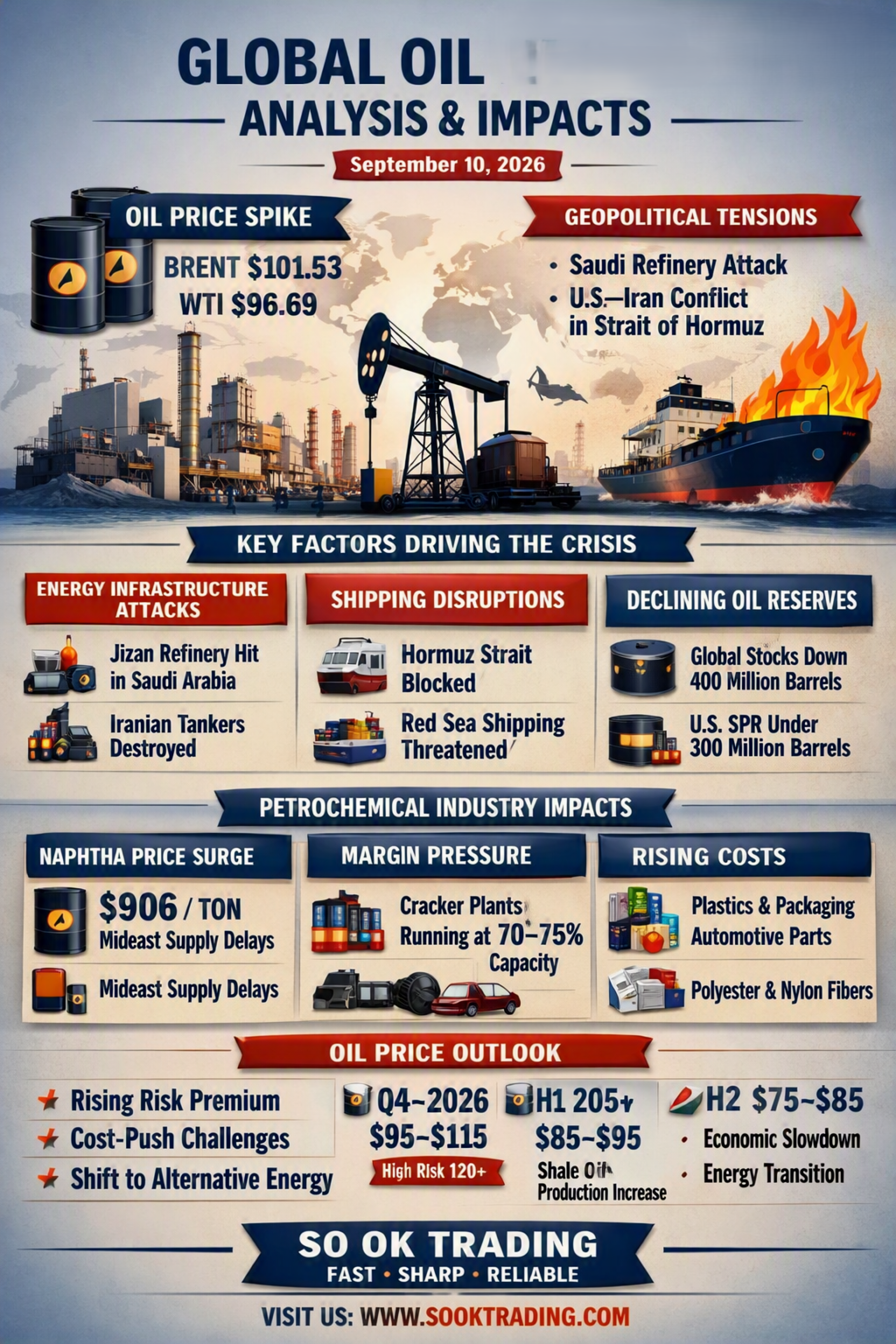
全球原油市场形势与相关产业影响(2026年9月10日)
SO OK TRADING | FAST • SHARP • RELIABLE
引言
全球原油市场正面临近年来最严重的动荡。Brent 原油价格突破心理关口 每桶100美元,WTI 单日上涨超过4%。主要原因是中东地区的地缘政治紧张:沙特阿拉伯 吉赞炼油厂(Jizan Refinery) 遭胡塞武装袭击引发火灾,美国与伊朗在 霍尔木兹海峡 的冲突更使全球能源供应链陷入危机。此局势不仅推高油价,还对全球能源供应链及相关产业造成深远影响。
推动油价上涨的关键因素
能源基础设施遭袭
沙特吉赞炼油厂(40万桶/日)被攻击并起火
美国击沉伊朗油轮5艘
运输瓶颈
霍尔木兹海峡几乎陷入瘫痪
红海航线遭袭,替代运输通道受阻
全球库存下降
年初以来全球原油库存减少4亿桶
美国战略储备(SPR)跌破3亿桶,市场干预能力受限
⚠️ 石化产业与相关产品的影响
石脑油(Naphtha): 价格飙升至906美元/吨,中东供应延迟,亚洲与欧洲工厂争夺原料
利润空间压缩: 原料成本上涨快于产品价格,裂解装置开工率降至70–75%
相关产品连锁反应:
塑料包装:2026年第四季度价格上涨15–20%
汽车零部件与合成橡胶:成本上升
纺织品(涤纶、尼龙):PX短缺与石脑油高价推动价格上涨
泰国股市影响:
不利:SCC、IRPC(高度依赖石脑油)
有利:PTTGC(以乙烷/LPG为主要原料,成本优势明显)
原油价格展望 (Outlook)
2026年第四季度: 95–115美元,最坏情况可能冲至120–130美元
2027年上半年: 页岩油增产与SPR释放,价格回落至85–95美元
2027年下半年: 全球经济放缓与能源转型加速,价格稳定在75–85美元
战略总结
当前原油市场反映出因地缘政治不确定性与库存下降而不断上升的 风险溢价(Risk Premium)。石化产业正面临 成本推动型超级周期(Cost-Push Supercycle),企业必须重新审视生产与原料采购策略。
短期内,企业需应对高成本与利润压缩;中长期来看,原油价格的调整与 可再生能源转型 将决定全球市场的新方向。
SO OK TRADING — 您值得信赖的商业伙伴 访问我们: www.sooktrading.com FACEBOOK: SO OK TRADING

相关文章

he Thai baht in Q1 2026 is expected to strengthen against the US dollar, driven primarily by a weaker dollar globally, a seasonal tourism boost, and expectations of US Federal Reserve rate cuts. This strength is occurring despite a weak domestic economic outlook and the Bank of Thailand's (BoT) likely continued easing of its policy rate.
Exchange Rate Drivers and Forecast
External Factors: The primary driver for the strengthening baht is external, mainly the broad weakness of the US dollar as global markets price in expected Fed rate cuts. The baht is also correlated with global gold prices, which have been climbing.
Tourism High Season: The period extending into Q1 2026 is the high season for tourism, which typically brings in foreign currency and supports the baht's value.
Policy Divergence: The BoT is expected to continue its easing cycle, potentially cutting the policy rate further to 1.00% by Q1 2026 to stimulate the sluggish domestic economy. This divergence from a potentially less aggressive US Fed in Q1 could support the baht in the short term, though some analysts warn the currency could weaken later in 2026.
Forecasts: Projections for 2026 generally place the baht in a range of 30.80–33.00 per US dollar. Some models estimate it could trade around 31.06 by the end of Q1. A persistently strong baht below 31 per US$ is seen as a significant risk to the Thai export and tourism sectors.
Key Economic Context
Weak Growth: Thailand's economy is expected to slow down to a 5-year low growth rate of around 1.6-1.8% in 2026, pressured by US tariffs, global trade tensions, and high household debt. The central bank chief expects an improvement in Q1 2026 after a weak second half of 2025.
Political Uncertainty: A general election expected in February 2026 could also introduce volatility, though some historical trends suggest the baht may strengthen following the formation of a new government.
Low Inflation: Headline inflation is projected to remain subdued or even negative, providing the central bank with justification for further rate cuts to stimulate demand.
In summary, Q1 2026 is characterized by a strong and volatile baht driven by external factors, contrasting sharply with a weak domestic economy and accommodative monetary policy.
1 1月 2026