“铜热潮 2026 – 铜价跃入 AI 时代:十年来最炙手可热的战略金属,当供应紧缩遭遇 AI 与绿色能源需求”
最后更新: 25 五月 2026
2869 浏览量
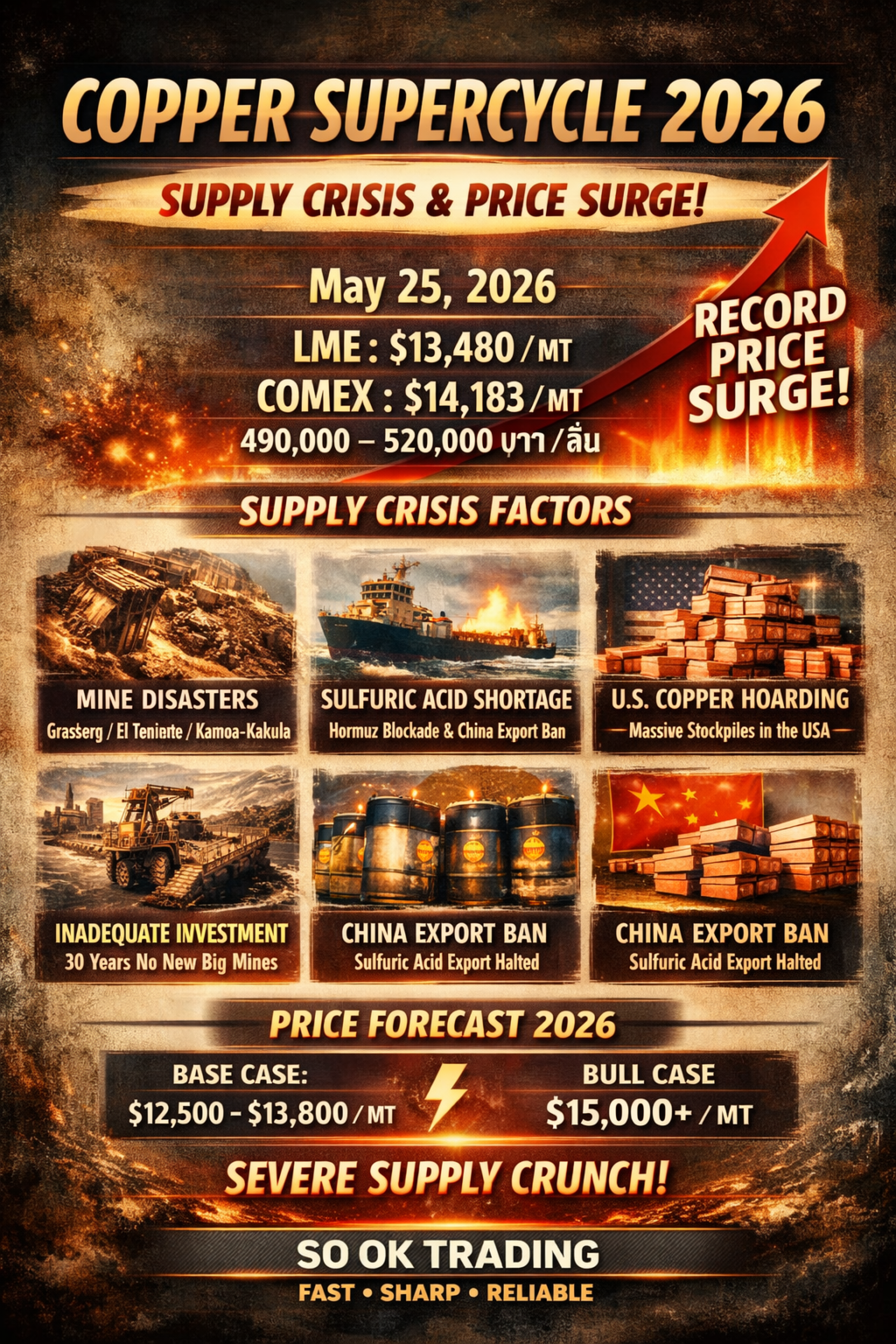
铜超级周期 2026 —— 当铜成为 AI 时代的战略金属
价格飙升,供应紧缺:创下历史新高并持续处于高位区间 SO OK TRADING 撰文:2026年5月25日
全球铜价创历史新高
2026年5月25日,LME市场铜价为 13,426 – 13,480美元/吨,COMEX约 14,183美元/吨,折合人民币约 490,000 – 520,000泰铢/吨。 与此同时,泰国国内的再生铜废料交易价格为 380,000 – 412,000泰铢/吨,价差高达 92,000泰铢/吨。这为大型冶炼厂和贸易商提供了绝佳的套利机会。
⚡ 推动铜价上涨的因素
AI与数据中心热潮 一个AI数据中心的铜需求量高达 50,000吨,是传统云计算设施的3–4倍。
矿山供应冲击
印尼Grasberg、智利El Teniente矿山发生滑坡与事故
刚果Kamoa-Kakula矿区遭遇洪灾,生产停滞
过去投资不足 全球近30年来几乎没有新建铜矿,产能无法满足激增的需求。
中国暂停硫酸出口 铜冶炼必需的硫酸供应受限,影响全球约15%的产能。
结果 全球市场消失数十万吨精炼铜,价格从2025年底的 10,000美元/吨 飙升至目前的 14,000美元/吨。
美国囤积政策 美国在关税调整前大量进口并储备铜,进一步加剧全球供应紧张。
清洁能源需求 电动车与高压电网对铜的需求急剧增加。
基金投机资金 超过 140亿美元 流入铜市场,推高价格。
铜供应侧危机(截至2026年5月25日)
大型矿山停产 印尼Grasberg、智利El Teniente矿山因滑坡事故停产。 刚果Kamoa-Kakula矿区因洪灾停产。
硫酸问题 霍尔木兹海峡封锁导致硫酸运输受阻,冶炼厂产能下降。
新矿开发滞后 30年来未有新矿投产,供应扩张困难。
美国囤积政策 2026年第一季度大量进口精炼铜,导致其他地区供应紧张。
中国硫酸出口禁令 全球15%的硫酸产能受限,供应危机进一步加剧。
全球铜供应正面临“多重风暴”:矿山停产、冶炼受阻、投资不足、美国囤积。市场进入数十年来最严重的供应紧缩。
2026年下半年价格预测
基准情景 维持在 12,500 – 13,800美元/吨。AI与清洁能源需求支撑,即使中国经济放缓。
乐观情景 若出现地缘政治危机(如霍尔木兹海峡封锁或新制裁),价格可能突破 15,000美元/吨。
机构预测
摩根大通(J.P. Morgan) Q2均价13,500美元/吨,Q4或回落至12,500美元/吨。
花旗(Citi) 强烈看涨:13,000 – 15,000美元/吨,预计供应缺口达330,000吨。
高盛(Goldman Sachs) 短期预测10,000 – 11,000美元/吨,但预计2035年将升至15,000美元/吨。
行业策略
买方(工厂/制造商) 通过期货合约进行风险对冲。
卖方(回收商) 在 390,000 – 410,000泰铢/吨 出货,是极佳的获利点。
✨ 总结
铜市场正处于“供需拉锯战”:一方面是全球矿山停产导致的真实供应短缺,另一方面是油价高企与通胀的宏观压力。 但毋庸置疑,AI与清洁能源时代已将铜从普通工业金属转变为全球不可或缺的战略资产。
SO OK TRADING —— 您的商业伙伴 FAST SHARP RELIABLE
WWW.SOOKTRADING.COM Facebook: SO OK TRADING
如需国内铜产品,欢迎随时咨询。谢谢!
价格飙升,供应紧缺:创下历史新高并持续处于高位区间 SO OK TRADING 撰文:2026年5月25日
全球铜价创历史新高
2026年5月25日,LME市场铜价为 13,426 – 13,480美元/吨,COMEX约 14,183美元/吨,折合人民币约 490,000 – 520,000泰铢/吨。 与此同时,泰国国内的再生铜废料交易价格为 380,000 – 412,000泰铢/吨,价差高达 92,000泰铢/吨。这为大型冶炼厂和贸易商提供了绝佳的套利机会。
⚡ 推动铜价上涨的因素
AI与数据中心热潮 一个AI数据中心的铜需求量高达 50,000吨,是传统云计算设施的3–4倍。
矿山供应冲击
印尼Grasberg、智利El Teniente矿山发生滑坡与事故
刚果Kamoa-Kakula矿区遭遇洪灾,生产停滞
过去投资不足 全球近30年来几乎没有新建铜矿,产能无法满足激增的需求。
中国暂停硫酸出口 铜冶炼必需的硫酸供应受限,影响全球约15%的产能。
结果 全球市场消失数十万吨精炼铜,价格从2025年底的 10,000美元/吨 飙升至目前的 14,000美元/吨。
美国囤积政策 美国在关税调整前大量进口并储备铜,进一步加剧全球供应紧张。
清洁能源需求 电动车与高压电网对铜的需求急剧增加。
基金投机资金 超过 140亿美元 流入铜市场,推高价格。
铜供应侧危机(截至2026年5月25日)
大型矿山停产 印尼Grasberg、智利El Teniente矿山因滑坡事故停产。 刚果Kamoa-Kakula矿区因洪灾停产。
硫酸问题 霍尔木兹海峡封锁导致硫酸运输受阻,冶炼厂产能下降。
新矿开发滞后 30年来未有新矿投产,供应扩张困难。
美国囤积政策 2026年第一季度大量进口精炼铜,导致其他地区供应紧张。
中国硫酸出口禁令 全球15%的硫酸产能受限,供应危机进一步加剧。
全球铜供应正面临“多重风暴”:矿山停产、冶炼受阻、投资不足、美国囤积。市场进入数十年来最严重的供应紧缩。
2026年下半年价格预测
基准情景 维持在 12,500 – 13,800美元/吨。AI与清洁能源需求支撑,即使中国经济放缓。
乐观情景 若出现地缘政治危机(如霍尔木兹海峡封锁或新制裁),价格可能突破 15,000美元/吨。
机构预测
摩根大通(J.P. Morgan) Q2均价13,500美元/吨,Q4或回落至12,500美元/吨。
花旗(Citi) 强烈看涨:13,000 – 15,000美元/吨,预计供应缺口达330,000吨。
高盛(Goldman Sachs) 短期预测10,000 – 11,000美元/吨,但预计2035年将升至15,000美元/吨。
行业策略
买方(工厂/制造商) 通过期货合约进行风险对冲。
卖方(回收商) 在 390,000 – 410,000泰铢/吨 出货,是极佳的获利点。
✨ 总结
铜市场正处于“供需拉锯战”:一方面是全球矿山停产导致的真实供应短缺,另一方面是油价高企与通胀的宏观压力。 但毋庸置疑,AI与清洁能源时代已将铜从普通工业金属转变为全球不可或缺的战略资产。
SO OK TRADING —— 您的商业伙伴 FAST SHARP RELIABLE
WWW.SOOKTRADING.COM Facebook: SO OK TRADING
如需国内铜产品,欢迎随时咨询。谢谢!


相关文章
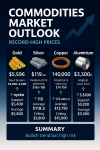
2026年1月29日,全球金属与大宗商品市场迎来了历史性的一天。黄金、白银、铜和铝同时刷新历史最高价(All-Time High),市场进入了前所未有的“超级周期”。
推动这一轮暴涨的因素包括:美元跌至四年来的低点、美伊地缘政治紧张、中国对银矿出口的限制政策,以及电动车与人工智能产业的强劲需求。
SO OK TRADING 将这一现象视为全球商品市场的重大转折,并对2026年2月的价格走势与投资策略进行深入分析。尽管整体趋势依然强劲,但市场过热与调整风险正在加剧,投资者需要保持冷静并严格进行风险管理。
市场动态更新
尽管在夜间,黄金价格从 5,600 美元/盎司 下跌至 5,000 美元/盎司,而白银价格也从 122 美元/盎司 下跌至 115 美元/盎司。
这一波动显示出市场在极度高位后的快速修正风险,提醒投资者在当前超级牛市环境下仍需保持谨慎,严格执行止损与风险管理策略。
30 1月 2026
「泰国橡胶——世界第一大供应源:清洁橡胶与高科技时代」
SO OK TRADING | 2026年5月9日
9 五月 2026
