Share

「再生铝:推动全球经济转型,迈向净零时代 —— 从易拉罐到清洁能源与循环经济创新」 SO OK TRADING 撰文|2026年3月25日

Last updated: 25 Mar 2026
335 Views
「再生铝:从易拉罐到驱动世界迈向净零」
SO OK TRADING 撰文|2026年3月25日


铝正在从日常生活中的金属,转变为循环经济和全球减碳的核心“战略性资源”。


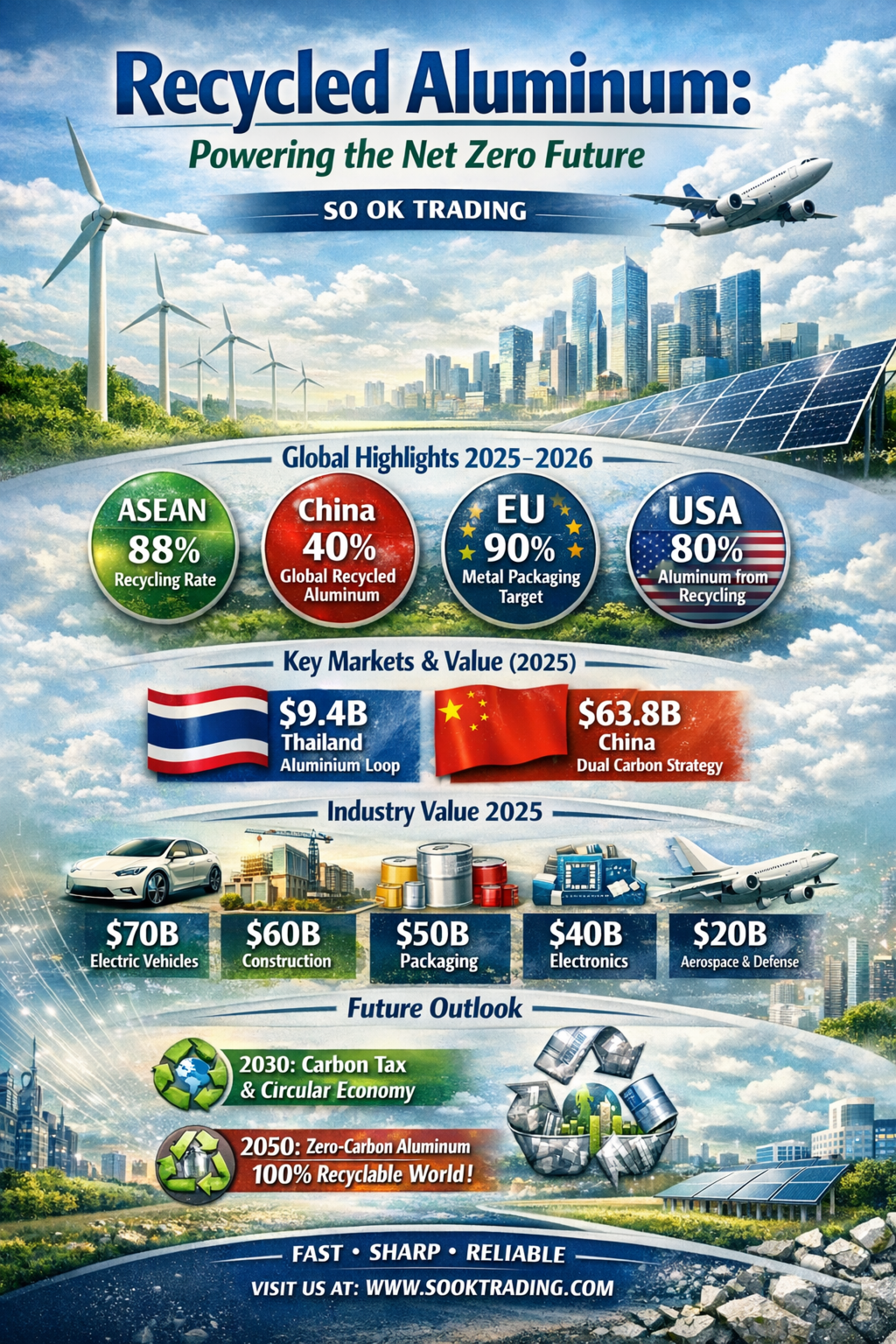
铝与再生铝:全球概况(2025–2026)

东南亚(ASEAN):泰国的垃圾分类回收率高达88%,Aluminium Loop 项目已回收超过10亿只易拉罐。马来西亚和泰国大幅增加从美国进口的铝废料,以支持区域再生产业。
中国:占全球二次铝产量近40%,正在从依赖煤炭的原生铝转向更清洁的废料铝。目标到2027年再生铝产量超过1500万吨。
日本:回收率高达93%,并向东南亚出口高质量金属分选技术。
韩国:以精准的垃圾数据管理和持续的包装减量活动而闻名。
美国:超过80%的铝产量来自回收,10个州实施易拉罐押金制度。
欧洲(EU):目标到2029年金属包装回收率达到90%,并投资使用太阳能和水电的再生工厂。
中东(GCC):阿联酋和沙特投资超过60亿美元建设再生基础设施。
非洲:城市化推动南非和尼日利亚在制造业中增加废铝使用。
澳大利亚:与国际铝业协会合作,提升易拉罐分选系统。
 

相关产业市场规模(2025)

汽车与电动车:700亿美元
建筑:600亿美元
包装:500亿美元
电气与电子:400亿美元
航空与国防:200亿美元
 

亚洲两大支柱:泰国与中国

泰国:市场规模93.9亿美元,推行EPR法与Aluminium Loop模式,目标回收50亿只易拉罐。
中国:市场规模637.8亿美元,原生铝产量4200万吨,设定上限4500万吨。推动“双碳”政策与零废弃城市。
 

⏳ 时间轴上的角色

当前(2025–2026):再生铝是废弃物管理与降低生产成本的关键。
2030年:成为碳税减免与绿色溢价市场的核心。
2050年:大幅减少原生铝生产,转向城市矿山(Urban Mining)。利用氢能与太阳能实现零碳铝生产,产品设计100%可回收。
 

战略总结

再生铝正在从“辅助材料”转变为“全球经济的核心”。到2050年,它将在所有产业中发挥关键作用,从包装到电动车再到航空航天。投资先进分选技术与清洁能源的国家将在价格与碳排放方面获得战略优势。


SO OK TRADING — FAST • SHARP • RELIABLE
访问:www.sooktrading.com
咨询请联系:SOOKTRADING@OUTLOOK.COM
Related Content
锡:从普通金属到战略资源 —— 连接人工智能与清洁能源的未来之胶
✨ 锡:从普通金属到“未来之金属” ✨ 曾经,锡只是用于涂覆罐头的材料。 但如今,它已成为推动数字经济与清洁能源的 战略资源 —— 从人工智能、半导体、电动车到新型电池。 价格飙升,需求突破天花板 锡是连接 AI 与数据中心的“胶水” 锡是未来电池创新的核心 锡不再只是基础金属,而是全球争夺的 关键资源,将在未来二十年决定世界经济的走向。
27 Feb 2026
ALUMINUM PRICE TREND 2026
An analysis of the aluminum market in 2026 indicates a likely continued market deficit and upward price pressure, driven by constrained supply and resilient demand from green energy sectors. However, significant volatility is expected due to policy uncertainties and the potential for new Indonesian supply to eventually balance the market. Key Drivers and Projections for 2026 Supply Side Analysis Capacity Constraints: China's primary aluminum output is approaching its self-imposed 45 million-tonne capacity cap, limiting global supply growth. Power Challenges: Smelters outside of China face intense competition for power from energy-intensive sectors like AI data centers, which are willing to pay higher prices for long-term contracts. This has kept significant capacity offline in Europe and the US. Production Disruptions: Outages and potential shutdowns at existing smelters in Iceland and Mozambique further tighten the market. Scrap Supply Pressure: The EU's planned implementation of the Carbon Border Adjustment Mechanism (CBAM) and potential scrap export tariffs in spring 2026 are expected to impact global scrap flows, creating regional shortages and price volatility. New Capacity: Indonesia is a key source of new supply, with several projects in the pipeline. However, analysts suggest the pace of the ramp-up may be slower than expected due to infrastructure and policy challenges, meaning it is unlikely to fully offset near-term tightness. Demand Side Analysis Green Transition Demand: Demand from "green" sectors such as solar panels, new energy vehicles, and energy transition infrastructure remains strong, providing fundamental support for the market. Substitution Effect: Aluminum's wide price discount relative to copper has encouraged substitution in electrical applications, acting as a tailwind for demand and prices. Construction and Automotive: The construction and automotive industries continue to be major consumers, with growing demand for lightweight, low-carbon aluminum products. Price Forecasts and Volatility The market is expected to remain in a deficit in 2026, with estimates ranging from 200,000 to 600,000 tonnes. This structural tightness is leading most analysts to forecast sustained or rising prices. Bullish Views: Analysts at Bank of America project prices of $3,000/tonne as early as 2026. J.P. Morgan also expects prices to approach $3,000/tonne in Q1 2026. ING forecasts an average price of $2,900/tonne for the year. Bearish/Conservative Views: Goldman Sachs is an outlier, forecasting prices to decline to $2,350/tonne by Q4 2026, anticipating a market surplus later in the year. SMM forecasts a "high first, then lower" pattern, with prices finding equilibrium in the $2,700–$2,800/tonne range by year-end. Premiums: Regional premiums, particularly the US Midwest premium, are expected to remain high and volatile due to tariffs and regional supply dynamics, creating a disconnect from the LME benchmark price. In essence, 2026 is projected to be a year of high volatility where participants need to focus on scenario readiness rather than relying on a single price forecast, as geopolitical and energy policies significantly influence regional supply and costs
31 Dec 2025
This website uses cookies for best user experience, to find out more you can go to our Privacy Policy and Cookies Policy
Powered By MakeWebEasy Logo MakeWebEasy