「再生铅锭:从废旧电池到清洁能源 —— 循环经济的支柱与未来的可再生动力」 SO OK TRADING 撰文 – 2026年3月14日
Last updated: 14 Mar 2026
1499 Views
♻️ 再生铅锭:世界仍然依赖的循环金属
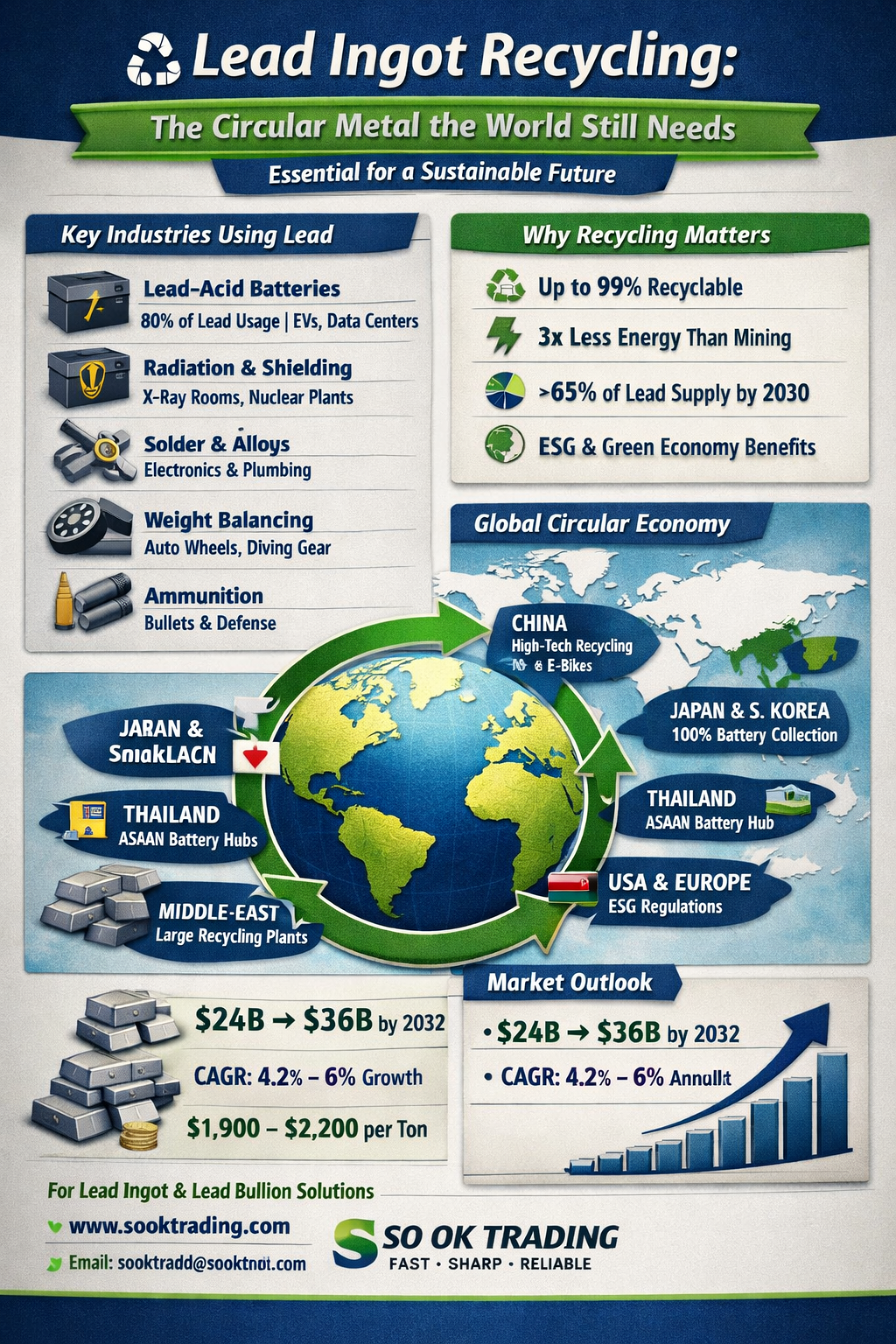
尽管常被视为“旧金属”,但再生铅锭正逐渐成为循环经济的核心,帮助世界实现资源的可持续利用,减少对新矿开采的依赖,并持续满足电池、汽车、数据中心以及可再生能源等关键产业的需求。
铅锭的主要应用行业
铅酸电池(占全球铅使用量的80%以上,用于汽车、EV辅助电池、UPS和数据中心)
辐射与隔音防护(X光室、核电站、隔音材料)
焊料与合金(电子产品、管道工程)
配重材料(汽车轮胎、潜水装备、渔业坠子)
军工与弹药(子弹、轻武器)
为什么再生是未来?
可回收率高达95–99%
能耗比采矿低3倍
到2030年,全球65%以上的铅供应将来自再生
符合ESG与绿色经济要求,推动“绿色铅”应用
全球循环经济格局
中国:关闭非法冶炼厂,发展高标准回收工厂,需求来自5G与电动自行车
日本与韩国:电池回收率接近100%,用于数据中心与混合动力汽车
泰国:东盟汽车电池生产基地,价格参考LME+溢价,开始在太阳能工厂使用再生铅
美国与欧盟:ESG法规要求新电池必须含有再生材料,减少对矿山依赖
中东:投资大型回收工厂,降低进口依赖并处理有害废物
非洲:虽存在非标准回收问题,但仍是主要的废旧电池出口地区
市场前景
全球铅市场预计从2024年的240亿美元增长至2032年的360–380亿美元
年均增长率(CAGR):4.2%–6%
全球价格区间:1,900–2,200美元/吨,以实际需求为主而非投机
再生铅锭不仅仅是普通金属,而是循环经济的支柱,帮助世界实现资源的可持续循环,降低能源成本,并持续支撑从汽车到数据中心再到医疗的关键产业。
SO OK TRADING:您的商业合作伙伴
FAST • SHARP • RELIABLE
访问: www.sooktrading.com
邮箱: sooktrading@outlook.com
尽管常被视为“旧金属”,但再生铅锭正逐渐成为循环经济的核心,帮助世界实现资源的可持续利用,减少对新矿开采的依赖,并持续满足电池、汽车、数据中心以及可再生能源等关键产业的需求。
铅锭的主要应用行业
铅酸电池(占全球铅使用量的80%以上,用于汽车、EV辅助电池、UPS和数据中心)
辐射与隔音防护(X光室、核电站、隔音材料)
焊料与合金(电子产品、管道工程)
配重材料(汽车轮胎、潜水装备、渔业坠子)
军工与弹药(子弹、轻武器)
为什么再生是未来?
可回收率高达95–99%
能耗比采矿低3倍
到2030年,全球65%以上的铅供应将来自再生
符合ESG与绿色经济要求,推动“绿色铅”应用
全球循环经济格局
中国:关闭非法冶炼厂,发展高标准回收工厂,需求来自5G与电动自行车
日本与韩国:电池回收率接近100%,用于数据中心与混合动力汽车
泰国:东盟汽车电池生产基地,价格参考LME+溢价,开始在太阳能工厂使用再生铅
美国与欧盟:ESG法规要求新电池必须含有再生材料,减少对矿山依赖
中东:投资大型回收工厂,降低进口依赖并处理有害废物
非洲:虽存在非标准回收问题,但仍是主要的废旧电池出口地区
市场前景
全球铅市场预计从2024年的240亿美元增长至2032年的360–380亿美元
年均增长率(CAGR):4.2%–6%
全球价格区间:1,900–2,200美元/吨,以实际需求为主而非投机
再生铅锭不仅仅是普通金属,而是循环经济的支柱,帮助世界实现资源的可持续循环,降低能源成本,并持续支撑从汽车到数据中心再到医疗的关键产业。
SO OK TRADING:您的商业合作伙伴
FAST • SHARP • RELIABLE
访问: www.sooktrading.com
邮箱: sooktrading@outlook.com


Related Content

铜——清洁能源时代的金属,正在成为全球经济的核心
2026年4月,全球铜市场比以往任何时候都更加炙热。价格攀升至多年高点,在中东战争、能源危机以及 AI、电动车(EV)、太阳能电池 等新技术的巨大需求推动下不断波动。
铜不再只是普通的工业金属,而逐渐成为“清洁能源转型”的关键指标。
在本文中,SO OK TRADING 将带您深入解析最新的铜价趋势,剖析战争与能源的影响,并呈现全球顶级金融机构的观点,揭示铜在2026年如何继续被视为“未来之金属”。
28 Apr 2026
历史性的“特朗普–习近平峰会”(2026年5月12日至15日)不仅仅是一次礼节性访问,而是撼动世界的大交易,涵盖经济、能源与科技。此次会晤展现了两大强国之间复杂的博弈,它们合计占全球GDP的42%。
从中东战争到台湾问题,从稀土贸易到高端技术出口管制的放宽——谈判桌上的每一次“交锋”,都可能成为决定全球市场走向、油价走势以及未来AI供应链的关键变量。
这是一场全球必须关注的峰会。如果协议成功,世界经济或将重回稳定;若失败,其冲击将波及全球民生成本,包括泰国在内的各国都会受到影响。
SO OK TRADING : FAST • SHARP • RELIABLE
在瞬息万变的世界中,您的商业伙伴
14 May 2026