“Recycled Lead Ingot: From Scrap Batteries to Clean Energy — The Pillar of Circular Economy and the Power of a Sustainable Future” Article by SO OK TRADING – March 14, 2026
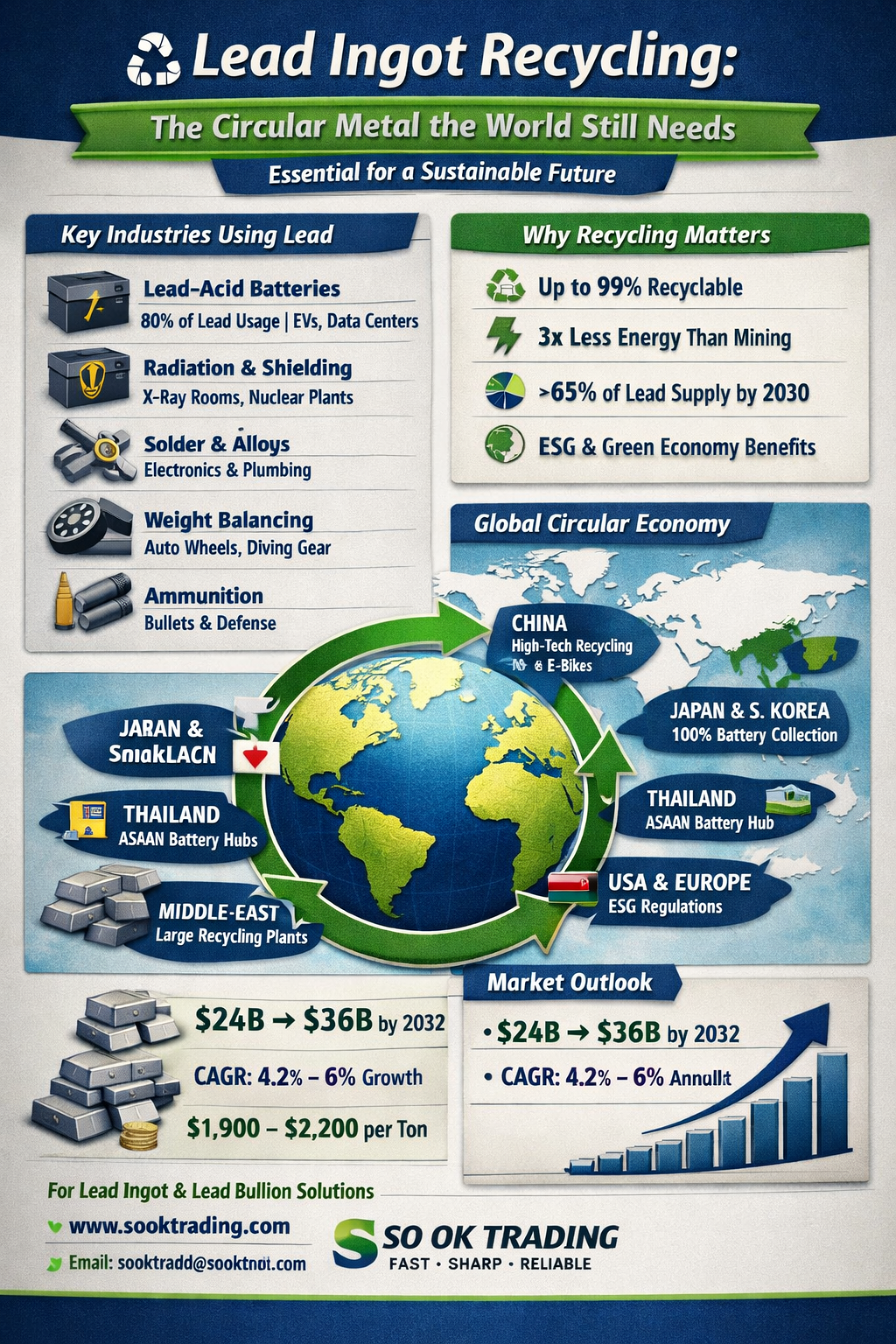
♻️ Recycled Lead Ingot: The Circular Metal the World Still Relies On
Although often seen as an “old metal,” Lead Ingot, especially when recycled, is becoming the backbone of the circular economy. It enables sustainable resource use, reduces dependence on new mining, and continues to serve critical industries worldwide.
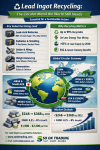
Key Industries Using Lead Ingot
Lead-Acid Batteries: Over 80% of global lead usage; essential for cars, EV auxiliary 12V batteries, UPS systems, and data centers.
Radiation & Sound Shielding: High density makes lead ideal for X-ray rooms, nuclear plants, and acoustic insulation.
Solder & Alloys: Widely used in electronics and plumbing, with strong demand in developing markets.
Weight Balancing: Automotive wheels, diving gear, and fishing sinkers.
Defense & Ammunition: Easy to mold, low melting point; remains stable despite environmental concerns.
Why Recycling is the Future
Nearly 100% recyclable: Old batteries can be reused at 95–99%.
3x less energy compared to mining.
By 2030, over 65% of global lead supply will come from recycling.
Meets ESG & Green Economy standards: “Green Lead” is increasingly adopted worldwide.
Circular Economy by Region
China: Shutting down illegal smelters, investing in high-standard recycling; demand driven by 5G and e-bikes.
Japan & South Korea: Nearly 100% battery collection; recycled lead used in hybrid cars and data centers.
Thailand: ASEAN automotive battery hub; LME + premium pricing; recycled lead now used in solar factory systems.
USA & EU: ESG laws mandate recycled materials in new batteries; reducing mining reliance.
Middle East: Investing in large recycling plants to cut imports and manage hazardous waste.
Africa: Major exporter of scrap batteries, though recycling standards remain inconsistent.
Market Outlook
Global lead market projected to grow from $24B (2024) to $36–38B (2032).
CAGR: 4.2% – 6%.
Price range: $1,900–$2,200 per ton, driven by real demand rather than speculation.
Positive factor: Stricter pollution controls in China could tighten supply and push prices upward.
Recycled Lead Ingot is not just another metal — it is the pillar of the circular economy, ensuring sustainable resource use, lowering energy costs, and supporting industries from automotive to data centers and healthcare.
SO OK TRADING: Your Trusted Business Partner
FAST • SHARP • RELIABLE
Visit us: www.sooktrading.com
Email: sooktrading@outlook.com