Share

India’s Golden Opportunity in Copper & Aluminium (2026–2030): Recycling and Innovation Driving the Non-Ferrous Metals Revolution
Last updated: 26 Feb 2026
777 Views

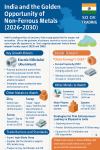
India and the Golden Opportunity of Non-Ferrous Metals (2026–2030)

Article by SO OK TRADING

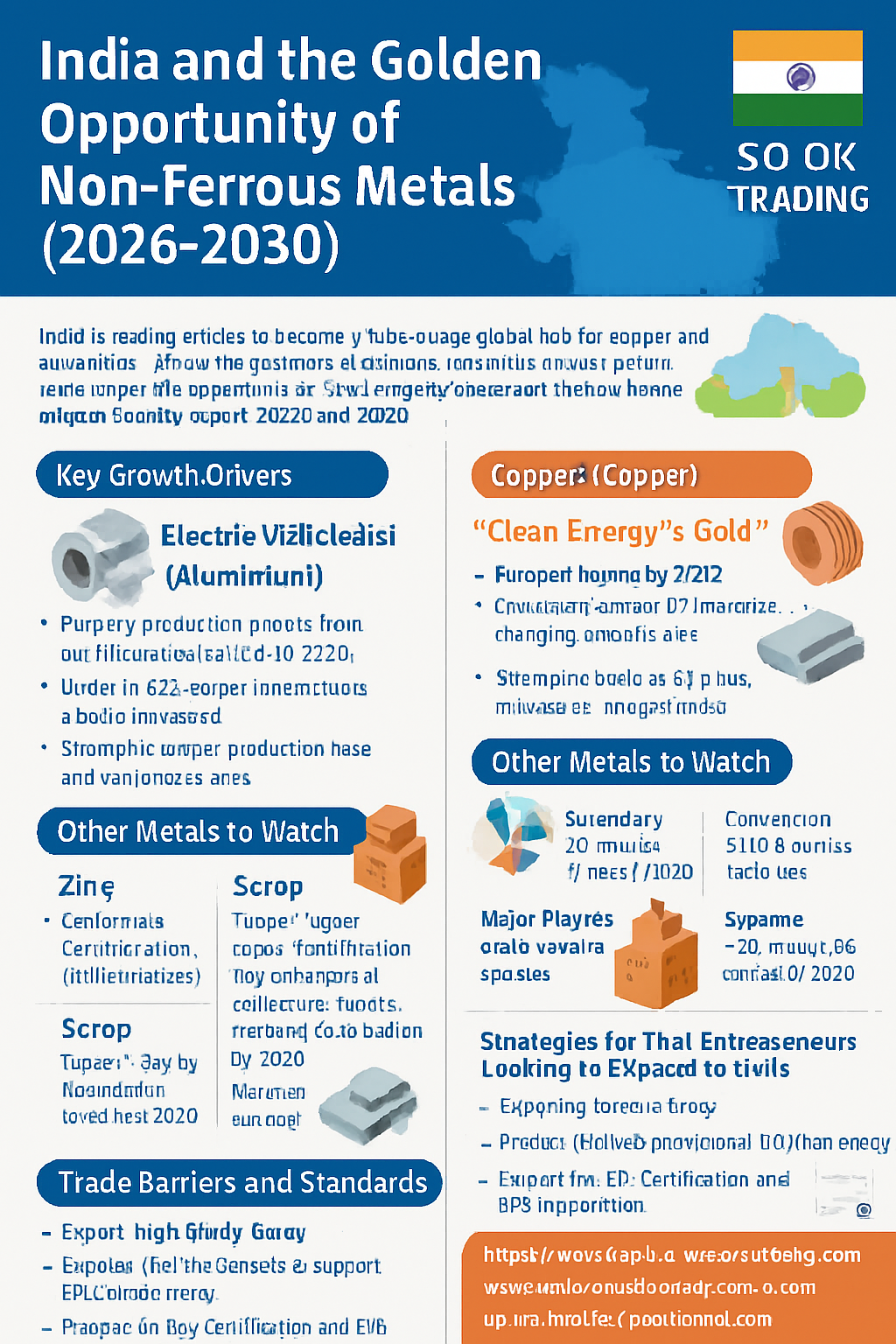
India is moving decisively toward becoming the “global hub for copper and aluminium.” Government policies, infrastructure investments, and the promotion of a circular economy are the key drivers behind this transformation. The non-ferrous metals market is expected to grow rapidly between 2026 and 2030.

Key Growth Drivers

Electric Vehicles (EVs) → Aluminium usage per vehicle increases by 25–30%, while copper is essential for motors and batteries
Renewable Energy → Target of 500 GW power generation by 2030 requires massive copper and aluminium demand
Infrastructure & Smart Cities → High-rise buildings, metro systems, bridges, data centers, and 5G networks
Circular Economy → Extended Producer Responsibility (EPR) regulations enforced from 2026
Spotlight Metals

Aluminium: “Champion in Volume”
Primary production to rise from 4.2 million tons (2025) → 7.0 million tons (2030)
Applications: EVs, transmission lines, food packaging
Strength: Large production base and cost competitiveness
Copper: “The Gold of the Clean Energy Era”
Demand expected to double by 2030
Applications: EV motors, batteries, charging stations, 5G, data centers
Strength: India remains a net importer → supply gap creates opportunities for exporters
Other Metals to Watch
Zinc → Stable growth in galvanization for infrastructure
Scrap Metal → Recycling market set to boom due to EPR and tax incentives
Major Players in India

Hindalco Industries → Giant in aluminium and copper
Vedanta Limited → Dominates aluminium, reviving copper smelting operations
Hindustan Copper Limited (HCL) → State-owned enterprise with full copper mining rights
Recycling Market Opportunities

Secondary aluminium production uses 95% less energy than new mining
Market remains fragmented → opportunity for foreign investors with advanced sorting technology
Recycling revenue projected to reach USD 4.8 billion by 2030
Trade Barriers & Standards

BIS Standard → Imported products must be certified before sale
EPR Regulation (2026) → New products must include 5–10% recycled metal
Simplified Trend Summary

Aluminium → Highest growth in volume, driven by EVs, construction, packaging
Copper → Fastest growth in value, driven by clean energy, EVs, 5G
Zinc → Stable growth in infrastructure
Scrap Metal → Recycling boom from circular economy policies
Strategies for Thai Businesses Expanding into India

Focus on exporting high-purity scrap
Develop finished products supporting EVs and clean energy
Prepare for BIS certification and EPR compliance
 

SO OK TRADING: Your Bridge to India

SO OK TRADING is ready to serve as the bridge between Thai businesses and the Indian market. With expertise in non-ferrous metals and the ability to source high-quality raw materials, we help Thai companies enter India’s booming market with confidence.

For aluminium, copper, or other non-ferrous products, contact us today:
www.sooktrading.com
sooktrading@outlook.com


Related Content
 “Metal Power Transforming the World: Aluminum, Copper, Nickel & Rare Earths Igniting Innovation and Driving the EV Revolution” Article by SO OK TRADING · March 19, 2026
“The Metal and Rare Earths War: The Hidden Power Behind the EV Revolution” Electric vehicles (EVs) are not driven by electricity alone. They are powered by aluminum, copper, nickel, and rare earths — the economic metals that are becoming the beating heart of global EV innovation. The latest article from SO OK TRADING provides an in‑depth analysis: - How these fundamental metals shape EV batteries and electrical systems - How rare earths like Neodymium, Dysprosium, and Praseodymium enable high‑torque, compact motors - How global trends from 2025–2030 will reshape the use of metals and rare earths - How leading automakers — Tesla, BMW, Renault, Nissan, BYD, and Toyota — are innovating to reduce dependence on rare earths
19 Mar 2026
Middle East Conflict Shakes Global Packaging: Plastic Shortages – Aluminum Rises as the Infinite Recycling Future”   Article by SO OK TRADING : April 11, 2026
Middle East Conflict Shakes the Plastic Industry – Naphtha Shortage! When a vital global raw material like Naphtha becomes scarce due to conflict in the Middle East, the packaging industry is immediately shaken. Plastic prices soar, supplies run short, and brands are forced to urgently seek new solutions. In this crisis, Aluminum has emerged as the most watched material — not only as a premium alternative but also as a symbol of sustainability in an era of rising energy costs. With infinite recyclability, aluminum is increasingly seen as the future of packaging. This article by SO OK TRADING explores: Why the shortage of Naphtha disrupts plastics worldwide How aluminum has become the “hero” of the packaging industry Strategies businesses must adopt to survive in a volatile market
11 Apr 2026
เกร็ดความรู้ ซิลิคอน by SO OK
ซิลิคอน (Silicon) คือธาตุสารกึ่งตัวนำสำคัญที่พบมากบนเปลือกโลก (ในรูปซิลิกา) ใช้ทำชิปอิเล็กทรอนิกส์, แผงโซลาร์เซลล์, แก้ว, เซรามิก, และผสมโลหะ; ส่วน ซิลิโคน (Silicone) คือพอลิเมอร์ที่ใช้ทำกาวอุดรอยรั่ว, สารหล่อลื่น, เครื่องสำอาง, ยา, และอุปกรณ์การแพทย์ คุณสมบัติเด่นคือทนความร้อน, ทนสารเคมี, เป็นฉนวนไฟฟ้า, ยืดหยุ่น, และกันน้ำ แม้ชื่อคล้ายกัน แต่คือคนละอย่าง. เกร็ดความรู้เกี่ยวกับ ซิลิคอน (Silicon - Si) (ธาตุ) ธาตุสำคัญ: เป็นธาตุที่พบมากเป็นอันดับสองในเปลือกโลก (รองจากออกซิเจน) มักอยู่ในรูปซิลิก้า (Silicon Dioxide - SiO2) เช่น ทราย, ควอตซ์. หัวใจอิเล็กทรอนิกส์: ซิลิคอนบริสุทธิ์พิเศษ (Doped Silicon) เป็นหัวใจของวงจรรวม (IC) และเซมิคอนดักเตอร์ในคอมพิวเตอร์, สมาร์ทโฟน, และแผงโซลาร์เซลล์. โลหะผสม: ผสมกับอะลูมิเนียมเพื่อทำชิ้นส่วนรถยนต์ และผสมเหล็กเพื่อทำเหล็กกล้า. เกร็ดความรู้เกี่ยวกับ ซิลิโคน (Silicone - พอลิเมอร์สังเคราะห์) คุณสมบัติมหัศจรรย์: ทนร้อน/เย็นจัด, กันน้ำ, ยืดหยุ่น, เป็นฉนวนไฟฟ้า, ทนสารเคมี, ไม่ติดไฟ. งานก่อสร้าง: กาวซิลิโคนใช้อุดรอยต่อกระจก, หน้าต่าง, หลังคา, ป้องกันน้ำรั่วซึม. เครื่องสำอาง: ทำให้ผลิตภัณฑ์เกลี่ยง่าย, เงางาม, ติดทนนาน (เช่น ลิปสติก), นุ่มลื่น (เช่น แชมพู). ทางการแพทย์: ใช้ในอุปกรณ์ทางการแพทย์, และซิลิโคนเจลสำหรับแผลเป็น. ระวังโรคปอด: การสูดดมฝุ่นผงซิลิก้า (ซิลิคอนไดออกไซด์) เป็นเวลานานในงานก่อสร้าง (เช่น โม่หิน) อาจทำให้เป็นโรคปอดฝุ่นหิน (Silicosis) ได้. ข้อแตกต่างที่สำคัญ ซิลิคอน (Silicon - Si): ธาตุโลหะ (สารกึ่งตัวนำ). ซิลิโคน (Silicone): สารประกอบพอลิเมอร์สังเคราะห์ที่มาจากซิลิคอน (มีออกซิเจนและคาร์บอน) มีความยืดหยุ่นและใช้งานหลากหลายกว่า.
11 Dec 2025
This website uses cookies for best user experience, to find out more you can go to our Privacy Policy and Cookies Policy
Powered By MakeWebEasy Logo MakeWebEasy