Share

India’s Golden Opportunity in Copper & Aluminium (2026–2030): Recycling and Innovation Driving the Non-Ferrous Metals Revolution
Last updated: 26 Feb 2026
3241 Views

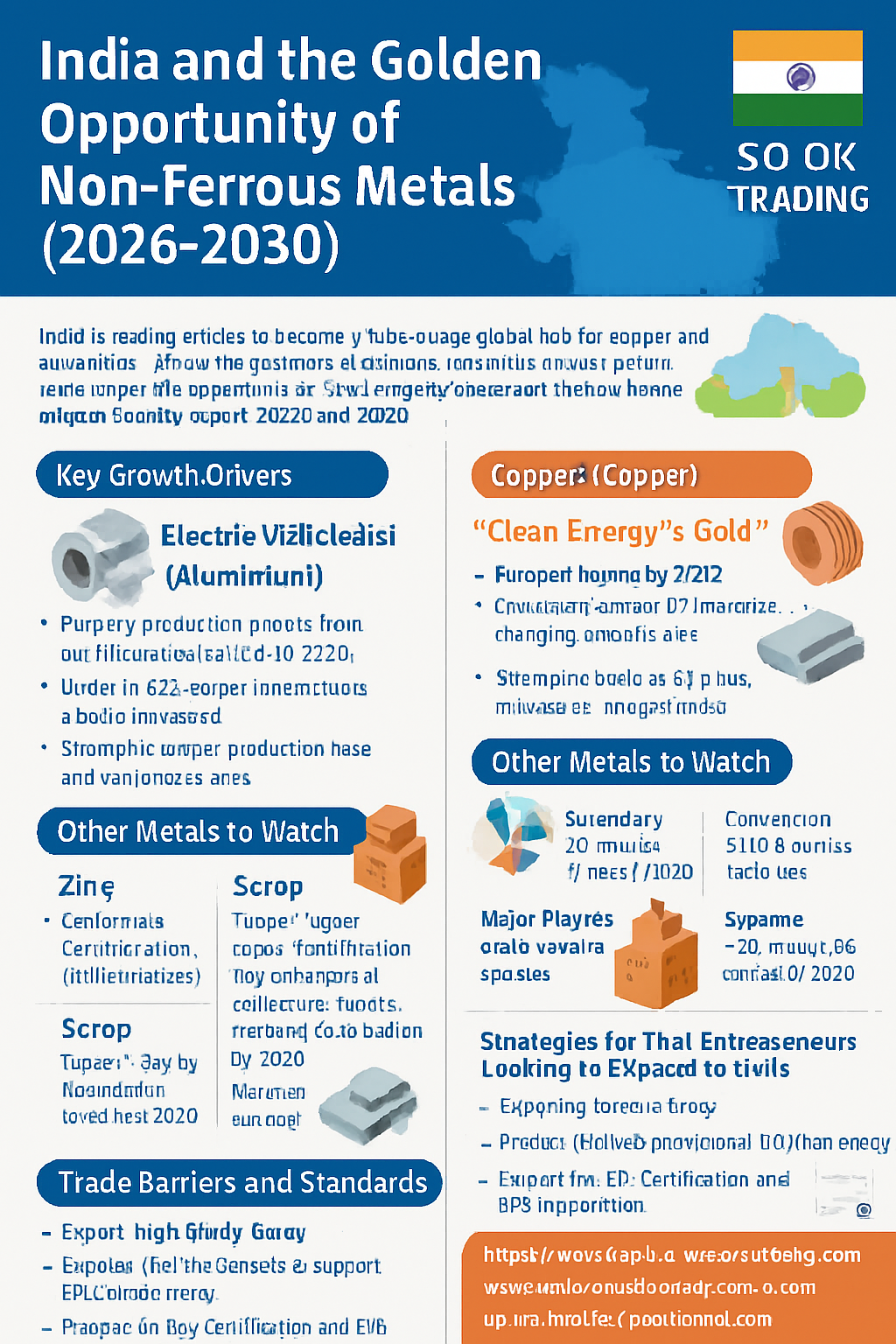
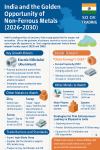
India and the Golden Opportunity of Non-Ferrous Metals (2026–2030)

Article by SO OK TRADING

India is moving decisively toward becoming the “global hub for copper and aluminium.” Government policies, infrastructure investments, and the promotion of a circular economy are the key drivers behind this transformation. The non-ferrous metals market is expected to grow rapidly between 2026 and 2030.

Key Growth Drivers

Electric Vehicles (EVs) → Aluminium usage per vehicle increases by 25–30%, while copper is essential for motors and batteries
Renewable Energy → Target of 500 GW power generation by 2030 requires massive copper and aluminium demand
Infrastructure & Smart Cities → High-rise buildings, metro systems, bridges, data centers, and 5G networks
Circular Economy → Extended Producer Responsibility (EPR) regulations enforced from 2026
Spotlight Metals

Aluminium: “Champion in Volume”
Primary production to rise from 4.2 million tons (2025) → 7.0 million tons (2030)
Applications: EVs, transmission lines, food packaging
Strength: Large production base and cost competitiveness
Copper: “The Gold of the Clean Energy Era”
Demand expected to double by 2030
Applications: EV motors, batteries, charging stations, 5G, data centers
Strength: India remains a net importer → supply gap creates opportunities for exporters
Other Metals to Watch
Zinc → Stable growth in galvanization for infrastructure
Scrap Metal → Recycling market set to boom due to EPR and tax incentives
Major Players in India

Hindalco Industries → Giant in aluminium and copper
Vedanta Limited → Dominates aluminium, reviving copper smelting operations
Hindustan Copper Limited (HCL) → State-owned enterprise with full copper mining rights
Recycling Market Opportunities

Secondary aluminium production uses 95% less energy than new mining
Market remains fragmented → opportunity for foreign investors with advanced sorting technology
Recycling revenue projected to reach USD 4.8 billion by 2030
Trade Barriers & Standards

BIS Standard → Imported products must be certified before sale
EPR Regulation (2026) → New products must include 5–10% recycled metal
Simplified Trend Summary

Aluminium → Highest growth in volume, driven by EVs, construction, packaging
Copper → Fastest growth in value, driven by clean energy, EVs, 5G
Zinc → Stable growth in infrastructure
Scrap Metal → Recycling boom from circular economy policies
Strategies for Thai Businesses Expanding into India

Focus on exporting high-purity scrap
Develop finished products supporting EVs and clean energy
Prepare for BIS certification and EPR compliance
 

SO OK TRADING: Your Bridge to India

SO OK TRADING is ready to serve as the bridge between Thai businesses and the Indian market. With expertise in non-ferrous metals and the ability to source high-quality raw materials, we help Thai companies enter India’s booming market with confidence.

For aluminium, copper, or other non-ferrous products, contact us today:
www.sooktrading.com
sooktrading@outlook.com


Related Content
“Global Aluminium Market Boiling Point – SO OK TRADING Q3/2026 Outlook: Scrap Emerges as Thailand’s Industrial Lifeline”
The year 2026 has become one of the most volatile years for the global metals market, especially aluminium, which has surged continuously to reach its highest level in a decade. Prices have been driven upward by the energy crisis in the Middle East and ongoing geopolitical uncertainties worldwide, while demand from the electric vehicle (EV) and clean energy industries continues to expand strongly. In August 2026, the global aluminium market remains “heated and fragile.” LME prices are holding firm at USD 3,550–3,800 per ton (including MJP Premium), pushing Thai import costs to an average of THB 135,000–140,000 per ton, amid intense competition for raw materials across the region. Amid this volatility, recycled aluminium (Scrap) has emerged as the key survival strategy for industries worldwide. Smelters and manufacturers in Thailand are increasingly turning to premium-grade scrap as a substitute for primary aluminium ingots, reducing costs while meeting sustainability and ESG requirements. SO OK TRADING, as your trusted partner in the non-ferrous metals business, is committed to delivering deep insights and risk management strategies in the global aluminium market, enabling Thai businesses to adapt with “Fast • Sharp • Reliable.”
1 Aug 2026
“Thai Beer Market 2026–2035: Giants’ Battle, Premiumization & Aluminum Packaging Innovation” SO OK TRADING | FAST • SHARP • RELIABLE | 17 SEP 2026
Thai Beer Market 2026–2035: Competition, Premiumization & Packaging Revolution SO OK TRADING | FAST • SHARP • RELIABLE | 17 SEP 2026 ✨ Introduction The Thai beer market is entering a major transformation — from the fierce rivalry between Leo (Boon Rawd Brewery) and Chang (Thai Beverage) to new forces driven by Premiumization, RTD (Ready-To-Drink), and aluminum packaging innovations that align with sustainability and modern lifestyles. With a market value of THB 1.6–2.7 trillion, accounting for nearly 70% of the country’s alcohol beverage market, Thailand’s beer industry not only reflects evolving consumer behavior but also plays a pivotal role in the national economy and packaging sector.
17 Sept 2026
Copper Scrap: Strategic Resource for a Green Future, Driving Net Zero and Powering the Booming AI–EV Era” SO OK TRADING: 13 SEP 2026
Copper Scrap: Strategic Resource in the Circular Economy Era In today’s world, where clean energy and advanced technologies are driving the global economy, copper scrap has transformed from what was once considered mere recyclable waste into a strategic resource. It plays a vital role in future industries — from electric vehicles (EVs) and artificial intelligence (AI) to data centers and renewable energy. With the unique property of being 100% recyclable without losing its physical or chemical qualities, copper scrap has become the backbone of the Circular Economy and the Green Supply Chain. Globally, it is recognized as an essential resource for building a sustainable economy and reducing carbon footprints across every stage of production.
13 Sept 2026
This website uses cookies for best user experience, to find out more you can go to our Privacy Policy and Cookies Policy
Powered By MakeWebEasy Logo MakeWebEasy