แชร์

ผลไม้ไทยตามฤดูกาล ความอร่อย และของขวัญจากธรรมชาติ
อัพเดทล่าสุด: 10 ม.ค. 2026
3325 ผู้เข้าชม

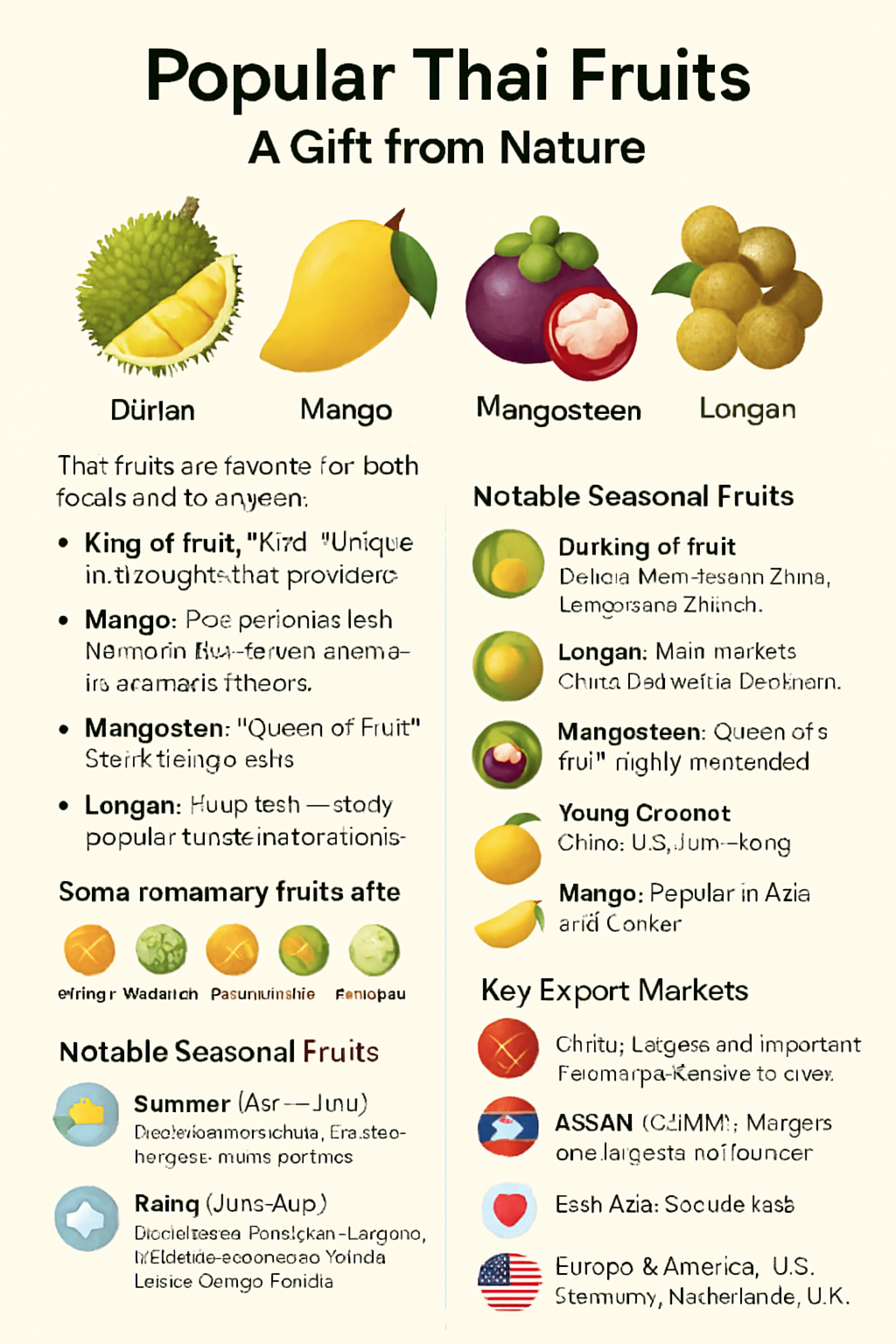
ผลไม้ไทยยอดนิยม – ของขวัญจากธรรมชาติ

ผลไม้ไทยมีความโดดเด่นทั้งรสชาติและความหลากหลาย โดยเฉพาะ:

ทุเรียน: ราชาผลไม้ กลิ่นและรสชาติเป็นเอกลักษณ์ ต้องการสูงทั่วโลก
มังคุด: ราชินีผลไม้ รสหวานอมเปรี้ยว
มะม่วง: น้ำดอกไม้สุก หอมหวาน เป็นที่นิยมมาก
ลำไย: เนื้อหวานฉ่ำ ได้รับความนิยมในตลาดต่างประเทศ
ผลไม้รองลงมา: ส้ม, เงาะ, แตงโม, สับปะรด, กล้วย, ฝรั่ง, ส้มโอ
️ ผลไม้ตามฤดูกาล

ฤดูร้อน (เม.ย.–มิ.ย.): ทุเรียน, มังคุด, เงาะ, ลองกอง, ลิ้นจี่, ขนุน
ฤดูฝน (มิ.ย.–ส.ค.): เงาะ, มังคุด, ลำไย, สับปะรด, ส้มโอ
ปลายปี–ต้นปี (พ.ย.–ก.พ.): ส้มเกลี้ยง, ฝรั่ง, องุ่น, ชมพู่, แตงโม, กล้วยหอม, สตรอว์เบอร์รี
 
ตลาดส่งออกผลไม้ไทย

ผลไม้ไทยเป็นสินค้าส่งออกสำคัญ โดยเฉพาะ:

ทุเรียน: ส่งออกมากที่สุด มูลค่ากว่า 134,000 ล้านบาท ในปี 2024
ลำไย: ตลาดหลักคือจีน, อินโดนีเซีย, เวียดนาม
มังคุด: ต้องการสูงในจีนและเอเชีย
มะพร้าวอ่อน: ตลาดใหญ่คือจีน, สหรัฐฯ, ฮ่องกง
มะม่วง: ส่งออกไปเกาหลีใต้, มาเลเซีย, ญี่ปุ่น
ส้มโอ: ได้รับความนิยมในเอเชียและยุโรป

ตลาดหลัก

จีน: ใหญ่ที่สุดและสำคัญที่สุด (ทุเรียน, ลำไย, มังคุด, มะพร้าว)
อาเซียน (CLMV): เวียดนาม, อินโดนีเซีย, มาเลเซีย, ลาว
เอเชียตะวันออก: เกาหลีใต้, ญี่ปุ่น
ยุโรปและอเมริกา: สหรัฐฯ, เยอรมนี, เนเธอร์แลนด์, สหราชอาณาจักร
 
แนวโน้มปี 2025

กระทรวงพาณิชย์ไทยประกาศให้ปี 2025 เป็น “ปีทองของผลไม้ไทย” โดยตั้งเป้าส่งออกผลไม้และผลิตภัณฑ์แปรรูปกว่า 950,000 ตัน
ผลผลิตผลไม้ไทยคาดว่าจะเพิ่มขึ้น 15% เป็นกว่า 6.7 ล้านตัน
กลยุทธ์สำคัญ: พัฒนาคุณภาพ, ขยายตลาดใหม่, ปรับปรุงโลจิสติกส์, และการแปรรูปเพื่อเพิ่มมูลค่า
 
✨ สรุป

ผลไม้ไทยคือ มรดกทางธรรมชาติที่มีเอกลักษณ์เฉพาะชาติอื่นลอกเลียนแบบไม่ได้ ทั้งรสชาติ ความหลากหลาย และคุณภาพที่เป็นที่ยอมรับในตลาดโลก หากสนใจนำเข้าผลไม้ไทยสดหรือแปรรูป โปรดติดต่อ SOOK TRADING เพื่อร่วมเป็นส่วนหนึ่งของความสำเร็จในตลาดผลไม้สากล


บทความที่เกี่ยวข้อง
THAI RICE KNOWLEDGE BY SO OK TRADING
Thai rice primarily refers to the world-renowned Jasmine Rice (Hom Mali), known for its soft texture, sweet taste, and floral pandan aroma, making it a national staple and major export, alongside other varieties like sticky rice (Khao Neow) for the Northeast, and essential for dishes like Thai fried rice (Khao Pad). Key Types of Thai Rice Jasmine Rice (Khao Hom Mali): The iconic long-grain rice, soft and fragrant when cooked, often with a pandan scent, used widely in Thai cuisine. Glutinous Rice (Khao Neow/Sticky Rice): Opaque, milky, shorter grains that become very sticky and sweet when cooked, popular in Northern and Northeastern Thailand. Long Grain White Rice (Khao Jao): A plain, grainy rice common in Central Thailand, great for absorbing sauces. Whole Grain Rice (Khao Glong): Unhusked rice (brown, red, etc.) rich in nutrients, fiber, and vitamins.
27 ธ.ค. 2025
Food Condiment , Thai Spice : Gift from Natural Product of Thailand
Thai condiments are vibrant, flavor-boosting additions like spicy-sweet Nam Jim Gai, all-purpose spicy Prik Nam Pla (fish sauce with chilies/garlic), savory Nam Prik Pao (chili jam), and tangy Nam Jim Jaew for grilled meats, adding balance (salty, sweet, sour, spicy) to dishes, much like salt and pepper in the West, with popular types including Sriracha, peanut sauce, and sweet chili. Popular Thai Condiments: Prik Nam Pla (or Nam Pla Prik): The quintessential all-purpose condiment, a simple mix of fish sauce, chopped chilies, garlic, and sometimes lime/sugar, adding salty, spicy, umami kick to anything. Nam Jim Gai: A sweet and sour chili sauce with garlic and vinegar, perfect for fried chicken and spring rolls. Nam Prik Pao: A complex, savory chili jam with roasted chilies, shallots, garlic, tamarind, and palm sugar, used in soups (like Tom Yum) and as a spread. Nam Jim Jaew: A smoky, tangy, spicy dipping sauce for grilled meats (Gai Yang), made with chili, lime, fish sauce, shallots, and toasted rice powder. Sriracha: While known globally, it's a staple, a spicy chili sauce often used on its own or as an ingredient. Sweet Chili Sauce (Nam Chim Kai): A widely loved sweet, tangy, and spicy sauce, great for fried items. Key Ingredients: Fish Sauce (Nam Pla): Salty, umami base. Chilies (Prik): Fresh (red/green) or dried for heat. Lime Juice: Adds essential sourness. Garlic & Shallots: Aromatic depth. Palm Sugar: Balances heat with sweetness. Tamarind: For sour/sweet notes. These condiments are crucial for achieving the balance of flavors—spicy, sour, salty, and sweet—that defines Thai cuisine.
18 ธ.ค. 2025
This website uses cookies for best user experience, to find out more you can go to our นโยบายความเป็นส่วนตัว และ นโยบายคุกกี้
Powered By MakeWebEasy Logo MakeWebEasy