“STR 20 พลิกเกมโลกยางพารา: พระเอกยางแท่งไทย สู่ยุคทองอุตสาหกรรม EV โลก”: SO OK TRADING: 4 JUNE 2026
“STR 20 พลิกเกมโลกยางพารา: จากขี้ยางสู่วัตถุดิบยุทธศาสตร์ของอุตสาหกรรม EV”: SO OK TRADING: 4 JUNE 2026
-----------------
ภาพรวมตลาดยางพารา (กลางปี 2026)
ราคายางพาราไทยยังคงเติบโตแข็งแกร่ง โดยเฉลี่ยทั้งปีคาดว่าจะเพิ่มขึ้น 4.8% อยู่ที่ราว 63.2 บาท/กิโลกรัม และบางชนิดมีโอกาสทะลุ 100 บาท/กิโลกรัม จากอุปทานที่ตึงตัวและความต้องการโลกที่ยังสูงต่อเนื่อง
น้ำยางสดเปิดตลาดที่ 83.70 บาท/กิโลกรัม
ยางก้อนถ้วยเฉลี่ย 79.20–80.70 บาท/กิโลกรัม
ยางแผ่นดิบ 78.50–80.00 บาท/กิโลกรัม
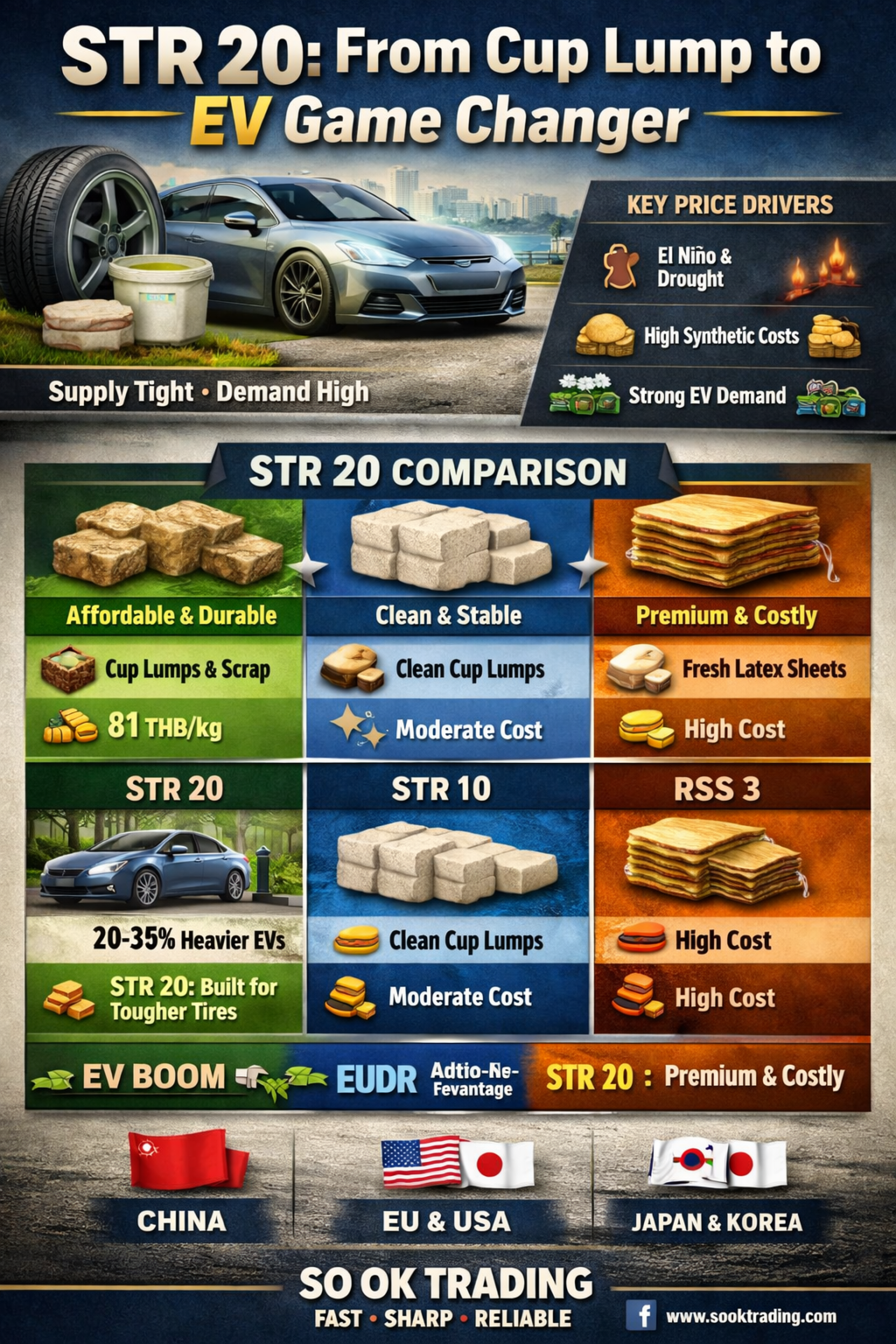
FOB แหลมฉบัง: STR 20 = 81 บาท/กิโลกรัม, STR 5L = 94.07 บาท/กิโลกรัม, RSS Bale = 93.09 บาท/กิโลกรัม
------------------
ปัจจัยหนุนราคายาง
ผลผลิตน้อยลง – ภัยแล้งและเอลนีโญทำให้ซัพพลายตึงตัว
ต้นทุนยางสังเคราะห์สูง – ราคาน้ำมันแพง โรงงานหันมาใช้ยางธรรมชาติแทน
ดีมานด์โลกแรง – EV จีน, ยางล้อ, ถุงมือแพทย์ และอุตสาหกรรมการแพทย์ฟื้นตัว
------------------
ยางพารา STR 20: พระเอกของอุตสาหกรรมยางล้อโลก
STR 20 ถูกใช้มากที่สุดในอุตสาหกรรมยางล้อ เพราะทนแรงฉีกขาดและสึกหรอได้ดีเยี่ยม นอกจากนี้ยังเหมาะกับการผลิต สายพานลำเลียง, ท่อยางอุตสาหกรรม, ยางกันกระแทก และโรงงานใหญ่ชื่นชอบเพราะ คุณภาพสม่ำเสมอ, ผสมสารเคมีง่าย, ขนส่งสะดวกและคุ้มค่า
------------------
ยางพารา ความแตกต่างระหว่างเกรด STR 20, STR 10 และ RSS 3
STR 20: ผลิตจากยางก้อนถ้วยและเศษยาง คุณภาพปานกลางแต่คุ้มค่า ราคาประหยัดที่สุด เหมาะกับการผลิตยางล้อรถบรรทุก สายพาน และยางปูพื้น
STR 10: ใช้ยางก้อนถ้วยที่คัดสะอาดกว่า STR 20 เนื้อยางเสถียรและสะอาดมากขึ้น ราคาสูงกว่าเล็กน้อย เหมาะกับยางล้อรถยนต์นั่งที่ต้องการความนุ่มนวล
RSS 3: ผลิตจากน้ำยางสดที่กรองสิ่งสกปรกอย่างละเอียด คุณภาพสูงสุด เนื้อยางสะอาดและสม่ำเสมอ แต่ราคาสูงที่สุด เหมาะกับอะไหล่ยนต์เกรดพรีเมียม ท่อแรงดันสูง และยางปัดน้ำฝน
สรุปส้นๆ: STR 20 = คุ้มค่าและทนทาน, STR 10 = สะอาดและเสถียร, RSS 3 = พรีเมียมสุดแต่แพง
-------------------
ตลาดส่งออกหลัก ยางพารา STR20 จากไทย
จีน: ฐานผลิตยางล้อใหญ่ที่สุด และบูม EV
ยุโรป–สหรัฐฯ: โรงงาน Michelin, Goodyear, Continental เน้นมาตรฐานสิ่งแวดล้อม
ญี่ปุ่น–เกาหลีใต้: Bridgestone, Hankook ทำสัญญารับซื้อระยะยาว
--------------------
⚡ EV จีน = อาวุธลับ STR 20
รถ EV หนักกว่าเดิม 20–30% และมอเตอร์ไฟฟ้าให้แรงบิดสูงทันที ทำให้ยางสึกหรอเร็วขึ้น STR 20 จึงถูกเลือกเป็นวัตถุดิบหลักในการผลิตยางล้อ EV เพราะทนแรงบิดและรองรับน้ำหนักได้ดีเยี่ยม
EUDR = โอกาสทองของไทย
กฎหมายยุโรปบังคับให้ยางต้องพิสูจน์ว่าไม่บุกรุกป่า ไทยมีระบบลงทะเบียนและแผนที่สวนยางพร้อมกว่า → ออกเอกสาร Traceability ได้ครบ STR 20 ที่ผ่านเกณฑ์ EUDR จึงขายได้ในราคาพรีเมียม
----------------------
แนวโน้มตลาดกลางปี 2026
STR 20 เคลื่อนไหวในกรอบ 80–85 บาท/กิโลกรัม
ผู้ผลิตรายใหญ่เร่งผลิต STR 20 ที่ผ่านเกณฑ์ EUDR → จับสัญญาระยะยาวกับแบรนด์ยางล้อระดับโลก
✨ บทสรุป จาก “ขี้ยาง” ที่เคยถูกมองเป็นสินค้าราคาถูก วันนี้ STR 20 ได้ยกระดับเป็น วัตถุดิบยุทธศาสตร์ ที่ขับเคลื่อนโลกยานยนต์ไฟฟ้า และเป็นโอกาสทองของไทยในการสร้างมูลค่าเพิ่มและครองตลาดโลก
---------------------
สนใจยางพารา STR20 ท่านสามารถติดต่อเราได้ที่หน้า WEBSITE ครับ
---------------------
SO OK TRADING : พันธมิตรทางธุรกิจของคุณ
SO OK TRADING : FAST SHARP RELIABLE
VISIT US AT : WWW.SOOKTRADING.COM
FACEBOOK : SO OK TRADING
--------------------