「中東戦争 US–IRAN:ホルムズからウォール街まで揺れる世界市場 — 金価格急騰・株価下落・為替乱高下」 状況評価:2026年3月30日〜4月3日 SO OK TRADING による分析
最終更新: 29 3月 2026
2724 閲覧数
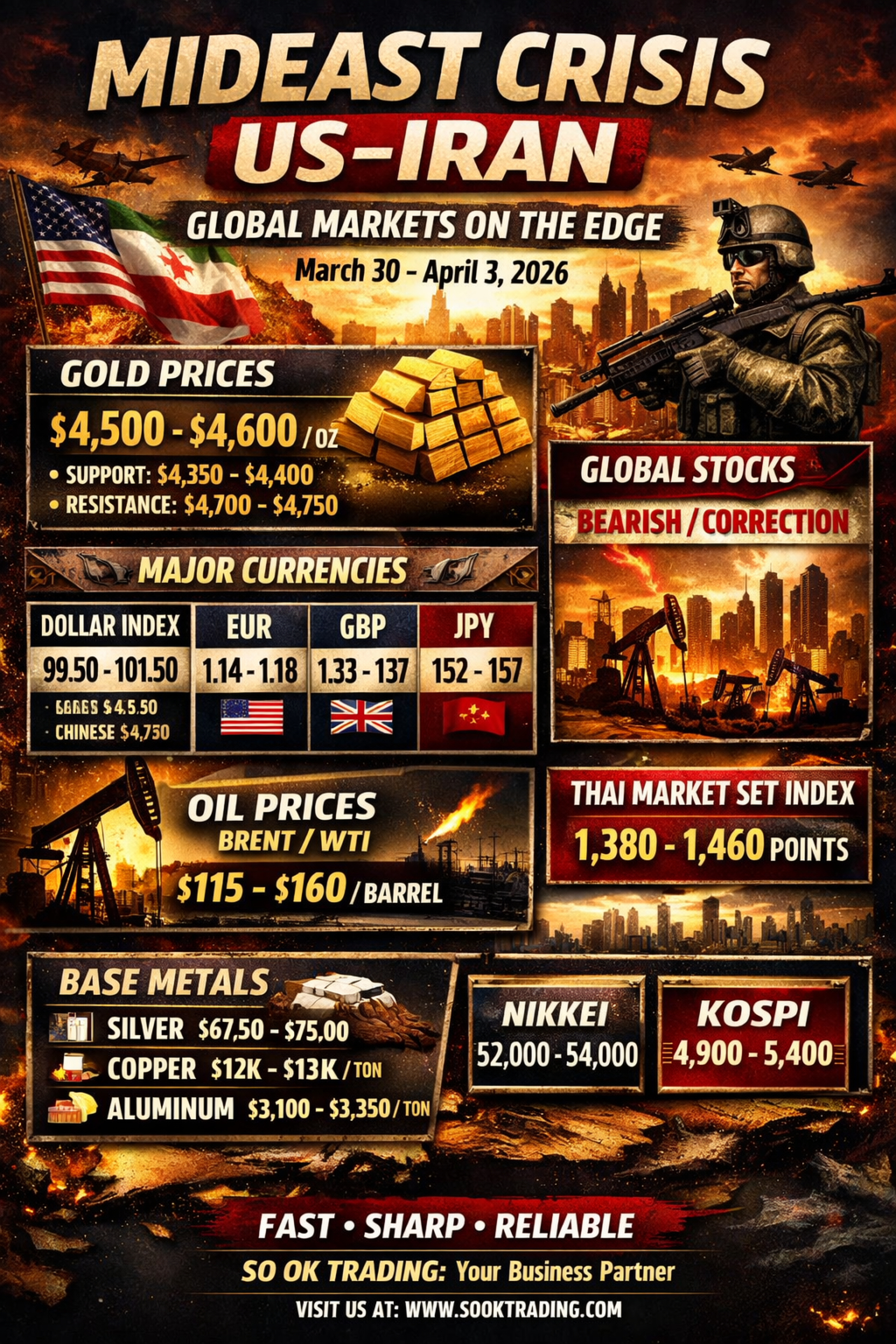
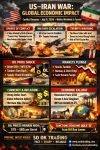
「中東戦争 US–IRAN:株式市場・為替・金・商品市場 — 世界市場の運命を決める一週間」
2026年3月30日〜4月3日
SO OK TRADING による分析
金(Gold) — 依然として強力な避難資産
トレンド: 強気のボラティリティ
予想価格レンジ: 4,500 – 4,600ドル/オンス
主要サポート: 4,350 – 4,400ドル
主要レジスタンス: 4,700 – 4,750ドル
分析: 米国–イラン交渉が不調に終われば金価格は4,700ドルを突破する可能性が高い。一方、緊張緩和の兆しがあれば4,400ドル付近まで調整する可能性。
世界株式市場
トレンド: 弱気 / 調整局面
S&P500 と Nasdaq は5週連続下落
主な懸念: エネルギーコスト高によるスタグフレーション
アジア市場およびタイ市場も世界動向に連動し脆弱
主要通貨の見通し
米ドル (USD / DXY): 99.50 – 101.50ポイント
サポート: 99.00 / レジスタンス: 101.80
ユーロ (EUR): 1.14 – 1.18ドル / 37.40 – 38.20バーツ
英ポンド (GBP): 1.33 – 1.37ドル / 43.20 – 44.10バーツ
日本円 (USD/JPY): 152 – 157円 / 0.20 – 0.21バーツ
中国人民元 (USD/CNY): 6.84 – 6.87元
タイバーツ (USD/THB): 32.80 – 33.40バーツ
サポート: 32.70 / レジスタンス: 33.25
️ 原油市場
トレンド: 強気 / 供給ショック
Brent と WTI は3月に40%以上上昇
ホルムズ海峡が封鎖されれば → 115–160ドル/バレル
極端な場合は200ドル/バレルに到達する可能性
タイ株式市場 (SET Index)
トレンド: 横ばい下落
サポート: 1,380–1,420ポイント
レジスタンス: 1,450–1,460ポイント
強み: エネルギー・精製株 (PTTEP, PTT)
脆弱: 建材、病院、航空関連
ポジティブ要因: P/E が低く配当利回りが高いバリュープレイ
アジア市場予測
日本 (Nikkei 225): 52,000–54,000ポイント
韓国 (KOSPI): 4,900–5,400ポイント
香港 (Hang Seng): バリュエーションが割安 → 平和の兆しがあれば急回復の可能性
⚙️ 基礎金属と銀
アルミニウム: 3,100 – 3,350ドル/トン → 強気
銅: 12,000 – 13,000ドル/トン → 横ばい、中国の刺激策次第
銀: 67.50 – 75.00ドル/オンス → 横ばい、投機的買いの可能性
今週の重要イベント
3月30日: パウエル議長の演説 → ドル高要因
4月1日: ADP雇用統計 & ISM → 原油価格の影響を反映
4月3日: グッドフライデー / 米雇用統計 → 弱ければ金を押し上げ
まとめ (2026年3月30日〜4月3日)
金は依然として「避難資産」であり、サポートは4,400ドル、レジスタンスは4,700ドル。主要通貨は戦争と米金融政策の影響を受け、ドル高・ユーロと円安・人民元とバーツはエネルギー価格に押される展開。投資家は和平交渉と米経済指標に注目すべき一週間。
SO OK TRADING — FAST • SHARP • RELIABLE
あなたのビジネスパートナー
www.sooktrading.com
2026年3月30日〜4月3日
SO OK TRADING による分析
金(Gold) — 依然として強力な避難資産
トレンド: 強気のボラティリティ
予想価格レンジ: 4,500 – 4,600ドル/オンス
主要サポート: 4,350 – 4,400ドル
主要レジスタンス: 4,700 – 4,750ドル
分析: 米国–イラン交渉が不調に終われば金価格は4,700ドルを突破する可能性が高い。一方、緊張緩和の兆しがあれば4,400ドル付近まで調整する可能性。
世界株式市場
トレンド: 弱気 / 調整局面
S&P500 と Nasdaq は5週連続下落
主な懸念: エネルギーコスト高によるスタグフレーション
アジア市場およびタイ市場も世界動向に連動し脆弱
主要通貨の見通し
米ドル (USD / DXY): 99.50 – 101.50ポイント
サポート: 99.00 / レジスタンス: 101.80
ユーロ (EUR): 1.14 – 1.18ドル / 37.40 – 38.20バーツ
英ポンド (GBP): 1.33 – 1.37ドル / 43.20 – 44.10バーツ
日本円 (USD/JPY): 152 – 157円 / 0.20 – 0.21バーツ
中国人民元 (USD/CNY): 6.84 – 6.87元
タイバーツ (USD/THB): 32.80 – 33.40バーツ
サポート: 32.70 / レジスタンス: 33.25
️ 原油市場
トレンド: 強気 / 供給ショック
Brent と WTI は3月に40%以上上昇
ホルムズ海峡が封鎖されれば → 115–160ドル/バレル
極端な場合は200ドル/バレルに到達する可能性
タイ株式市場 (SET Index)
トレンド: 横ばい下落
サポート: 1,380–1,420ポイント
レジスタンス: 1,450–1,460ポイント
強み: エネルギー・精製株 (PTTEP, PTT)
脆弱: 建材、病院、航空関連
ポジティブ要因: P/E が低く配当利回りが高いバリュープレイ
アジア市場予測
日本 (Nikkei 225): 52,000–54,000ポイント
韓国 (KOSPI): 4,900–5,400ポイント
香港 (Hang Seng): バリュエーションが割安 → 平和の兆しがあれば急回復の可能性
⚙️ 基礎金属と銀
アルミニウム: 3,100 – 3,350ドル/トン → 強気
銅: 12,000 – 13,000ドル/トン → 横ばい、中国の刺激策次第
銀: 67.50 – 75.00ドル/オンス → 横ばい、投機的買いの可能性
今週の重要イベント
3月30日: パウエル議長の演説 → ドル高要因
4月1日: ADP雇用統計 & ISM → 原油価格の影響を反映
4月3日: グッドフライデー / 米雇用統計 → 弱ければ金を押し上げ
まとめ (2026年3月30日〜4月3日)
金は依然として「避難資産」であり、サポートは4,400ドル、レジスタンスは4,700ドル。主要通貨は戦争と米金融政策の影響を受け、ドル高・ユーロと円安・人民元とバーツはエネルギー価格に押される展開。投資家は和平交渉と米経済指標に注目すべき一週間。
SO OK TRADING — FAST • SHARP • RELIABLE
あなたのビジネスパートナー
www.sooktrading.com


関連コンテンツ
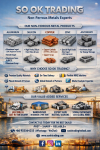
SO OK TRADING – Trusted Non-Ferrous Expert
2026年8月31日
SO OK TRADINGは、信頼できるビジネスパートナーとして、非鉄金属(Non-Ferrous Metals)業界で高品質な原材料を提供しています。
国際基準に適合し、納期厳守、柔軟な調達対応を実現し、世界からタイへ、タイから世界へとビジネスをつなぎます。
10年以上にわたるグローバル市場での専門知識と経験を活かし、確かな供給力をお届けします。
⚙️ 取扱製品
当社は幅広い非鉄金属製品を取り揃えています:
31 8月 2026
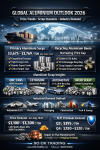
「米国–イラン戦争 世界のエネルギーと経済を揺るがす」
再び勃発 — 2026年7月9日 : 世界の財布に衝撃
SO OK TRADING 提供
9 7月 2026
