「リサイクルアルミニウム:スクラップから世界基準へ ― サーキュラーエコノミーで産業を変革するアルミリメルト ― Remelt Revolution:ネットゼロに向けた金属産業の革命」
最終更新: 21 2月 2026
3097 閲覧数
นี่คือเวอร์ชันแปลเป็น ภาษาญี่ปุ่น ของบทความที่คุณให้มา:
アルミニウムリサイクル:スクラップから産業の「新しい標準」へ
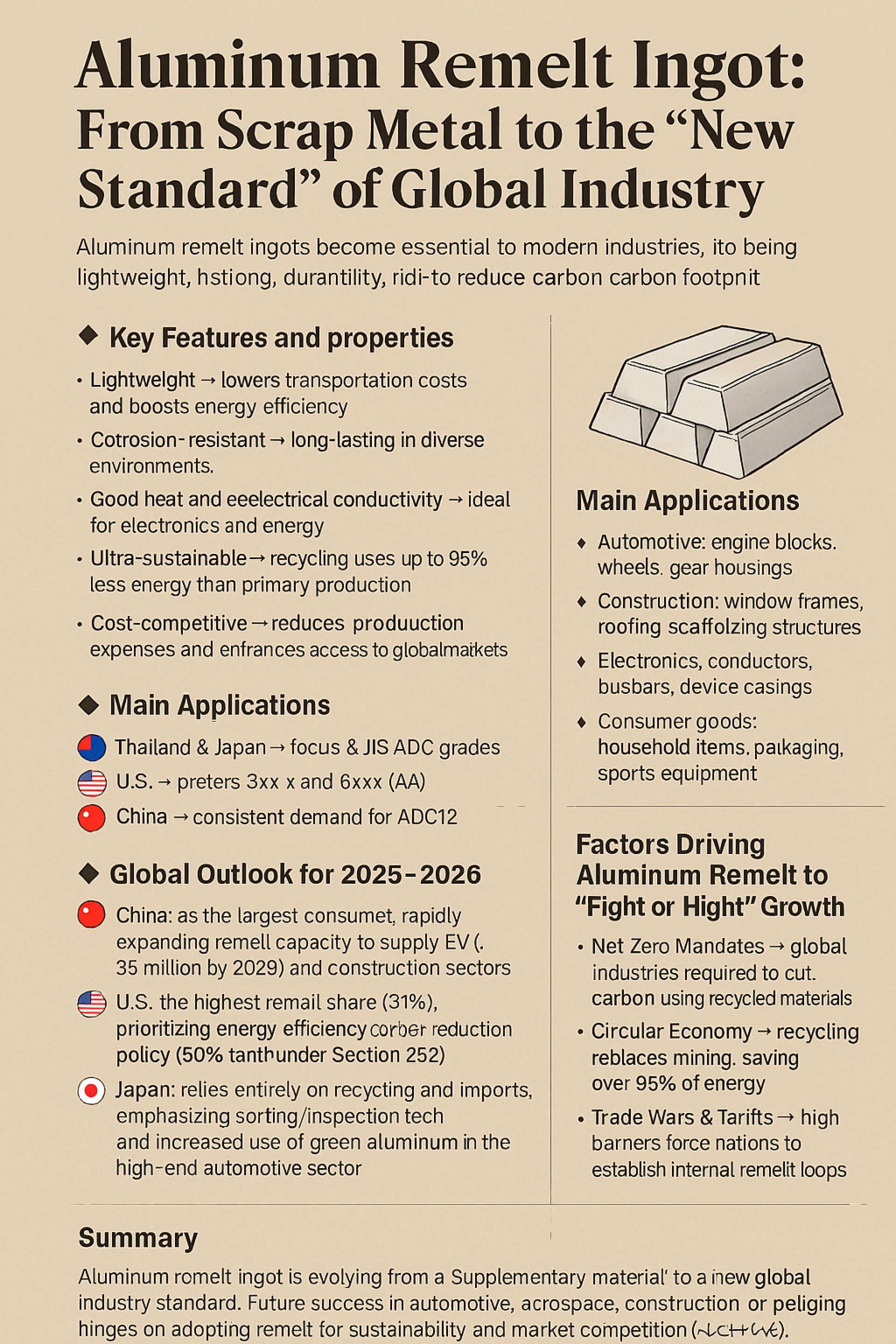
アルミニウム再溶解インゴット(Aluminum Remelt Ingot)は、現代産業の中心的存在になりつつあります。軽量で強靭、耐食性に優れ、さらに持続可能性とカーボンフットプリント削減に直結する素材として、もはや「選択肢」ではなく 必須の主役 となっています。
✦ 特長と性能
軽量 → 輸送コスト削減とエネルギー効率向上
耐食性 → 多様な環境で長寿命
優れた熱・電気伝導性 → 電子機器やエネルギー分野に最適
持続可能性 → 新規生産に比べて最大 95%の省エネ
コスト競争力 → 生産費用を削減し、グローバル市場へのアクセスを容易に
✦ 主なグレード
ADC12 / A383 → 汎用グレード、エンジン部品や家電に使用
A356 → プレミアムグレード、アルミホイールや高強度構造材に使用
AC4B → シリンダーヘッドや高圧部品に適用
市場インサイト:
タイ・日本 → ADC 系(JIS 規格)が主流
米国 → 3xx.x や 6xxx(AA 規格)が人気
中国 → ADC12 の需要が継続的に高い
✦ 主な用途
自動車:エンジンブロック、ホイール、ギアハウジング
建設:窓枠、屋根、足場構造
電子機器:導体、バスバー、筐体
消費財:家庭用品、包装材、スポーツ用品
✦ 世界動向(2025–2026)
中国:世界最大の消費国。EV(2025年に3,500万台目標)と建設需要に対応するため生産能力を拡大、輸入スクラップの品質基準を強化。
米国:再溶解利用率世界最高(81%)。エネルギー効率とカーボン削減を重視し、Section 232 に基づく関税を 50% に引き上げ。航空宇宙・自動車・包装分野で需要増。
日本:完全にリサイクルと輸入に依存。高度な選別・検査技術を活用し、グリーンアルミニウムの利用を拡大。高品質自動車産業が中心。
タイ:ASEAN のスクラップハブとして台頭。中国・米国への輸出が増加。アルミ缶リサイクル率は 86% に達し、Aluminium Loop などの循環経済プロジェクトを推進。
✦ 成長を後押しする要因
Net Zero 需要 → 世界の産業がカーボン削減のためリサイクル材を必須化
サーキュラーエコノミー → 採掘に代わるリサイクル、省エネ効果 95%以上
貿易戦争と関税 → 高関税により各国が国内リメルト循環を構築
新技術投資 → 精密な選別・検査により一次アルミ並みの品質を実現
EV と包装材需要 → 電動モビリティと持続可能な包装が成長の主要ドライバー
✦ まとめ
アルミニウム再溶解インゴットは「補助材料」から 世界産業の新しい標準 へと進化しています。自動車、航空宇宙、建設、包装のいずれの分野でも、持続可能性と競争力を確保するために不可欠です。
スクラップから → 未来の主役へ
金属・製造業界に携わる方々にとって、今こそリメルトへの移行を進め、世界市場のチャンスを掴むべき時です。
SOOK TRADING はあなたのビジネスパートナーです。ADC12 や Aluminum Remelt Ingot のご要望がございましたら、ぜひ弊社ウェブサイト www.sooktrading.com → Give Inquiry またはメール sooktrading@outlook.com にて直接ご連絡ください。
アルミニウムリサイクル:スクラップから産業の「新しい標準」へ
アルミニウム再溶解インゴット(Aluminum Remelt Ingot)は、現代産業の中心的存在になりつつあります。軽量で強靭、耐食性に優れ、さらに持続可能性とカーボンフットプリント削減に直結する素材として、もはや「選択肢」ではなく 必須の主役 となっています。
✦ 特長と性能
軽量 → 輸送コスト削減とエネルギー効率向上
耐食性 → 多様な環境で長寿命
優れた熱・電気伝導性 → 電子機器やエネルギー分野に最適
持続可能性 → 新規生産に比べて最大 95%の省エネ
コスト競争力 → 生産費用を削減し、グローバル市場へのアクセスを容易に
✦ 主なグレード
ADC12 / A383 → 汎用グレード、エンジン部品や家電に使用
A356 → プレミアムグレード、アルミホイールや高強度構造材に使用
AC4B → シリンダーヘッドや高圧部品に適用
市場インサイト:
タイ・日本 → ADC 系(JIS 規格)が主流
米国 → 3xx.x や 6xxx(AA 規格)が人気
中国 → ADC12 の需要が継続的に高い
✦ 主な用途
自動車:エンジンブロック、ホイール、ギアハウジング
建設:窓枠、屋根、足場構造
電子機器:導体、バスバー、筐体
消費財:家庭用品、包装材、スポーツ用品
✦ 世界動向(2025–2026)
中国:世界最大の消費国。EV(2025年に3,500万台目標)と建設需要に対応するため生産能力を拡大、輸入スクラップの品質基準を強化。
米国:再溶解利用率世界最高(81%)。エネルギー効率とカーボン削減を重視し、Section 232 に基づく関税を 50% に引き上げ。航空宇宙・自動車・包装分野で需要増。
日本:完全にリサイクルと輸入に依存。高度な選別・検査技術を活用し、グリーンアルミニウムの利用を拡大。高品質自動車産業が中心。
タイ:ASEAN のスクラップハブとして台頭。中国・米国への輸出が増加。アルミ缶リサイクル率は 86% に達し、Aluminium Loop などの循環経済プロジェクトを推進。
✦ 成長を後押しする要因
Net Zero 需要 → 世界の産業がカーボン削減のためリサイクル材を必須化
サーキュラーエコノミー → 採掘に代わるリサイクル、省エネ効果 95%以上
貿易戦争と関税 → 高関税により各国が国内リメルト循環を構築
新技術投資 → 精密な選別・検査により一次アルミ並みの品質を実現
EV と包装材需要 → 電動モビリティと持続可能な包装が成長の主要ドライバー
✦ まとめ
アルミニウム再溶解インゴットは「補助材料」から 世界産業の新しい標準 へと進化しています。自動車、航空宇宙、建設、包装のいずれの分野でも、持続可能性と競争力を確保するために不可欠です。
スクラップから → 未来の主役へ
金属・製造業界に携わる方々にとって、今こそリメルトへの移行を進め、世界市場のチャンスを掴むべき時です。
SOOK TRADING はあなたのビジネスパートナーです。ADC12 や Aluminum Remelt Ingot のご要望がございましたら、ぜひ弊社ウェブサイト www.sooktrading.com → Give Inquiry またはメール sooktrading@outlook.com にて直接ご連絡ください。


関連コンテンツ
銅価格の動向(2026年2月)
世界は今、“転換点”に突入しています。EV、AI、そしてクリーンエネルギーによる需要が急増する一方で、供給は依然として逼迫しています。
SO OK TRADINGは、市場の全体像と価格調整期における原材料調達戦略をまとめ、タイの事業者がこの戦略的資産に潜むチャンスを明確に捉えられるようサポートします。
1 2月 2026
アルミニウム沸騰!LME急騰 – プレミアムは過去10年で最高水準
2026年5月、世界のアルミニウム市場は「ここ数年で最も熱い」状況が続いています。価格は1トンあたり3,600ドルを突破し、中東の供給危機とEV・クリーンエネルギー産業からの旺盛な需要に支えられています。
12 5月 2026
「銅価格が急騰!AIとクリーンエネルギーが世界市場を新時代へと押し上げる」
13 3月 2026
