黄金市场大逆转——机会还是风险 : Article By SO OK TRADING
最后更新: 3 2月 2026
3909 浏览量
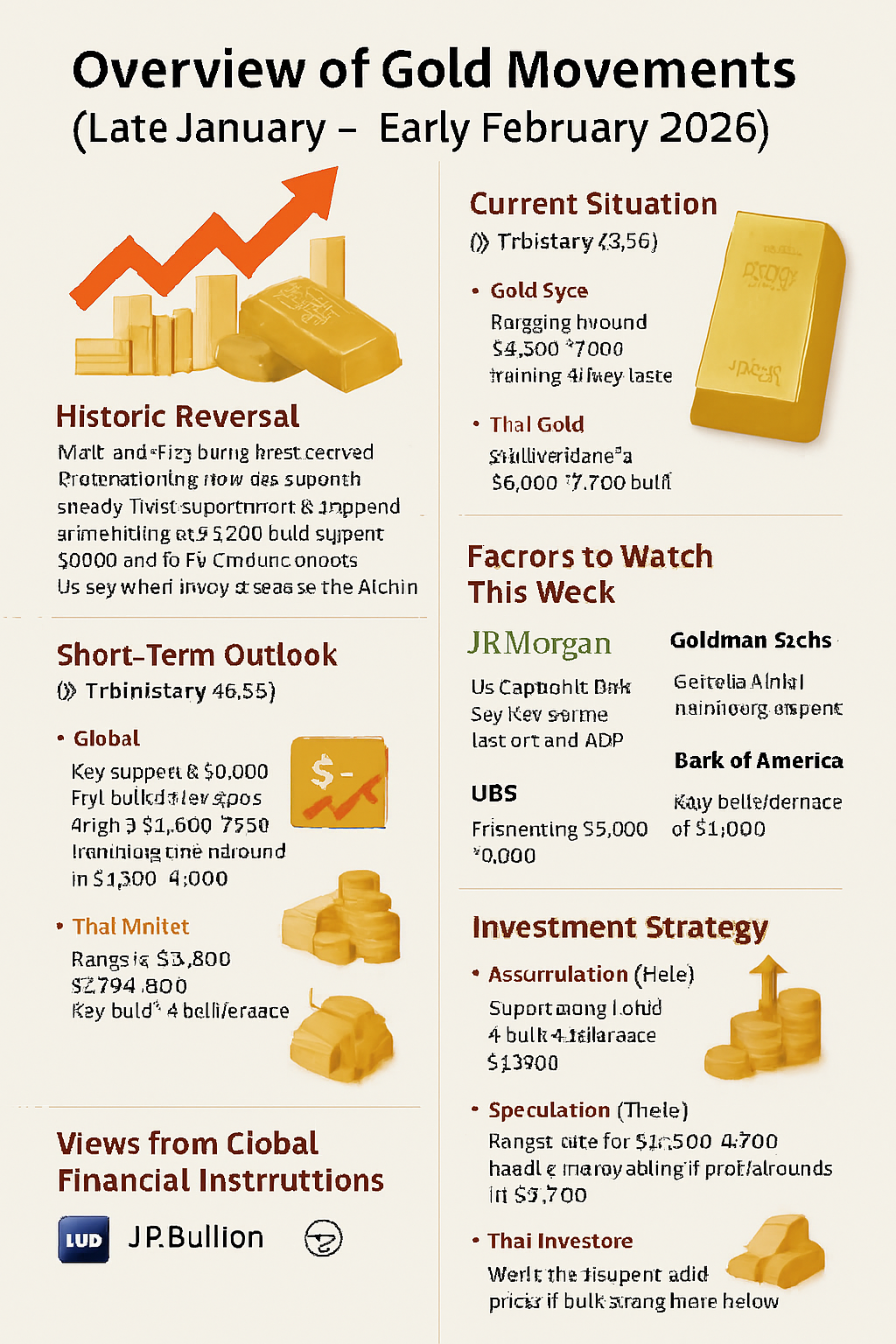
黄金市场动向概览(2026年1月末至2月初)
全球黄金市场刚刚经历了数十年来最大的一次 历史性反转 (Historic Reversal)。在1月末,金价首次突破每盎司 5,500美元,泰国黄金价格也飙升至 80,000泰铢 的历史新高。
然而仅仅几天之后,大型机构和基金的获利了结抛售潮汹涌而至,全球金价在不到一周的时间里急跌 800–900美元,泰国金价也下跌超过 10,000泰铢。不过,由于泰铢贬值至 31.60–32.00泰铢/美元 区间,国内金价的跌幅没有全球市场那么剧烈。
最新情况(2026年2月3日)
全球金价(Gold Spot):4,664–4,700美元/盎司
泰国黄金(96.5%金条):70,000–71,000泰铢
短期走势展望(2月3日–10日)
全球市场:
当前处于“蓄势”阶段。关键支撑位在 4,600美元,若跌破可能下探 4,400–4,550美元。若企稳并反弹,首个目标为 4,900–5,000美元。
泰国市场:
预计在 69,500–72,500泰铢 区间波动。若泰铢升值至 31.50泰铢/美元 以下,国内金价可能进一步走低。
本周需关注的因素
美国非农就业数据 (NFP) 与 ADP就业报告
高位后的获利了结卖压
美联储 (Fed) 的利率与通胀政策
中东地区的地缘政治紧张局势
全球金融机构观点
摩根大通 (J.P. Morgan): 预计年底目标 6,300美元,认为此次下跌只是市场过度投机后的调整。
高盛 (Goldman Sachs): 目标 4,900–5,400美元,强调各国央行持续买入黄金。
瑞银 (UBS): 预测 5,400–6,200美元,供应不足与地缘政治风险可能推高价格。
美国银行 (Bank of America): 预计全年平均价格约 5,000美元。
泰国分析师观点
YLG Bullion: 认为黄金仍有上涨空间,目标 4,900美元,但提醒2月波动性极高。
SO OK TRADING: 预计2月金价在 4,500–5,250美元/盎司 区间波动,均值约 5,000美元。泰国黄金价格预计在 70,000–76,000泰铢,均值约 73,500泰铢,但需密切关注汇率变化。
投资策略(SO OK TRADING总结)
长期持有: 若金价稳于 4,600美元 以上,是加仓的良机。
短线交易: 在 4,600–4,900美元 区间操作,但若逼近 5,000美元,需警惕强烈的抛压。
泰国投资者: 若泰铢升值至 31.50泰铢/美元 以下,是在国内低价买入黄金的机会。
总结
黄金市场在1月的急涨后进入了大幅调整阶段。短期内波动性依然很高,但中长期仍被全球金融机构普遍看好。对于长期投资者而言,这是一个逐步加仓的机会;而短线交易者则需谨慎应对可能出现的强烈卖压。
全球黄金市场刚刚经历了数十年来最大的一次 历史性反转 (Historic Reversal)。在1月末,金价首次突破每盎司 5,500美元,泰国黄金价格也飙升至 80,000泰铢 的历史新高。
然而仅仅几天之后,大型机构和基金的获利了结抛售潮汹涌而至,全球金价在不到一周的时间里急跌 800–900美元,泰国金价也下跌超过 10,000泰铢。不过,由于泰铢贬值至 31.60–32.00泰铢/美元 区间,国内金价的跌幅没有全球市场那么剧烈。
最新情况(2026年2月3日)
全球金价(Gold Spot):4,664–4,700美元/盎司
泰国黄金(96.5%金条):70,000–71,000泰铢
短期走势展望(2月3日–10日)
全球市场:
当前处于“蓄势”阶段。关键支撑位在 4,600美元,若跌破可能下探 4,400–4,550美元。若企稳并反弹,首个目标为 4,900–5,000美元。
泰国市场:
预计在 69,500–72,500泰铢 区间波动。若泰铢升值至 31.50泰铢/美元 以下,国内金价可能进一步走低。
本周需关注的因素
美国非农就业数据 (NFP) 与 ADP就业报告
高位后的获利了结卖压
美联储 (Fed) 的利率与通胀政策
中东地区的地缘政治紧张局势
全球金融机构观点
摩根大通 (J.P. Morgan): 预计年底目标 6,300美元,认为此次下跌只是市场过度投机后的调整。
高盛 (Goldman Sachs): 目标 4,900–5,400美元,强调各国央行持续买入黄金。
瑞银 (UBS): 预测 5,400–6,200美元,供应不足与地缘政治风险可能推高价格。
美国银行 (Bank of America): 预计全年平均价格约 5,000美元。
泰国分析师观点
YLG Bullion: 认为黄金仍有上涨空间,目标 4,900美元,但提醒2月波动性极高。
SO OK TRADING: 预计2月金价在 4,500–5,250美元/盎司 区间波动,均值约 5,000美元。泰国黄金价格预计在 70,000–76,000泰铢,均值约 73,500泰铢,但需密切关注汇率变化。
投资策略(SO OK TRADING总结)
长期持有: 若金价稳于 4,600美元 以上,是加仓的良机。
短线交易: 在 4,600–4,900美元 区间操作,但若逼近 5,000美元,需警惕强烈的抛压。
泰国投资者: 若泰铢升值至 31.50泰铢/美元 以下,是在国内低价买入黄金的机会。
总结
黄金市场在1月的急涨后进入了大幅调整阶段。短期内波动性依然很高,但中长期仍被全球金融机构普遍看好。对于长期投资者而言,这是一个逐步加仓的机会;而短线交易者则需谨慎应对可能出现的强烈卖压。


相关文章

全球非铁金属价格趋势(2026年9月21日至25日)
全球市场概览及 Ceiling–Average–Floor 价格预测
SO OK TRADING | 2026年9月20日
引言
本周全球非铁金属市场仍受到重要宏观因素的压力,尤其是美国联邦储备委员会(Fed)和海湾国家的加息,导致美元走强,短期内压制了大宗商品价格。然而,各金属的供应紧张(Supply Tightness)依然是关键支撑力量,使价格维持在重要支撑位之上。
市场展望
伦敦金属交易所(LME)整体处于 “Consolidation to Rebound(盘整至反弹)” 阶段。尽管在月中价格一度承压,但上周末因实物需求强劲而回升,尤其是 铜(Copper) 和 锌(Zinc),因供应中断(Supply Disruption)推动价格维持在高位。
SO OK TRADING 的观点
9月下旬非铁金属市场预计仍将在有限区间内波动,但中期有望反弹。特别是供应紧张的 铜、铝、锌,仍是需要重点关注的核心金属。
对于泰国的采购方而言,应采取 套期保值(Hedging)和长期合同(Term Contract) 策略,以降低价格波动风险。同时需密切关注美元走势以及中国经济指标(PMI),这些将决定亚洲市场的实际需求方向。
SO OK TRADING
FAST • SHARP • RELIABLE
您在非铁金属市场的商业伙伴
20 9月 2026
中文版引言
2026年将成为全球与泰国经济的重要转折之年。
世界正由 人工智能(AI)与清洁能源 驱动,同时 黄金、白银、铜、铝 等战略性大宗商品正在崛起。
尽管全球经济仍在持续增长,但贸易战与地缘政治风险依然是主要压力。泰国目前正处于 转型期(Transition),亟需吸引更多外国直接投资(FDI),并加大研发(R&D)投入,以避免被时代浪潮所淘汰。
在本文中,SO OK TRADING 将带您深入解析 2026 年全球与泰国经济的趋势,并指出新兴产业中的机遇。
这些机遇涵盖 数字科技、综合医疗、清洁能源,以及快速成长的生活方式市场。2026年将成为全球与泰国经济的重要转折点。
在 人工智能(AI) 和 清洁能源 的推动下,世界正见证着战略性大宗商品的崛起——黄金、白银、铜和铝。
尽管全球经济仍在持续增长,但泰国依然处于 转型期,亟需吸引更多外国直接投资(FDI),并加强研发(R&D),以把握 医疗枢纽、绿色制造和生活方式市场 等新兴机遇。
17 2月 2026

泰国海产品与饮料产业概览 2026
SO OK TRADING | 2026年7月19日
2026年是泰国海产品与饮料产业的重要转折点。两大产业依然是国家经济的支柱,但同时也面临全球经济放缓、贸易壁垒,以及消费者偏好逐渐转向“健康与可持续”的挑战。
在本文中,SO OK TRADING 汇集了两大产业的深度信息与关键趋势,并分析了 金属包装(锡板 & 铝罐) 的发展方向——这是泰国食品与饮料生产和出口的核心环节。
19 7月 2026
