「黄金暴跌,但机遇依然闪耀 —— 从抛售压力到2026年强劲的牛市浪潮」 SO OK TRADING:2026年5月28日
最后更新: 28 五月 2026
1785 浏览量
黄金暴跌,但机遇依然闪耀 – 2026黄金投资者策略 SO OK TRADING:2026年5月28日
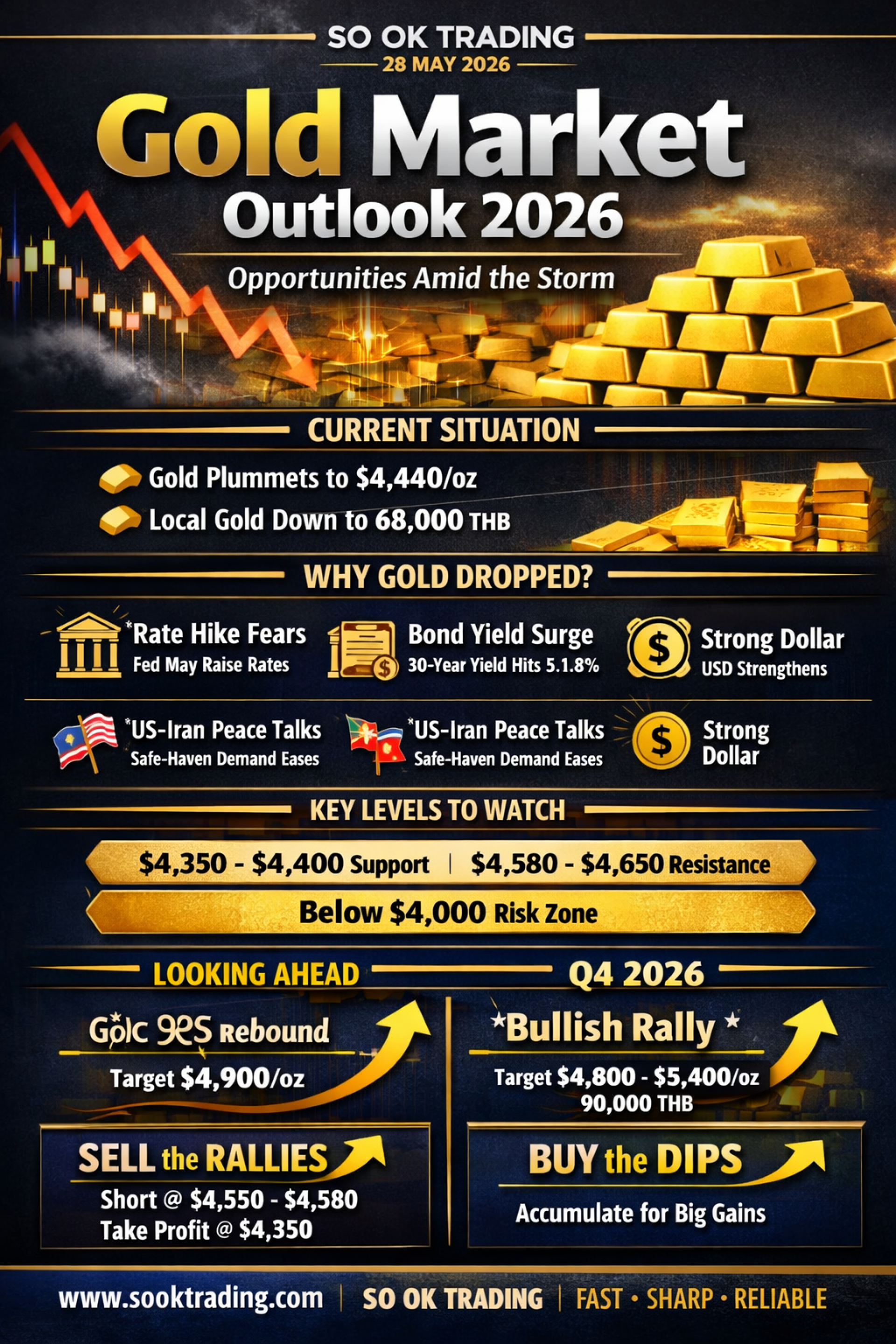
黄金正处于一场“全球金融风暴”之中,让许多投资者心惊胆战。国际金价(Gold Spot)跌破4,500美元/盎司,徘徊在4,380–4,410美元之间;国内金条也瞬间下跌1,000泰铢至68,000–68,250泰铢。但在这场剧烈波动背后,对于中长期投资者而言,这仍是一场“黄金机遇”。尤其在2026年第三、第四季度,市场有望迎来反弹(REBOUND)。
黄金为何暴跌?
美联储可能加息:顽固的通胀让市场担心加息超出预期
美债收益率飙升:30年期美债收益率创下5.18%的历史新高,资金流向债券市场
美伊和平消息:降低了黄金作为避险资产的需求
美元走强:美国经济数据强劲,美元指数上升,压制金价
关键价格区间
Gold Spot:支撑位 $4,350–$4,400(若跌破或测试 $4,000),阻力位 $4,580–$4,650
国内金条:卖出约70,050泰铢,回购约69,850泰铢
⏳ 短期预测(至2026年6月15日)
Gold Spot 平均 $4,380–$4,500(当前 $4,440)
国内黄金平均 67,500–68,500泰铢
中期至年底展望
Q3/2026:价格开始反弹,有望测试 $4,900
Q4/2026:强劲牛市(Bullish Rally),国际金价或升至 $4,800–$5,400,国内黄金最高目标90,000泰铢
投资策略建议
短期投资者: “逢高卖出,逢低买入”,在阻力位 $4,550–$4,580 做空,在支撑位 $4,330 附近获利了结
中长期投资者: “逢低买入(Buy on Dips)”,逐步积累黄金(DCA),在Q3–Q4上涨时分批获利
✨ 总结 今日金价或许令人担忧,但从长远来看,这是增加安全资产的绝佳机会。到2026年底,黄金极有可能迎来新一轮强劲牛市。
SO OK TRADING FAST • SHARP • RELIABLE www.sooktrading.com Facebook: SO OK TRADING
黄金正处于一场“全球金融风暴”之中,让许多投资者心惊胆战。国际金价(Gold Spot)跌破4,500美元/盎司,徘徊在4,380–4,410美元之间;国内金条也瞬间下跌1,000泰铢至68,000–68,250泰铢。但在这场剧烈波动背后,对于中长期投资者而言,这仍是一场“黄金机遇”。尤其在2026年第三、第四季度,市场有望迎来反弹(REBOUND)。
黄金为何暴跌?
美联储可能加息:顽固的通胀让市场担心加息超出预期
美债收益率飙升:30年期美债收益率创下5.18%的历史新高,资金流向债券市场
美伊和平消息:降低了黄金作为避险资产的需求
美元走强:美国经济数据强劲,美元指数上升,压制金价
关键价格区间
Gold Spot:支撑位 $4,350–$4,400(若跌破或测试 $4,000),阻力位 $4,580–$4,650
国内金条:卖出约70,050泰铢,回购约69,850泰铢
⏳ 短期预测(至2026年6月15日)
Gold Spot 平均 $4,380–$4,500(当前 $4,440)
国内黄金平均 67,500–68,500泰铢
中期至年底展望
Q3/2026:价格开始反弹,有望测试 $4,900
Q4/2026:强劲牛市(Bullish Rally),国际金价或升至 $4,800–$5,400,国内黄金最高目标90,000泰铢
投资策略建议
短期投资者: “逢高卖出,逢低买入”,在阻力位 $4,550–$4,580 做空,在支撑位 $4,330 附近获利了结
中长期投资者: “逢低买入(Buy on Dips)”,逐步积累黄金(DCA),在Q3–Q4上涨时分批获利
✨ 总结 今日金价或许令人担忧,但从长远来看,这是增加安全资产的绝佳机会。到2026年底,黄金极有可能迎来新一轮强劲牛市。
SO OK TRADING FAST • SHARP • RELIABLE www.sooktrading.com Facebook: SO OK TRADING



相关文章
「铜的超级周期:当铜成为‘未来的金属’」
全球铜价正经历十年来最炙热的上涨!美国COMEX已飙升至 每磅6.69美元,上海市场突破 每吨14,000美元。铜不再只是传统的工业金属,而是成为 科技经济与清洁能源的核心。
14 五月 2026

Aluminum Ingot P1020 , A7
อลูมิเนียมเป็นหนึ่งในรูปแบบทั่วไปของโลหะผสมอลูมิเนียมที่ใช้ในอุตสาหกรรมสมัยใหม่ การผสมผสานคุณสมบัติที่เป็นเอกลักษณ์ของอลูมิเนียมทำให้เป็นวัสดุที่มีคุณค่าสำหรับการใช้งานที่หลากหลาย รวมถึงการก่อสร้าง การบินและอวกาศ การขนส่ง และสินค้าอุปโภคบริโภค ในบทความนี้ เราจะพิจารณากระบวนการผลิตแท่งอลูมิเนียมอย่างละเอียดมากยิ่งขึ้น
กระบวนการผลิตแท่งอลูมิเนียมเริ่มต้นด้วยการสกัดแร่บอกไซต์ แร่นี้จะถูกบดเป็นผงละเอียดก่อนแล้วจึงผสมกับโซเดียมไฮดรอกไซด์ในกระบวนการที่เรียกว่ากระบวนการไบเออร์ สารละลายที่ได้จะถูกบำบัดด้วยความร้อนและความดันเพื่อสร้างอะลูมิเนียมไฮดรอกไซด์ ซึ่งจะถูกทำให้แห้งเพื่อผลิตผงอะลูมินาจากนั้นนำผงอลูมินามาผสมกับไครโอไลต์ ซึ่งเป็นแร่ธาตุหายากที่ทำหน้าที่เป็นฟลักซ์ ส่วนผสมจะถูกวางในเซลล์อิเล็กโทรไลต์ขนาดใหญ่ที่เต็มไปด้วยเกลือหลอมเหลว และกระแสไฟฟ้าจะถูกส่งผ่านเซลล์ กระบวนการนี้เรียกว่ากระบวนการ Hall-Héroult ทำให้อะลูมิเนียมออกไซด์แยกตัวออกจากออกซิเจน เหลือแต่อโลหะอะลูมิเนียมบริสุทธิ์ จากนั้นโลหะอลูมิเนียมจะถูกเทลงในแม่พิมพ์เพื่อสร้างรูปทรงลิ่ม แม่พิมพ์มักทำจากเหล็กหรือกราไฟต์และมีหลายขนาดและรูปร่าง แท่งอโลหะจะถูกทำให้เย็นและแข็งตัว จากนั้นนำออกจากแม่พิมพ์และตัดตามความยาว (Aluminum Slab)
ก่อนที่แท่งอโลหะจะสามารถนำมาใช้ในอุตสาหกรรมได้ จะต้องผ่านกระบวนการต่อไป โดยทั่วไปแล้วจะละลายและหล่อเป็นรูปแบบเฉพาะสำหรับการใช้งานเฉพาะ ซึ่งอาจเกี่ยวข้องกับการผสมอลูมิเนียมกับอโลหะอื่นเพื่อให้ได้คุณสมบัติเฉพาะ เช่น ความแข็งแรง ความทนทานต่อการกัดกร่อน หรือการทนความร้อน แท่งอะลูมิเนียมมีขนาดตั้งแต่ไม่กี่ปอนด์ไปจนถึงหลายตัน ขึ้นอยู่กับการใช้งาน โดยปกติแล้วจะจัดส่งในปริมาณมากไปยังผู้ผลิต ซึ่งจะนำไปแปรรูปเป็นผลิตภัณฑ์ที่หลากหลายต่อไป (Aluminum Ingot, Aluminum Billet, Aluminum Slab) ETC.
โดยสรุปแล้ว การผลิตแท่งอะลูมิเนียมเป็นกระบวนการที่ซับซ้อนซึ่งเกี่ยวข้องกับการเปลี่ยนแปลงทางเคมีและกายภาพหลายขั้นตอน จำเป็นต้องมีความเข้าใจอย่างลึกซึ้งเกี่ยวกับวัสดุศาสตร์และหลักการทางวิศวกรรม เช่นเดียวกับแรงงานที่มีทักษะในการใช้งานอุปกรณ์ที่ซับซ้อนที่ใช้ในกระบวนการ แท่งอลูมิเนียมมีบทบาทสำคัญในอุตสาหกรรมสมัยใหม่ และความสามารถรอบด้านและความน่าเชื่อถือทำให้เป็นวัสดุที่ขาดไม่ได้สำหรับการใช้งานที่หลากหลาย ตั้งแต่เครื่องครัว ไปจนถึง เครื่องบิน และ ชิ้นส่วนในยานอวกาศ
28 11月 2025