「供应冲击震撼全球:ADC12 与 A6063 —— 中东供给消失,溢价飙升,成为产业关键变量」
最后更新: 21 4月 2026
3391 浏览量
铝市场更新 – 2026年4月21日
ADC12 与 A6063:稀缺且高价的产业关键金属
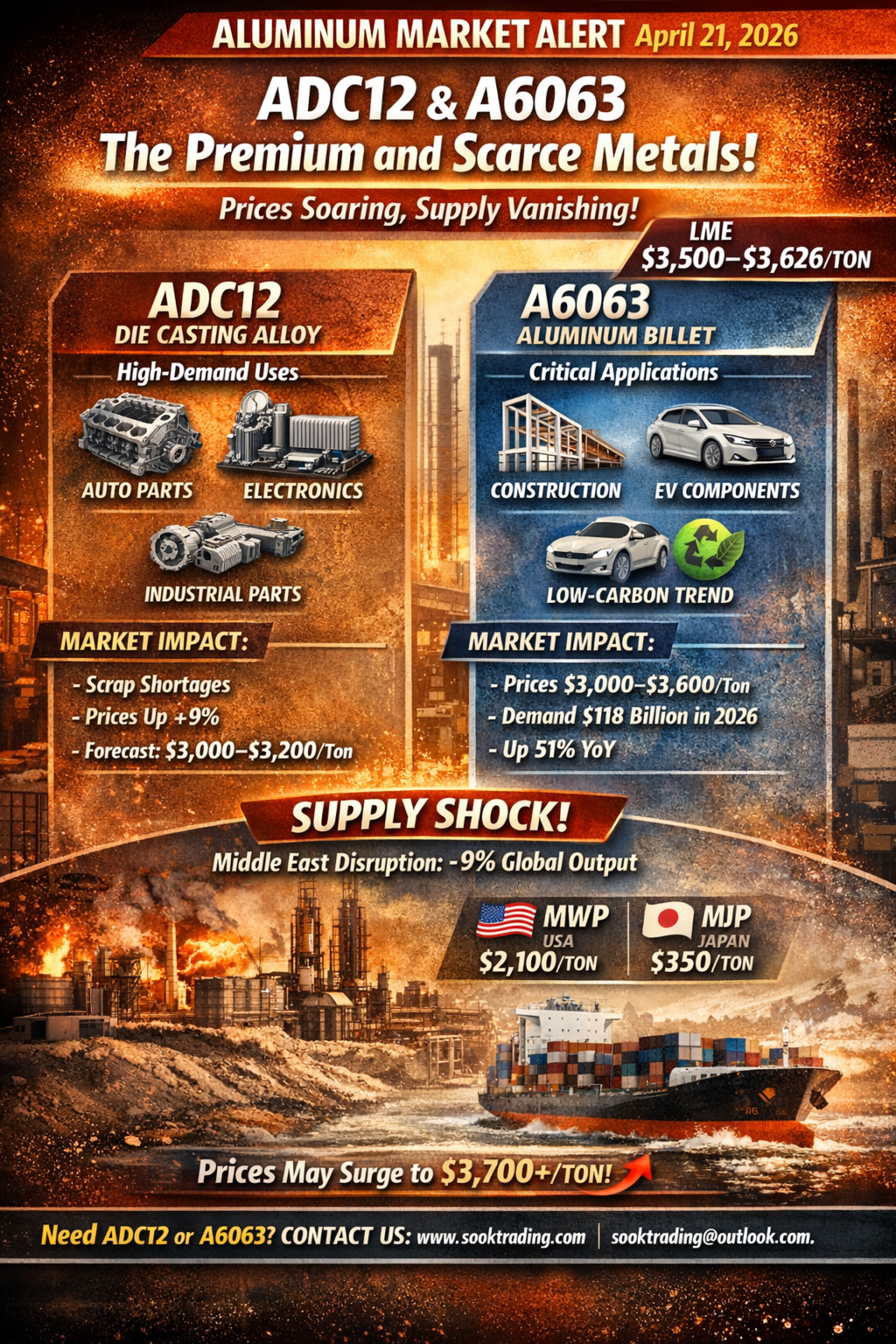
全球铝市场在2026年4月面临多重压力:能源成本飙升、中东地区冲突导致供应骤减约 8–9%,以及美国严格的进口关税。伦敦金属交易所(LME)价格已攀升至 3,500–3,626 美元/吨,区域溢价也创下历史新高。
ADC12 – 压铸核心合金
应用领域:
汽车:发动机缸体、变速箱壳体、气缸盖、电动车轻量化零部件
电子:散热器、外壳、精密零件
工业:耐腐蚀机械零件
市场情况:
亚洲和泰国需求恢复缓慢,但电动车是主要驱动力
印度价格自年初以来上涨超过9%
铝废料短缺导致供应紧张,价格居高不下
趋势: 预计价格仍将随能源和LME波动,在 3,000–3,200 美元/吨 区间运行
A6063 – 建筑与电动车的关键材料
应用领域:
建筑/建筑设计:门窗框架、节能建筑结构
电动车:轻量化挤压型材
电气/工业:管材、散热器、导电结构件
市场情况:
价格创4年来新高(3,000–3,600 美元/吨,同比+51%)
全球需求预计2026年达到 1,180 亿美元,年均增长率7–8%
欧洲CBAM推动“低碳铝锭”需求激增,回收与清洁能源铝材备受青睐
溢价与价格走势
美国MWP: 超过 2,100 美元/吨,创历史新高,因50%进口关税与国内供应不足
日本MJP: 达到 350–353 美元/吨,为近11年最高。若中东局势持续,Q3可能升至 400–500 美元/吨
中东供应冲击
阿联酋、巴林、卡塔尔冶炼厂遭受攻击并宣布 不可抗力(Force Majeure),全球供应立即减少约9%。日本因对中东进口依赖超过70%,受到最严重影响。若冲突持续,价格可能进一步升至 3,700–3,800 美元/吨。
战略要点
ADC12: 确保回收供应链,降低成本与供应风险
A6063: 把握低碳铝锭趋势,拓展欧洲出口机会
溢价: 亚洲买家需警惕套利流动导致供应外流至美国和欧洲
供应冲击: 拥有旧库存的企业占据优势,新买家面临巨大成本压力
如需采购 ALUMINUM INGOT ADC12 或 ALUMINUM BILLET A6063,请联系: www.sooktrading.com sooktrading@outlook.com
SO OK TRADING — FAST • SHARP • RELIABLE
ADC12 与 A6063:稀缺且高价的产业关键金属
全球铝市场在2026年4月面临多重压力:能源成本飙升、中东地区冲突导致供应骤减约 8–9%,以及美国严格的进口关税。伦敦金属交易所(LME)价格已攀升至 3,500–3,626 美元/吨,区域溢价也创下历史新高。
ADC12 – 压铸核心合金
应用领域:
汽车:发动机缸体、变速箱壳体、气缸盖、电动车轻量化零部件
电子:散热器、外壳、精密零件
工业:耐腐蚀机械零件
市场情况:
亚洲和泰国需求恢复缓慢,但电动车是主要驱动力
印度价格自年初以来上涨超过9%
铝废料短缺导致供应紧张,价格居高不下
趋势: 预计价格仍将随能源和LME波动,在 3,000–3,200 美元/吨 区间运行
A6063 – 建筑与电动车的关键材料
应用领域:
建筑/建筑设计:门窗框架、节能建筑结构
电动车:轻量化挤压型材
电气/工业:管材、散热器、导电结构件
市场情况:
价格创4年来新高(3,000–3,600 美元/吨,同比+51%)
全球需求预计2026年达到 1,180 亿美元,年均增长率7–8%
欧洲CBAM推动“低碳铝锭”需求激增,回收与清洁能源铝材备受青睐
溢价与价格走势
美国MWP: 超过 2,100 美元/吨,创历史新高,因50%进口关税与国内供应不足
日本MJP: 达到 350–353 美元/吨,为近11年最高。若中东局势持续,Q3可能升至 400–500 美元/吨
中东供应冲击
阿联酋、巴林、卡塔尔冶炼厂遭受攻击并宣布 不可抗力(Force Majeure),全球供应立即减少约9%。日本因对中东进口依赖超过70%,受到最严重影响。若冲突持续,价格可能进一步升至 3,700–3,800 美元/吨。
战略要点
ADC12: 确保回收供应链,降低成本与供应风险
A6063: 把握低碳铝锭趋势,拓展欧洲出口机会
溢价: 亚洲买家需警惕套利流动导致供应外流至美国和欧洲
供应冲击: 拥有旧库存的企业占据优势,新买家面临巨大成本压力
如需采购 ALUMINUM INGOT ADC12 或 ALUMINUM BILLET A6063,请联系: www.sooktrading.com sooktrading@outlook.com
SO OK TRADING — FAST • SHARP • RELIABLE



相关文章
“铜价飙升!AI与清洁能源推动全球市场进入新时代”
13 3月 2026
铝市火热!MJP溢价在Q3/2026再创新高
全球铝市场持续升温,日本MJP溢价预计将再创11年来新高,而LME现货价格保持在 3,450–3,700美元/吨,自年初以来上涨超过19%。
中东供应危机、几内亚铝土矿出口限制,以及欧洲CBAM政策,正在推动全球金属市场进入真正的“供应紧缩”时代。
11 6月 2026
中国的绿色铝转型
从煤炭燃料走向清洁能源的未来
SO OK TRADING | 2026年9月18日
中国作为全球最大的铝生产和消费国,占全球产量的约60%。过去依赖煤炭能源和数量驱动的产业,如今正迈向 绿色铝(Green Aluminum) 的新时代。通过清洁能源与先进技术的推动,中国正在应对环境挑战以及欧盟 CBAM(碳边境调节机制) 等全球碳政策的压力。
这一转型不仅体现了中国在减少碳排放方面的坚定决心,也标志着全球金属市场战略性调整的开始。铝工业正逐步进入 循环经济(Circular Economy) 与 高质量生产 的新阶段。
在本文中,SO OK TRADING 将深入解析:
年产能上限 4,500 万吨的供应控制政策
工厂向高科技产品转型,如 EV 电池箔与航空材料
云南与四川清洁能源基地的扩张
CBAM 的影响与中国在东盟的投资布局
2026–2027 年全球铝市场的趋势展望
✨ 中国正在重新定义“绿色铝”的概念
这是全球金属产业必须密切关注的重要转折点。
18 9月 2026
