「2026年3月2日:战争震撼全球市场 —— 汇率波动、原油飙升、股市下跌、金属剧烈调整、黄金飞涨,一文看尽全球经济全景 · SO OK TRADING 出品」
最后更新: 2 3月 2026
4539 浏览量
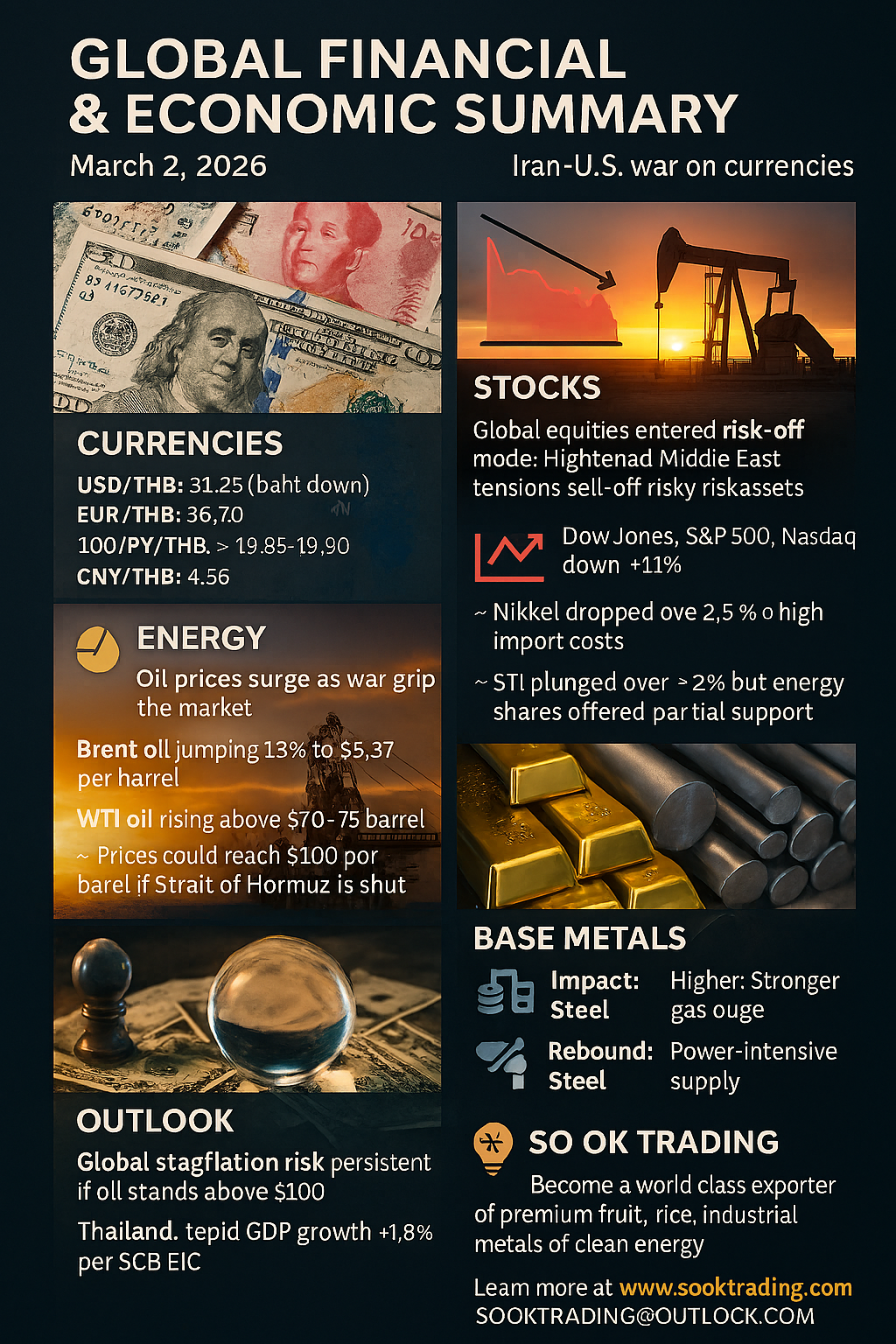
全球金融与经济市场综述(2026年3月2日)
美伊战争震撼全球市场,金融体系强烈进入“风险规避(Risk-off)”模式 —— 汇率剧烈波动、股市下跌、原油飙升、黄金飞涨。
泰铢与主要货币
泰铢(THB)因原油价格上涨与资金外流而走弱:
USD/THB: 31.25(泰铢贬值)
EUR/THB: 36.70
JPY/THB: 100日元 ≈ 19.85–19.90
CNY/THB: 4.56
全球货币走势:
美元(USD):作为避险资产强劲上涨,并受益于能源出口国地位
瑞士法郎(CHF):因中立性而最强劲
日元(JPY):初期走强,但受进口能源成本限制
欧元与英镑(EUR & GBP):因欧洲能源危机担忧而走弱
泰铢(THB):随区域货币整体走弱
人民币(CNY):窄幅波动
全球股市进入“风险规避”模式
中东局势动荡导致全球股市抛售:
美国:道琼斯、标普500、纳斯达克约下跌1%
欧洲:受能源危机拖累,仅能源与防务板块有支撑
中国:香港市场大跌,中国大陆因刺激政策预期而有支撑
日本:日经225指数下跌约2.5%,进口能源成本上升
新加坡:STI下跌约1.7%,航空与航运板块受压
泰国:SET指数下跌约2%至1,490点,能源股部分支撑
⛽ 原油价格飙升
布伦特原油:上涨13%,至82.37美元/桶,后回落至79–80美元
WTI原油:突破70–75美元/桶
前景:若霍尔木兹海峡被封锁,油价或达100美元/桶
️ 避险资产表现突出
黄金:创历史新高(5,500–6,000美元)
美国国债:买盘强劲
⚙️ 金属与稀土的影响
钢铁:运输与天然气成本上升,生产成本飙升
铝:因高耗电生产而价格急涨
铜:受电动车需求支撑维持高位,但运输成本增加
稀土:战略储备增加,价格走高
第二季度展望
全球经济:若油价维持在100美元以上,存在滞胀风险
泰国经济:SCB EIC预测GDP增长仅1.8%(能源成本高企)
金融市场:资金持续流入避险资产
产业:成本推动型通胀显著,尤其是金属与能源行业
✨ 总结
2026年3月,因中东战争全球进入“冲击期”。汇率剧烈波动、股市下跌、原油飙升、黄金飞涨。投资者与企业必须调整策略,应对风险与机遇。能源、金属与避险资产成为焦点。
SO OK TRADING
在充满不确定性的全球经济环境中,SO OK TRADING 作为全球贸易伙伴,致力于出口优质水果、大米、工业金属与清洁能源,帮助泰国企业自信迈向世界舞台 。
我们坚信 “化危机为机遇”,并将每一次变化视为推动成长的动力。
联系我们:
www.sooktrading.com
SOOKTRADING@OUTLOOK.COM
คุณอยากให้ผมช่วยทำ Tagline ภาษาจีนสั้นๆ (เช่น 「化危机为机遇」) และชุด SEO关键词 + Hashtags สำหรับโพสต์นี้เลยไหมครับ จะได้พร้อมใช้ทันทีบน Facebook / LinkedIn / Instagram
美伊战争震撼全球市场,金融体系强烈进入“风险规避(Risk-off)”模式 —— 汇率剧烈波动、股市下跌、原油飙升、黄金飞涨。
泰铢与主要货币
泰铢(THB)因原油价格上涨与资金外流而走弱:
USD/THB: 31.25(泰铢贬值)
EUR/THB: 36.70
JPY/THB: 100日元 ≈ 19.85–19.90
CNY/THB: 4.56
全球货币走势:
美元(USD):作为避险资产强劲上涨,并受益于能源出口国地位
瑞士法郎(CHF):因中立性而最强劲
日元(JPY):初期走强,但受进口能源成本限制
欧元与英镑(EUR & GBP):因欧洲能源危机担忧而走弱
泰铢(THB):随区域货币整体走弱
人民币(CNY):窄幅波动
全球股市进入“风险规避”模式
中东局势动荡导致全球股市抛售:
美国:道琼斯、标普500、纳斯达克约下跌1%
欧洲:受能源危机拖累,仅能源与防务板块有支撑
中国:香港市场大跌,中国大陆因刺激政策预期而有支撑
日本:日经225指数下跌约2.5%,进口能源成本上升
新加坡:STI下跌约1.7%,航空与航运板块受压
泰国:SET指数下跌约2%至1,490点,能源股部分支撑
⛽ 原油价格飙升
布伦特原油:上涨13%,至82.37美元/桶,后回落至79–80美元
WTI原油:突破70–75美元/桶
前景:若霍尔木兹海峡被封锁,油价或达100美元/桶
️ 避险资产表现突出
黄金:创历史新高(5,500–6,000美元)
美国国债:买盘强劲
⚙️ 金属与稀土的影响
钢铁:运输与天然气成本上升,生产成本飙升
铝:因高耗电生产而价格急涨
铜:受电动车需求支撑维持高位,但运输成本增加
稀土:战略储备增加,价格走高
第二季度展望
全球经济:若油价维持在100美元以上,存在滞胀风险
泰国经济:SCB EIC预测GDP增长仅1.8%(能源成本高企)
金融市场:资金持续流入避险资产
产业:成本推动型通胀显著,尤其是金属与能源行业
✨ 总结
2026年3月,因中东战争全球进入“冲击期”。汇率剧烈波动、股市下跌、原油飙升、黄金飞涨。投资者与企业必须调整策略,应对风险与机遇。能源、金属与避险资产成为焦点。
SO OK TRADING
在充满不确定性的全球经济环境中,SO OK TRADING 作为全球贸易伙伴,致力于出口优质水果、大米、工业金属与清洁能源,帮助泰国企业自信迈向世界舞台 。
我们坚信 “化危机为机遇”,并将每一次变化视为推动成长的动力。
联系我们:
www.sooktrading.com
SOOKTRADING@OUTLOOK.COM
คุณอยากให้ผมช่วยทำ Tagline ภาษาจีนสั้นๆ (เช่น 「化危机为机遇」) และชุด SEO关键词 + Hashtags สำหรับโพสต์นี้เลยไหมครับ จะได้พร้อมใช้ทันทีบน Facebook / LinkedIn / Instagram


相关文章
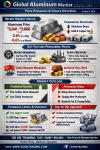
全球铝市场趋势:价格压力因素与未来走向(2026年10月)
伦敦金属交易所(LME)铝期货价格单日暴跌超过2.6%,过去一个月累计下跌近10%。这反映了宏观因素与供需结构的双重压力。与此同时,黄金、铜和锌等其他金属价格仍在上涨,这一现象被称为 “Fundamental Decoupling(基本面脱钩)”。
此次调整不仅是短期信号,更体现了工业金属市场的结构性变化。尤其是铝,正面临 供应快速恢复与新增产能释放 的压力,而中国需求并未如预期般回暖。
本文将深入分析影响价格的 宏观因素、供应与需求,并探讨 技术面支撑与阻力位。同时提出长期视角下的 “逢低买入(Buy on Dip)”机会,为需要原材料的企业提供参考。
9 10月 2026
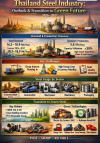
泰国钢铁产业正处于迈向“绿色钢铁”(Green Steel)新时代的重要转折点。
国内需求依然持续增长,主要来自建筑业、汽车业和机械制造业。然而,廉价进口钢材的竞争却不断加剧,迫使泰国制造商必须在技术和环保方面加快转型。
2026–2027年将成为泰国钢铁产业的关键节点。高企的能源成本、波动的海运费、废钢短缺,以及来自中国的倾销压力,构成了“四重挑战”。但与此同时,这也是一个黄金机遇——通过发展低碳钢生产,提升可持续性与全球竞争力。
SO OK TRADING愿成为您值得信赖的商业伙伴,秉持 FAST • SHARP • RELIABLE 的理念,致力于提供兼具高品质与可持续性的钢铁产品,共同推动泰国钢铁产业迈向坚韧且环保的未来。
2 8月 2026
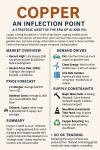
2026年2月铜价走势
全球正进入一个“关键转折点”——来自电动车(EV)、人工智能(AI)以及清洁能源的需求急剧上升,而供应仍然紧张。
SO OK TRADING 总结了市场全貌以及在价格回调阶段的原材料采购策略,帮助泰国企业清晰把握这一战略性资产的机遇。
1 2月 2026
