特朗普2.0:关税游戏尚未结束 最高法院叫停全球关税 → 特朗普立刻反击! 旧关税退出,新关税登场:全球10%关税将于2月24日正式实施 我们的钱包会受到怎样的冲击?拭目以待!
最后更新: 21 2月 2026
2705 浏览量
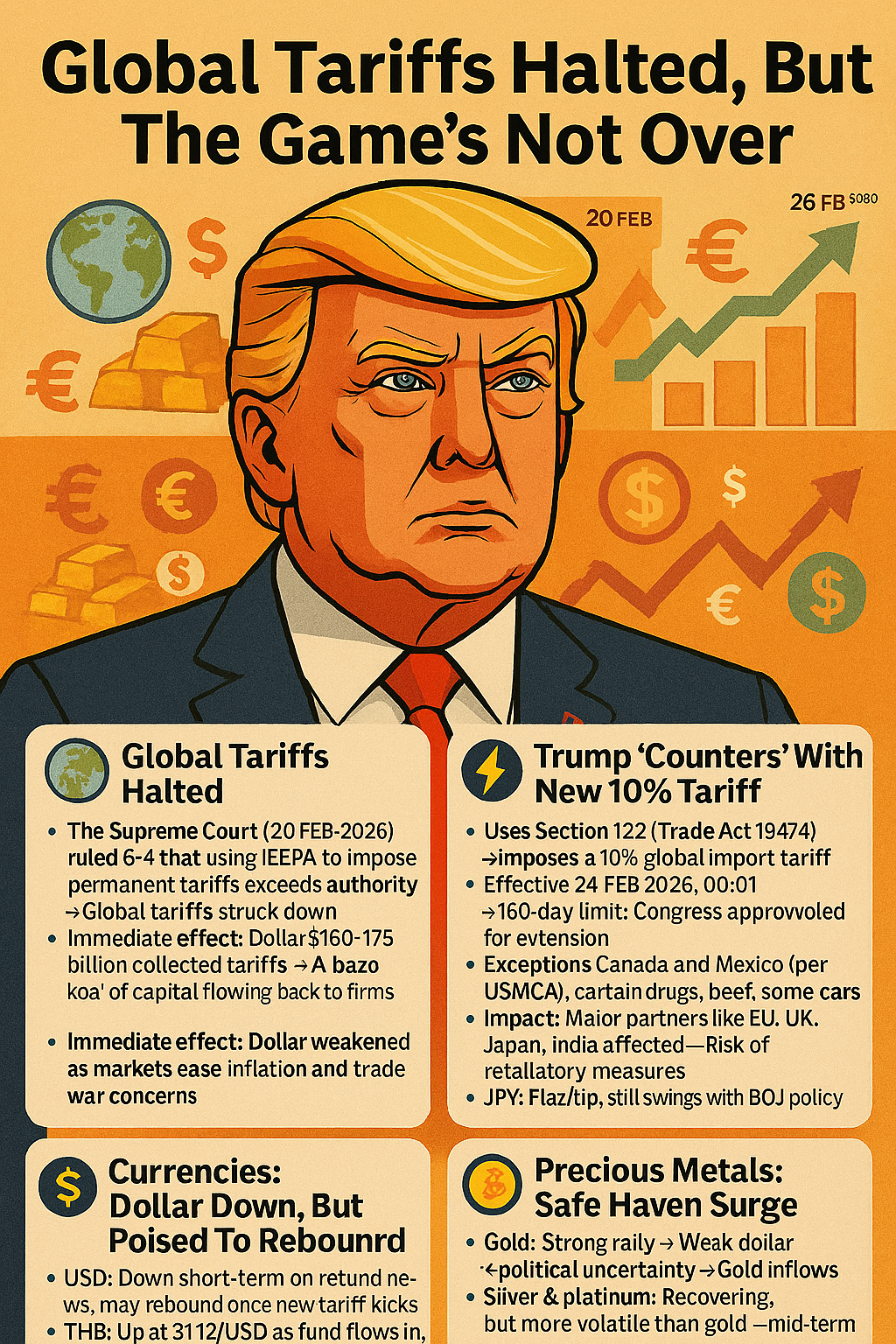
2026年2月20日:全球税(Aggressive TAX)被暂停,但游戏尚未结束
― 这只是“中场休息”。特朗普总统调整策略,接下来需关注对经济、汇率、股市及贵金属的影响。
文章 BY SO OK TRADING
美国最高法院判决(2026年2月20日)
判决结果:以6比3裁定,利用《国际紧急经济权力法》(IEEPA)设立永久性关税属越权行为
结果:全球关税(Global Tariffs)被撤销
影响:美国政府可能需退还已征收的约1,600–1,750亿美元关税 → 这笔资金将成为“强心针”,流入企业与股市
即时效果
美元走弱:市场对通胀与贸易战的担忧缓解,美元短期下跌
⚡ 特朗普“新招”——10%关税
法律依据:《1974年贸易法》第122条
内容:对全球进口商品征收10%关税
生效时间:2026年2月24日 00:01起,最长150天(延长需国会批准)
例外:加拿大、墨西哥(USMCA),以及部分商品如药品、牛肉、部分车型
影响:欧盟、英国、日本、印度等主要贸易伙伴需缴纳新关税 → 存在报复性措施风险
汇率:美元短期走弱,但有反弹空间
美元(USD):短期下跌,但新关税实施后可能反弹
泰铢(THB):约31.12泰铢/美元,因资金流入而走强,但若政府干预可能受压
人民币(CNY):升至6.91元/美元,虽为关税主要目标,但仍走强
欧元(EUR):因德国及欧洲出口压力缓解而回升
日元(JPY):小幅走强,走势仍受日本央行政策影响
― 这只是“中场休息”。特朗普总统调整策略,接下来需关注对经济、汇率、股市及贵金属的影响。
文章 BY SO OK TRADING
美国最高法院判决(2026年2月20日)
判决结果:以6比3裁定,利用《国际紧急经济权力法》(IEEPA)设立永久性关税属越权行为
结果:全球关税(Global Tariffs)被撤销
影响:美国政府可能需退还已征收的约1,600–1,750亿美元关税 → 这笔资金将成为“强心针”,流入企业与股市
即时效果
美元走弱:市场对通胀与贸易战的担忧缓解,美元短期下跌
⚡ 特朗普“新招”——10%关税
法律依据:《1974年贸易法》第122条
内容:对全球进口商品征收10%关税
生效时间:2026年2月24日 00:01起,最长150天(延长需国会批准)
例外:加拿大、墨西哥(USMCA),以及部分商品如药品、牛肉、部分车型
影响:欧盟、英国、日本、印度等主要贸易伙伴需缴纳新关税 → 存在报复性措施风险
汇率:美元短期走弱,但有反弹空间
美元(USD):短期下跌,但新关税实施后可能反弹
泰铢(THB):约31.12泰铢/美元,因资金流入而走强,但若政府干预可能受压
人民币(CNY):升至6.91元/美元,虽为关税主要目标,但仍走强
欧元(EUR):因德国及欧洲出口压力缓解而回升
日元(JPY):小幅走强,走势仍受日本央行政策影响


相关文章
“黄金飙升 白银上涨 美元走弱”:伊朗全面开放霍尔木兹海峡,迎来以色列–黎巴嫩停火协议
贵金属市场正迎来今年最火热的行情!
黄金价格突破 每盎司 4,849 美元,受到美元走弱以及市场对美联储(Fed)可能放松货币政策的预期推动。与此同时,白银(Silver) 成为 2026 年的明星资产,电动车与太阳能产业的强劲需求持续推高价格。
另一方面,美元在中东局势缓和后开始显露疲软迹象,使得泰铢随着金价上涨而呈现走强趋势。
18 4月 2026

Lead ingot คือ โลหะตะกั่วแท่งที่ใช้เป็นวัตถุดิบหลักในการผลิตแบตเตอรี่ตะกั่ว-กรด เนื่องจากมีความหนาแน่นสูงและคุณสมบัติทางเคมีที่เหมาะสม ทำให้เป็นส่วนประกอบสำคัญในแผ่นขั้วบวกและขั้วลบของแบตเตอรี่ Lead ingot ที่มีความบริสุทธิ์สูงจะช่วยให้แบตเตอรี่มีประสิทธิภาพและอายุการใช้งานยาวนานขึ้น
การใช้งาน Lead ingot ในแบตเตอรี่
วัตถุดิบหลัก: ใช้เป็นวัตถุดิบตั้งต้นในการผลิตแบตเตอรี่ตะกั่ว-กรด ซึ่งใช้ในรถยนต์ ระบบสำรองไฟ (UPS) และระบบกักเก็บพลังงานแสงอาทิตย์
การผลิตแผ่นขั้ว: เป็นส่วนประกอบสำคัญในการผลิตแผ่นขั้วไฟฟ้าของแบตเตอรี่ ซึ่งเป็นส่วนที่เกิดปฏิกิริยาเคมี
คุณภาพและประสิทธิภาพ: ความบริสุทธิ์ของตะกั่วใน lead ingot มีผลโดยตรงต่อประสิทธิภาพและอายุการใช้งานของแบตเตอรี่
การรีไซเคิล: นอกจากใช้ผลิตใหม่แล้ว ตะกั่วจากแบตเตอรี่ที่ใช้แล้วยังสามารถนำมารีไซเคิลและแปรรูปเป็น lead ingot เพื่อนำกลับมาใช้ใหม่ได้อีกครั้ง
27 11月 2025
黄金强势突破4,400美元 —— 地缘政治风险推升行情,今晚美国CPI公布将决定走势
SO OK TRADING 分析报告|2026年8月12日
全球黄金现货价格(Gold Spot)突破每盎司4,400美元,在中东紧张局势与全球投机买盘的推动下强劲上涨。全球投资者正密切关注今晚即将公布的美国消费者物价指数(CPI),这一数据将成为关键,决定黄金短期走势是“继续上行”还是“进入回调”。
在本篇分析中,SO OK TRADING 将为您深入解读:从地缘政治因素、美国货币政策,到推动金价飙升的技术性买盘。并提供关键的支撑与阻力位,以及投资者在今晚市场开盘前必须掌握的策略。
✨ SO OK TRADING —— 您的商业合作伙伴
FAST • SHARP • RELIABLE
12 8月 2026
