「Copper 2026:当金属成为驱动未来的力量」 「铜价腾飞 —— AI与清洁能源的引擎」
最后更新: 12 2月 2026
4004 浏览量
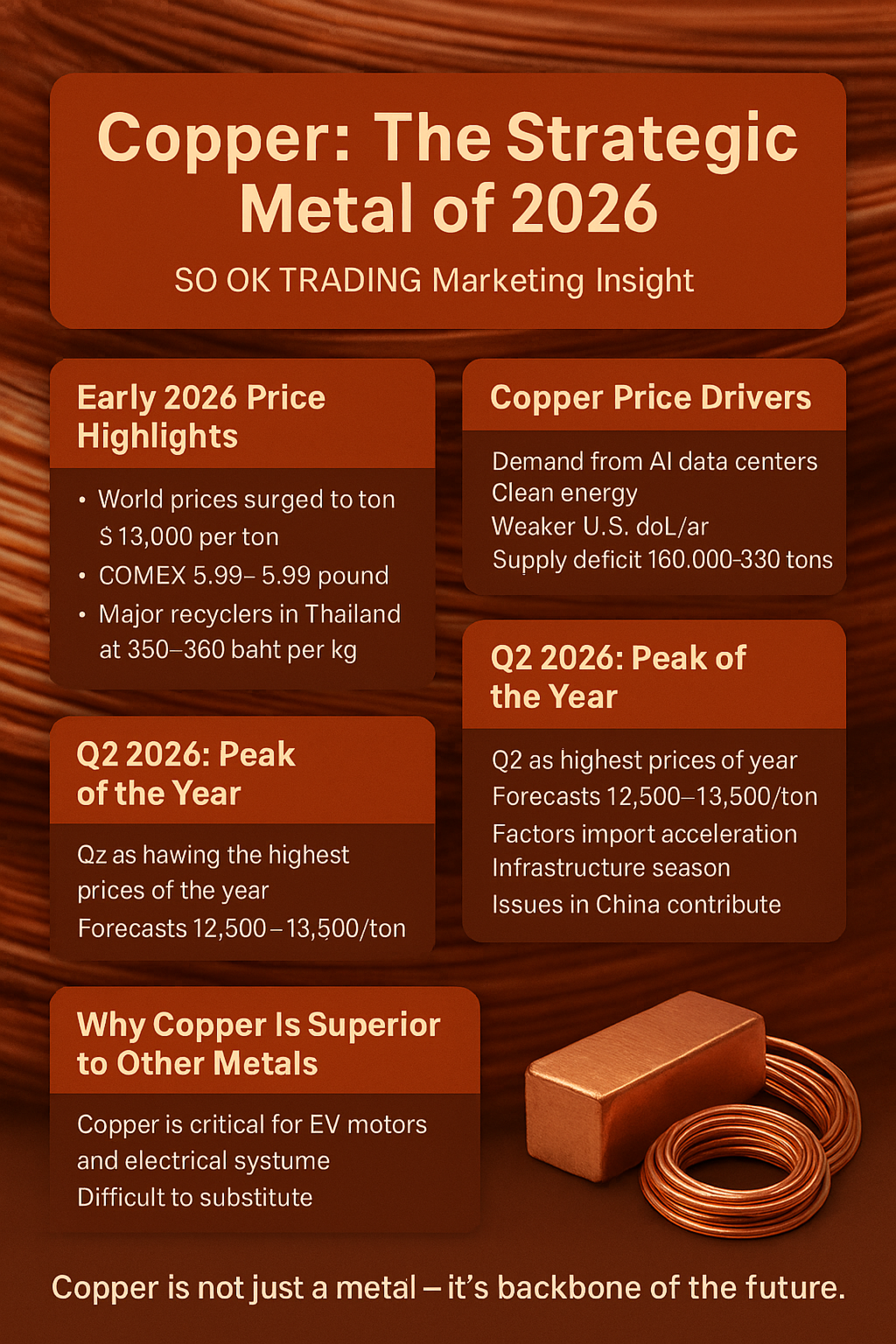
✨ Copper: 2026年的战略金属 ✨
SO OK TRADING 市场洞察
铜正在成为2026年金属市场的“主角”。这正是SO OK TRADING与您共同把握的绝佳机会。
2026年初铜价亮点
全球市场铜价飙升至13,000美元/吨,创下新纪录。COMEX价格维持在5.98–5.99美元/磅。泰国国内,大型回收商收购优质剥线铜的价格为每公斤350–360泰铢。尽管短期内有获利了结的卖盘,但整体趋势依然强劲上涨。尤其是第二季度,被分析师视为全年“高峰期”。
推动铜价的关键因素
AI与数据中心的快速发展、清洁能源基础设施的扩张、美元走弱,以及严重的供应缺口。预计今年全球精炼铜短缺将达到160,000–330,000吨。
全球金融机构观点
各大金融机构一致认为,铜是2026年的“战略性资产”。预计全年均价将保持在11,000美元/吨以上。Citigroup预测第二季度价格将冲至14,000–15,000美元。Goldman Sachs评估合理价格为13,000美元。美国银行则认为,受电动车与可再生能源需求推动,到2027年铜价可能达到15,000美元。
2026年第二季度:全年高峰
第二季度被认为是全年价格最高的时期,预计区间为12,500–13,500美元/吨。如果矿山供应中断,价格可能短暂飙升至14,000–15,000美元。主要驱动因素包括:为规避美国关税而加快进口、基础设施建设季节,以及中国冶炼厂的生产问题。
⚖️ 为什么铜优于其他金属
铜在电力系统和电动车电机中不可替代,与清洁能源的联系最为紧密。新矿山开发需耗时10–15年,不像镍那样容易出现供应过剩。同时,铜直接受益于AI数据中心的建设需求。
SO OK TRADING 总结
2026年是“铜之年”。对于从事回收、清洁能源、电动车或数据中心相关业务的企业而言,现在战略性储备铜将带来巨大的竞争优势。
SO OK TRADING是您值得信赖的合作伙伴,提供高品质的铜材,从再生铜到精炼铜,全面满足不断增长的市场需求。
✨ Copper is not just a metal — it’s the backbone of the future.
SO OK TRADING 市场洞察
铜正在成为2026年金属市场的“主角”。这正是SO OK TRADING与您共同把握的绝佳机会。
2026年初铜价亮点
全球市场铜价飙升至13,000美元/吨,创下新纪录。COMEX价格维持在5.98–5.99美元/磅。泰国国内,大型回收商收购优质剥线铜的价格为每公斤350–360泰铢。尽管短期内有获利了结的卖盘,但整体趋势依然强劲上涨。尤其是第二季度,被分析师视为全年“高峰期”。
推动铜价的关键因素
AI与数据中心的快速发展、清洁能源基础设施的扩张、美元走弱,以及严重的供应缺口。预计今年全球精炼铜短缺将达到160,000–330,000吨。
全球金融机构观点
各大金融机构一致认为,铜是2026年的“战略性资产”。预计全年均价将保持在11,000美元/吨以上。Citigroup预测第二季度价格将冲至14,000–15,000美元。Goldman Sachs评估合理价格为13,000美元。美国银行则认为,受电动车与可再生能源需求推动,到2027年铜价可能达到15,000美元。
2026年第二季度:全年高峰
第二季度被认为是全年价格最高的时期,预计区间为12,500–13,500美元/吨。如果矿山供应中断,价格可能短暂飙升至14,000–15,000美元。主要驱动因素包括:为规避美国关税而加快进口、基础设施建设季节,以及中国冶炼厂的生产问题。
⚖️ 为什么铜优于其他金属
铜在电力系统和电动车电机中不可替代,与清洁能源的联系最为紧密。新矿山开发需耗时10–15年,不像镍那样容易出现供应过剩。同时,铜直接受益于AI数据中心的建设需求。
SO OK TRADING 总结
2026年是“铜之年”。对于从事回收、清洁能源、电动车或数据中心相关业务的企业而言,现在战略性储备铜将带来巨大的竞争优势。
SO OK TRADING是您值得信赖的合作伙伴,提供高品质的铜材,从再生铜到精炼铜,全面满足不断增长的市场需求。
✨ Copper is not just a metal — it’s the backbone of the future.


相关文章
「黄金暂时回调 —— 把握积累良机,迎接下一波浪潮!」
截至2026年4月,全球黄金市场正处于“高位盘整”阶段。年初创下历史新高 5,594美元/盎司 后,目前金价在 4,522–4,702美元/盎司 区间波动(泰国国内约 72,200泰铢/泰铢金条)。尽管价格有所回调,但整体仍处于 结构性牛市(Structural Bull Market),凸显黄金作为安全资产的坚韧与价值。
全球央行,尤其是中国及新兴市场,持续增持黄金,成为重要支撑。同时,地缘政治风险与美联储下半年可能降息的预期,也为黄金长期走势提供了积极因素。
对于短期投资者而言,这是一个“观望”的阶段;但对于长期投资者来说,4月正是 逐步布局、积累黄金的最佳时机,以迎接下一波上涨浪潮。
SO OK TRADING
您的商业合作伙伴
FAST • SHARP • RELIABLE
4 4月 2026

「黄金迈向超级周期:Buy on Dip 把握良机,冲击5,000美元」
SO OK TRADING | 2026年8月28日
全球黄金市场(XAU/USD)正处于“超级周期”的关键转折点。在创下近三个月高点4,690美元/盎司后,目前价格在4,580–4,600美元区间内小幅整理。
尽管通胀与美元的压力有所减弱,但整体市场结构依然保持强劲的上升趋势。美国的经济刺激政策、地缘政治紧张局势,以及各国央行持续增持黄金,成为推动金价的重要动力。
2026年9月至10月,被视为投资者的“黄金积累良机”。在调整阶段采用 Buy on Dip 策略,将是年末冲击 4,900–5,100美元 的关键。
✨ SO OK TRADING
FAST • SHARP • RELIABLE
您值得信赖的商业伙伴
28 8月 2026
