Share

“Copper 2026: When Metal Becomes the Power Driving the Future” “Copper Soars — The Force of AI and Clean Energy
Last updated: 12 Feb 2026
1702 Views

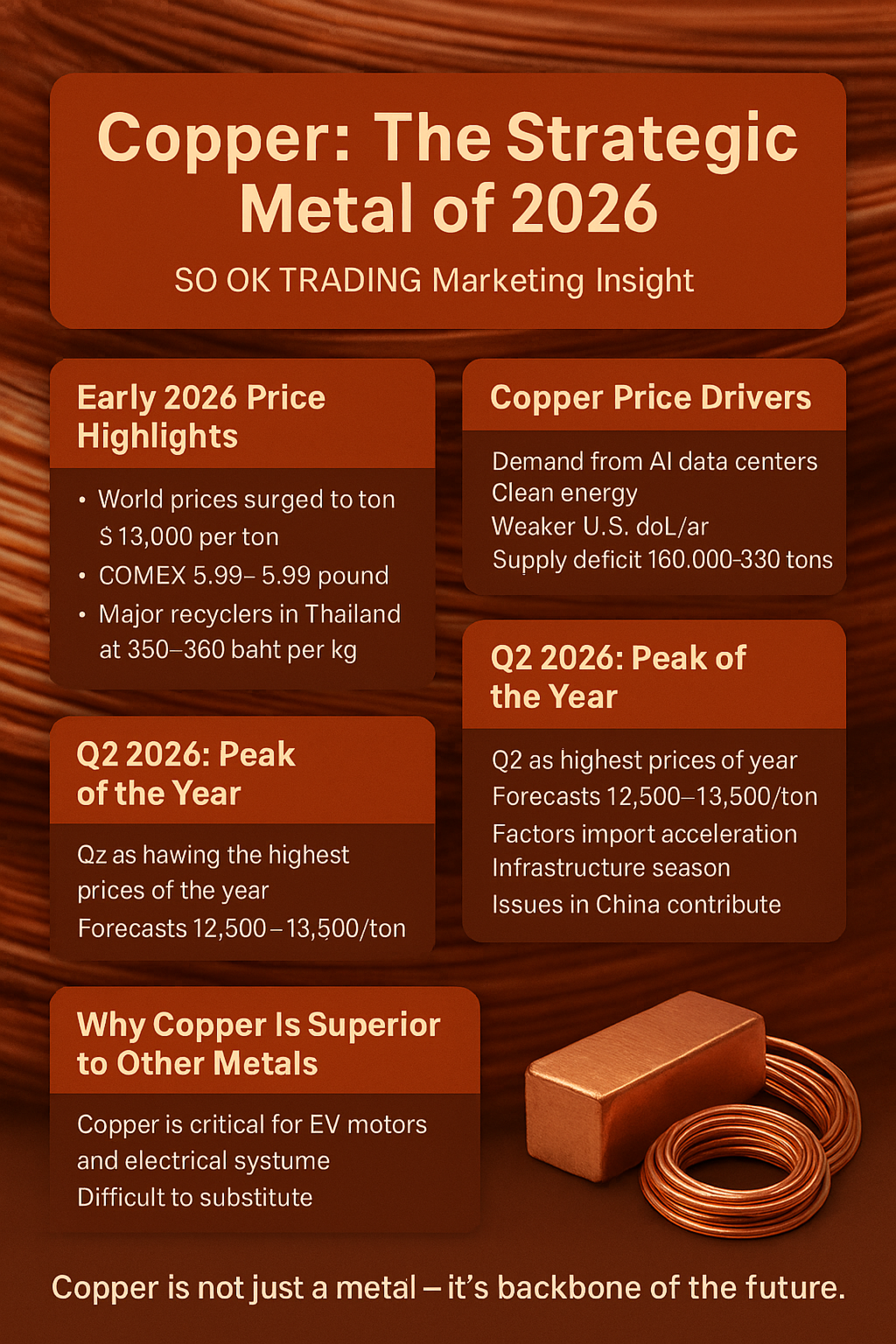
✨ Copper: The Strategic Metal of 2026 ✨

SO OK TRADING Marketing Insight

Copper is becoming the “star” of the metals market in 2026 — and this is the opportunity that SO OK TRADING is ready to help you seize!


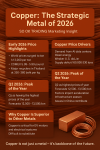
Early 2026 Price Highlights

Global copper prices surged to $13,000 per ton, setting a new record. On COMEX, prices moved between $5.98–5.99 per pound. In Thailand, major recyclers are buying high-quality stripped copper wires at 350–360 THB/kg. While short-term profit-taking has occurred, the overall trend remains strongly bullish, especially heading into Q2, which analysts expect to be the “peak season” of the year.
 

Key Drivers of Copper Prices

Copper is supported by powerful forces: the rapid growth of AI and data centers, expansion of clean energy infrastructure, a weakening U.S. dollar, and a severe supply deficit. The world is expected to face a shortage of 160,000–330,000 tons of refined copper in 2026.


Insights from Leading Financial Institutions

Global financial institutions agree: copper is the strategic asset of 2026. Average prices are expected to remain above $11,000 per ton throughout the year. Citigroup projects prices could reach $14,000–15,000 in Q2. Goldman Sachs estimates a fair price of $13,000, while Bank of America forecasts demand from EVs and renewable energy could push copper to $15,000 by 2027.


Q2/2026: The Peak of the Year

Q2 is expected to be the most expensive period of the year, with prices ranging between $12,500–13,500 per ton. If supply disruptions occur, prices could briefly spike to $14,000–15,000. Key drivers include accelerated imports to avoid U.S. tariffs, the infrastructure construction season, and production issues in China’s smelters.


⚖️ Why Copper Outshines Other Metals

Copper is irreplaceable in electrical systems and EV motors, has the strongest link to clean energy, and new mine development takes 10–15 years. Unlike nickel, which faces oversupply, copper directly benefits from the global boom in AI data centers.


SO OK TRADING Conclusion

2026 is truly the Year of Copper. For businesses in recycling, clean energy, EVs, or data centers, securing copper now is a strategic investment that will deliver a major competitive edge.

SO OK TRADING is your trusted partner, providing high-quality copper — from recycled scrap to refined copper — to meet the unstoppable rise in demand.


✨ Copper is not just a metal — it’s the backbone of the future.

Related Content
เกร็ดความรู้ ซิลิคอน by SO OK
ซิลิคอน (Silicon) คือธาตุสารกึ่งตัวนำสำคัญที่พบมากบนเปลือกโลก (ในรูปซิลิกา) ใช้ทำชิปอิเล็กทรอนิกส์, แผงโซลาร์เซลล์, แก้ว, เซรามิก, และผสมโลหะ; ส่วน ซิลิโคน (Silicone) คือพอลิเมอร์ที่ใช้ทำกาวอุดรอยรั่ว, สารหล่อลื่น, เครื่องสำอาง, ยา, และอุปกรณ์การแพทย์ คุณสมบัติเด่นคือทนความร้อน, ทนสารเคมี, เป็นฉนวนไฟฟ้า, ยืดหยุ่น, และกันน้ำ แม้ชื่อคล้ายกัน แต่คือคนละอย่าง. เกร็ดความรู้เกี่ยวกับ ซิลิคอน (Silicon - Si) (ธาตุ) ธาตุสำคัญ: เป็นธาตุที่พบมากเป็นอันดับสองในเปลือกโลก (รองจากออกซิเจน) มักอยู่ในรูปซิลิก้า (Silicon Dioxide - SiO2) เช่น ทราย, ควอตซ์. หัวใจอิเล็กทรอนิกส์: ซิลิคอนบริสุทธิ์พิเศษ (Doped Silicon) เป็นหัวใจของวงจรรวม (IC) และเซมิคอนดักเตอร์ในคอมพิวเตอร์, สมาร์ทโฟน, และแผงโซลาร์เซลล์. โลหะผสม: ผสมกับอะลูมิเนียมเพื่อทำชิ้นส่วนรถยนต์ และผสมเหล็กเพื่อทำเหล็กกล้า. เกร็ดความรู้เกี่ยวกับ ซิลิโคน (Silicone - พอลิเมอร์สังเคราะห์) คุณสมบัติมหัศจรรย์: ทนร้อน/เย็นจัด, กันน้ำ, ยืดหยุ่น, เป็นฉนวนไฟฟ้า, ทนสารเคมี, ไม่ติดไฟ. งานก่อสร้าง: กาวซิลิโคนใช้อุดรอยต่อกระจก, หน้าต่าง, หลังคา, ป้องกันน้ำรั่วซึม. เครื่องสำอาง: ทำให้ผลิตภัณฑ์เกลี่ยง่าย, เงางาม, ติดทนนาน (เช่น ลิปสติก), นุ่มลื่น (เช่น แชมพู). ทางการแพทย์: ใช้ในอุปกรณ์ทางการแพทย์, และซิลิโคนเจลสำหรับแผลเป็น. ระวังโรคปอด: การสูดดมฝุ่นผงซิลิก้า (ซิลิคอนไดออกไซด์) เป็นเวลานานในงานก่อสร้าง (เช่น โม่หิน) อาจทำให้เป็นโรคปอดฝุ่นหิน (Silicosis) ได้. ข้อแตกต่างที่สำคัญ ซิลิคอน (Silicon - Si): ธาตุโลหะ (สารกึ่งตัวนำ). ซิลิโคน (Silicone): สารประกอบพอลิเมอร์สังเคราะห์ที่มาจากซิลิคอน (มีออกซิเจนและคาร์บอน) มีความยืดหยุ่นและใช้งานหลากหลายกว่า.
11 Dec 2025
ALUMINUM PRICE TREND 2026
An analysis of the aluminum market in 2026 indicates a likely continued market deficit and upward price pressure, driven by constrained supply and resilient demand from green energy sectors. However, significant volatility is expected due to policy uncertainties and the potential for new Indonesian supply to eventually balance the market. Key Drivers and Projections for 2026 Supply Side Analysis Capacity Constraints: China's primary aluminum output is approaching its self-imposed 45 million-tonne capacity cap, limiting global supply growth. Power Challenges: Smelters outside of China face intense competition for power from energy-intensive sectors like AI data centers, which are willing to pay higher prices for long-term contracts. This has kept significant capacity offline in Europe and the US. Production Disruptions: Outages and potential shutdowns at existing smelters in Iceland and Mozambique further tighten the market. Scrap Supply Pressure: The EU's planned implementation of the Carbon Border Adjustment Mechanism (CBAM) and potential scrap export tariffs in spring 2026 are expected to impact global scrap flows, creating regional shortages and price volatility. New Capacity: Indonesia is a key source of new supply, with several projects in the pipeline. However, analysts suggest the pace of the ramp-up may be slower than expected due to infrastructure and policy challenges, meaning it is unlikely to fully offset near-term tightness. Demand Side Analysis Green Transition Demand: Demand from "green" sectors such as solar panels, new energy vehicles, and energy transition infrastructure remains strong, providing fundamental support for the market. Substitution Effect: Aluminum's wide price discount relative to copper has encouraged substitution in electrical applications, acting as a tailwind for demand and prices. Construction and Automotive: The construction and automotive industries continue to be major consumers, with growing demand for lightweight, low-carbon aluminum products. Price Forecasts and Volatility The market is expected to remain in a deficit in 2026, with estimates ranging from 200,000 to 600,000 tonnes. This structural tightness is leading most analysts to forecast sustained or rising prices. Bullish Views: Analysts at Bank of America project prices of $3,000/tonne as early as 2026. J.P. Morgan also expects prices to approach $3,000/tonne in Q1 2026. ING forecasts an average price of $2,900/tonne for the year. Bearish/Conservative Views: Goldman Sachs is an outlier, forecasting prices to decline to $2,350/tonne by Q4 2026, anticipating a market surplus later in the year. SMM forecasts a "high first, then lower" pattern, with prices finding equilibrium in the $2,700–$2,800/tonne range by year-end. Premiums: Regional premiums, particularly the US Midwest premium, are expected to remain high and volatile due to tariffs and regional supply dynamics, creating a disconnect from the LME benchmark price. In essence, 2026 is projected to be a year of high volatility where participants need to focus on scenario readiness rather than relying on a single price forecast, as geopolitical and energy policies significantly influence regional supply and costs
31 Dec 2025
SO OK INSIGHT: Global Oil Prices Plunge – When Geopolitics Reshapes the Industrial World   (27 May 2026)
SO OK INSIGHT: Global Oil Prices Plunge – Geopolitical Easing Reshapes the Energy World (27 May 2026) Article Global crude oil prices have dropped to their lowest level in five weeks. Brent crude fell below $100 per barrel, while WTI settled at $92.78 per barrel. The decline follows progress in peace talks between the United States and Iran, raising hopes for reopening the Strait of Hormuz and easing supply concerns. This adjustment reflects more than just market volatility — it highlights a geopolitical shift that directly impacts global commodities, from naphtha and petrochemicals to fertilizers and alternative energy sources. For Thailand, this situation could become a golden opportunity. Lower oil prices reduce energy costs and pave the way for economic recovery in the second half of 2026. SO OK TRADING FAST • SHARP • RELIABLE
27 May 2026
This website uses cookies for best user experience, to find out more you can go to our Privacy Policy and Cookies Policy
Powered By MakeWebEasy Logo MakeWebEasy