“Battery Recycling: From Old Waste to a Moving Gold Mine – Thailand Rising as ASEAN’s Future Hub” By SO OK TRADING
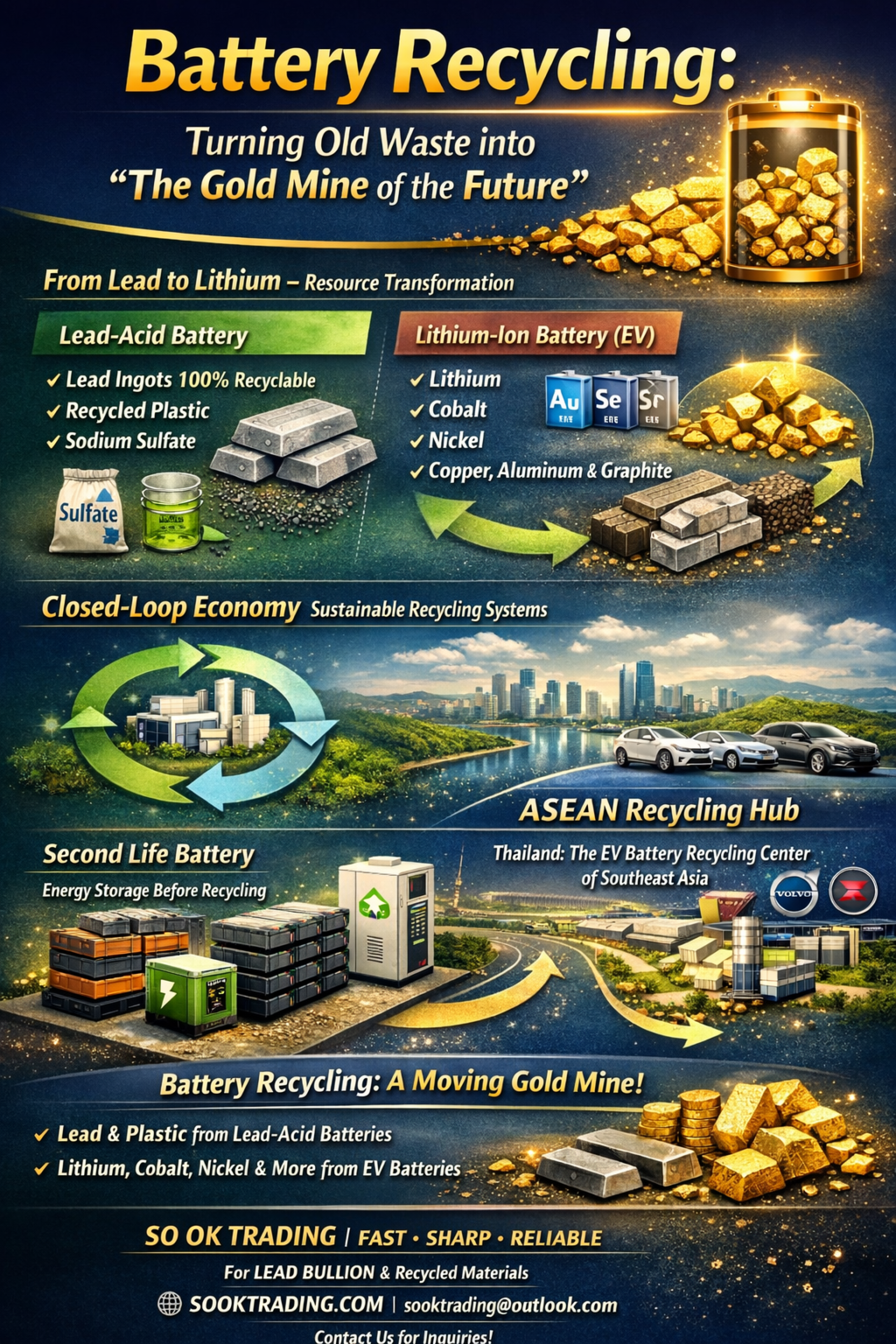
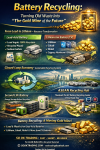
Battery Recycling: Turning Old Waste into the “Gold Mine of the Future”
Battery recycling is not just about disposing of hazardous waste.
It is about transforming “trash” into “precious resources” that can be reused endlessly.
Both lead-acid batteries (used in fuel-powered cars) and lithium-ion batteries (used in EVs) contain valuable metals that can be recovered, making this industry a future driver of both economic value and sustainability.
⚙️ From Lead to Lithium – A Major Transition
Lead-Acid Battery
Lead: Nearly 100% recoverable, remelted into ingots for unlimited reuse.
Polypropylene Plastic: Battery casings can be crushed, cleaned, and remade into plastic pellets.
Sulfuric Acid:
Neutralization → converted into clean water
Sodium Sulfate → used in detergents, glass, and textiles
Highlight: Almost 100% recyclable, the most stable system worldwide, and profitable through battery “trade-in.”
Lithium-Ion Battery (EV)
Lithium
Cobalt
Nickel
Manganese
Copper
Aluminum
Graphite
Highlight: Though complex, more than 90% of valuable metals can be recovered. Plus, “Second Life” use as energy storage systems (ESS) before recycling adds extra value.
♻️ Closed-Loop Economy – Endless Cycle
Thailand’s Department of Primary Industries and Mines (DPIM) has successfully developed EV battery prototypes using recycled domestic materials, reducing mineral imports and minimizing environmental impact.
⚡ Second Life Battery – Use Before Recycling
EV batteries degraded to 70–80% capacity can still serve as Energy Storage Systems for homes and factories before entering the recycling process.
Thailand as ASEAN’s Recycling Hub
Global automakers like Volvo Car Thailand have invested in repair and recycling centers in Thailand, in partnership with Singapore. Thailand is being positioned as the ASEAN hub for EV battery recycling.
EV 3.5 Policy – Attracting Advanced Technology
The Thai government, through BOI incentives, is bringing in advanced extraction technologies such as Black Mass, enabling efficient recovery of lithium, cobalt, and nickel.
✨ Conclusion
Old batteries are not waste — they are mobile mines full of precious resources:
Lead and plastics from lead-acid batteries
Lithium, cobalt, nickel, and rare metals from EV batteries
Battery recycling not only protects the planet but also generates massive economic value, pushing Thailand toward becoming the ASEAN center for battery recycling.
SO OK TRADING FAST • SHARP • RELIABLE
If you are interested in Lead Bullion produced from battery recycling, please contact us:
www.sooktrading.com
sooktrading@outlook.com