Twin Storms Shaking the World: The Naphtha–Fertilizer Crisis — Turning Point into the High-Cost Era, Plastics & Food Prices Surge Worldwide Written by SO OK TRADING April 10, 2026
The Naphtha & Fertilizer Crisis: Twin Storms Shaking the World and ASEAN
The Beginning of the Crisis
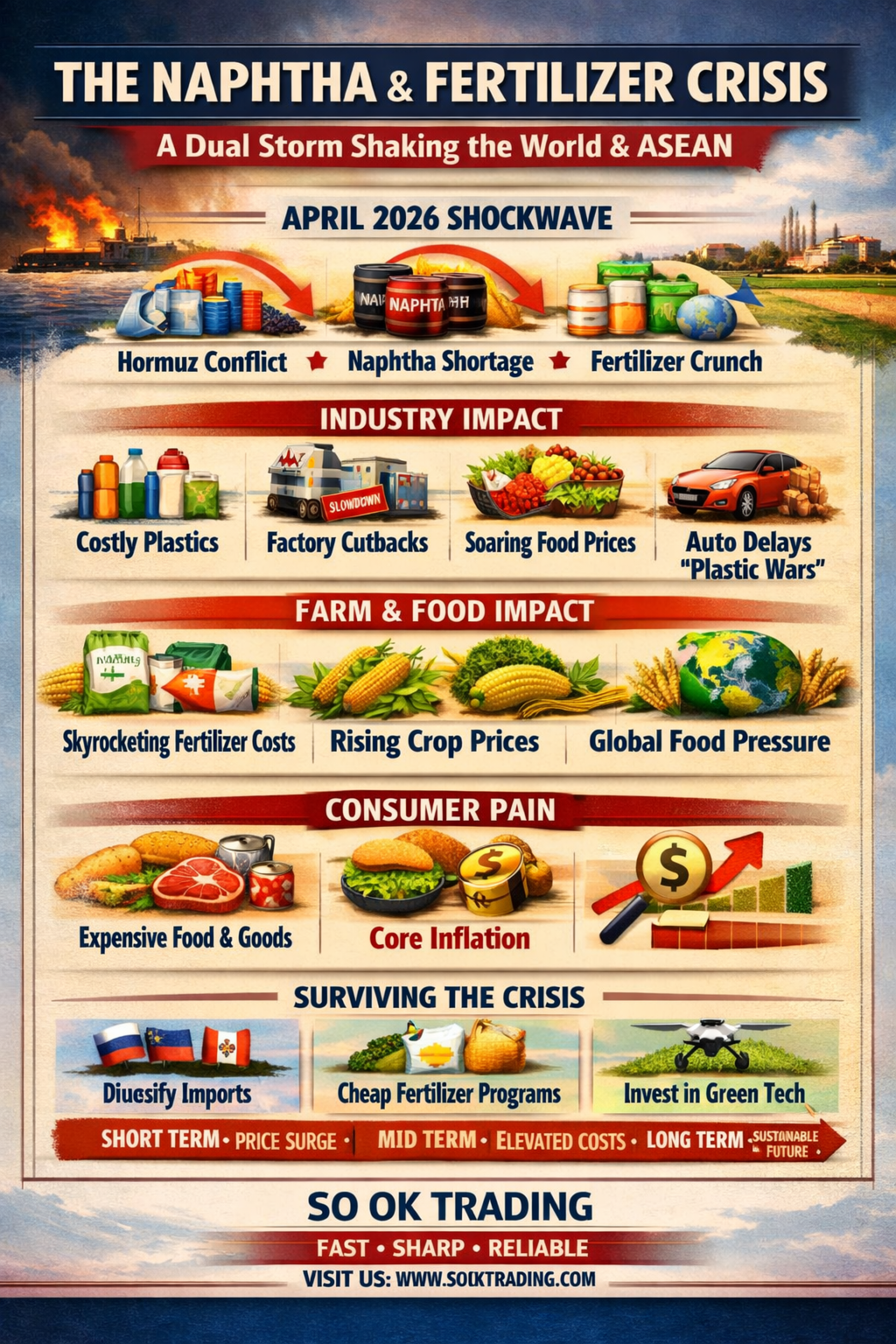
In April 2026, the world is facing a severe shortage of Naphtha and chemical fertilizers. The main cause is conflict in the Middle East affecting the strategic Hormuz Strait — the lifeline of global energy and raw material transport. If disrupted for just three months, the global economy trembles instantly.
Impact on Industries
Plastics become expensive immediately: Naphtha is the heart of plastic production. When supply falters, packaging and consumer goods costs surge worldwide.
Factories reduce output: Japan and South Korea cut operations, disrupting IT and automotive supply chains.
Europe hit twice: Fertilizer plants shut down due to costly gas and missing raw materials, pushing supermarket food prices higher.
Hidden impact: The automotive industry may face a “new plastic war.” With many car parts made from plastics, shortages could raise new car prices or delay deliveries — reminiscent of the past chip crisis.
Impact on Agriculture and Food
Fertilizer becomes an economic weapon: Urea and sulfur prices soar, raising cultivation costs.
Thailand and ASEAN feel the shock: Thailand imports nearly 100% of its fertilizer. Costs for rice, corn, and palm oil rise sharply. Vietnam and Indonesia face food security risks.
Brazil and the U.S.: Higher farming costs push global soybean and corn prices upward.
Hidden impact: Farmers worldwide may reduce planting of fertilizer-intensive crops like feed corn → leading to higher meat and animal feed prices in a chain reaction.
What Consumers Face
Food prices surge nationwide: Rice, meat, eggs, and canned goods rise.
Plastics of all kinds become costly: Bags, bottled water, and food packaging.
Embedded inflation: Even if energy prices fall, consumer goods and food prices won’t easily drop.
Hidden impact: Consumers face entrenched “core inflation,” keeping living costs high even as energy prices ease.
Solutions for Thailand and ASEAN
Diversification: Thailand seeks fertilizer imports from Russia, China, and Canada.
Price support measures: “Cheap fertilizer” programs and price controls to aid farmers.
BCG Economy: Accelerated investment in bioplastics and precision agriculture, using drones and soil tech to reduce waste.
Hidden impact: This transition may accelerate “New Trade Blocs” — state-to-state (G2G) deals for food and energy security.
Trends and Opportunities from the Fertilizer & Plastic Crisis
Short term (3–6 months): Prices hit new highs, some goods face real shortages.
Medium term (6–12 months): Prices remain elevated, adaptation and alternatives emerge.
Long term (from 2027 onward): If conflict does not escalate, the situation gradually eases.
New opportunities: Bioplastics and eco-friendly packaging adoption accelerates as oil-based plastics become comparably expensive. Hidden impact: Countries with fertilizer and energy resources — Russia, Canada, and the Middle East — gain stronger political leverage.
The High-Cost Era is Here
Farmers: Net income declines
Consumers: Face persistent high prices
Governments & businesses: Must urgently seek alternatives and invest in technology
This crisis is not only a challenge but also a driving force pushing the world toward a more sustainable economic structure.
SO OK TRADING: Your Business Partner FAST • SHARP • RELIABLE Visit us: www.sooktrading.com