“Oil, Naphtha & Plastics: Q4/2026 Outlook and Thai Industry Trends — Strategies to Navigate the Global Cost Crisis”
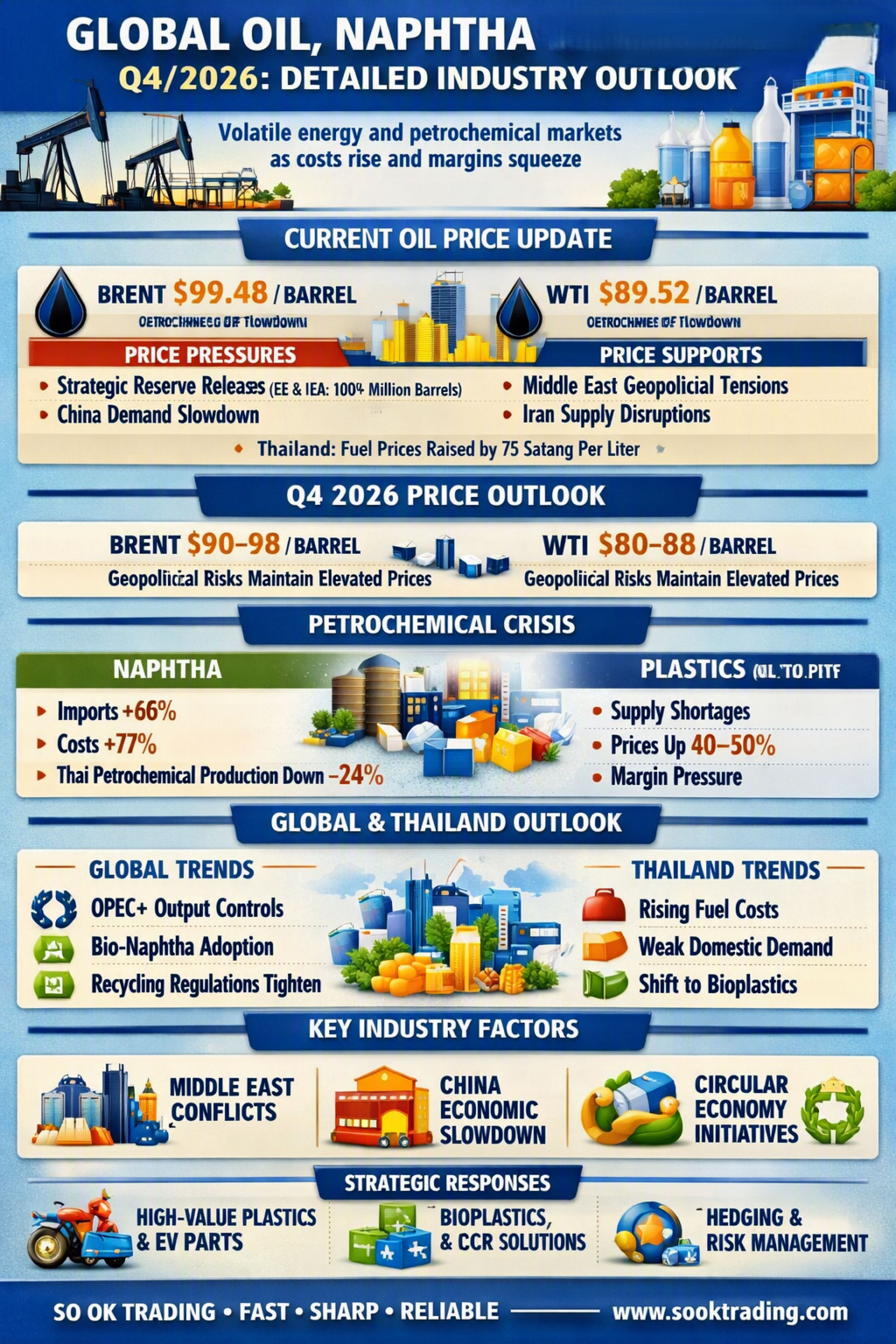
Global Oil, Naphtha & Plastics Q4/2026: Industry Overview and Outlook
SO OK TRADING | October 3, 2026
Introduction
In Q4 2026, the world faces intense volatility in the energy and petrochemical markets. Crude oil, which surged past $100 per barrel earlier this week, has begun to stabilize. Yet upstream raw materials such as naphtha and plastic resins remain costly, impacting the entire industrial value chain from upstream to downstream — both globally and in Thailand.
️ Current Oil Price Situation
Brent: $99.48/barrel
WTI: $89.52/barrel
Price Pressures
Strategic reserve releases by the EU and IEA (over 100 million barrels)
Slowing import demand from China
Price Supports
Geopolitical tensions in the Middle East
Iranian exports disrupted due to the blockade of the Strait of Hormuz
Impact on Thailand On October 2, Thailand’s Energy Policy and Planning Office raised fuel prices by 0.75 THB per liter to maintain balance in the Oil Fund.
Oil Price Outlook Q4/2026
Brent: Forecast range $90–98
WTI: Forecast range $80–88
Although prices are entering a consolidation phase, geopolitical risks continue to keep them elevated throughout the quarter.
Petrochemical Crisis – Naphtha and Plastics
Naphtha
Global supply tightened due to Middle East conflicts
Thailand’s import dependency at 66%, with costs up 77% since the start of the year
Thai petrochemical plants reduced output by an average of 24% to control costs
Plastics (PE, PP, HDPE, PET)
Supply shortages forced some plants to halt production
Prices surged 40–50% and remain high
Global demand slowdown compresses margins
Global and Thai Industry Outlook
Global
Oil: OPEC+ continues output controls
Naphtha: Asia competes for U.S. supply; Europe accelerates Bio-Naphtha development
Plastics: Recycling regulations tighten; demand for Bioplastics and PCR rises
Thailand
Oil: Pump prices rise in line with global costs
Naphtha: Petrochemical plants cut production amid high costs
Plastics: Domestic demand slows due to inflation and competition from cheaper Chinese imports
Path forward: Bioplastics and specialty resins for export
Key Industry Factors
Geopolitical tensions in the Middle East and Strait of Hormuz
Global energy policies: EU and IEA reserve releases
China’s economic slowdown and weaker demand
Thai baht depreciation raising import costs
Environmental regulations driving Circular Economy and Bioplastics
Major Industry Trends
Automotive: Engineering plastics remain in demand for EVs; Thai suppliers must adapt to Chinese automakers
Packaging: Commodity plastics pressured by Chinese imports and global regulations; survival lies in monomaterials and Bioplastics
Construction: Supported by Thai government mega projects, though global recovery remains slow
Strategies for Thai Businesses
Reduce production of commodity plastics that cannot compete on price
Shift toward Circular Economy solutions such as PCR and Bioplastics
Use hedging to mitigate risks from raw material and freight cost volatility
✨ Conclusion
Q4 2026 marks a period of margin squeeze for global energy and petrochemical industries — high costs coupled with slowing demand. Thai businesses must pivot toward high-value and sustainable markets, such as Bioplastics and PCR, while leveraging financial tools like hedging to ensure long-term resilience.
SO OK TRADING: Your Business Partner FAST • SHARP • RELIABLE
Visit us: www.sooktrading.com Facebook: SO OK TRADING