Cassava chips and pellets from Thailand are reaching far and wide — from China and the Middle East to global markets. Strong demand in animal feed, bioenergy, and industrial applications continues to position Thailand as a world leader in cassava exports.
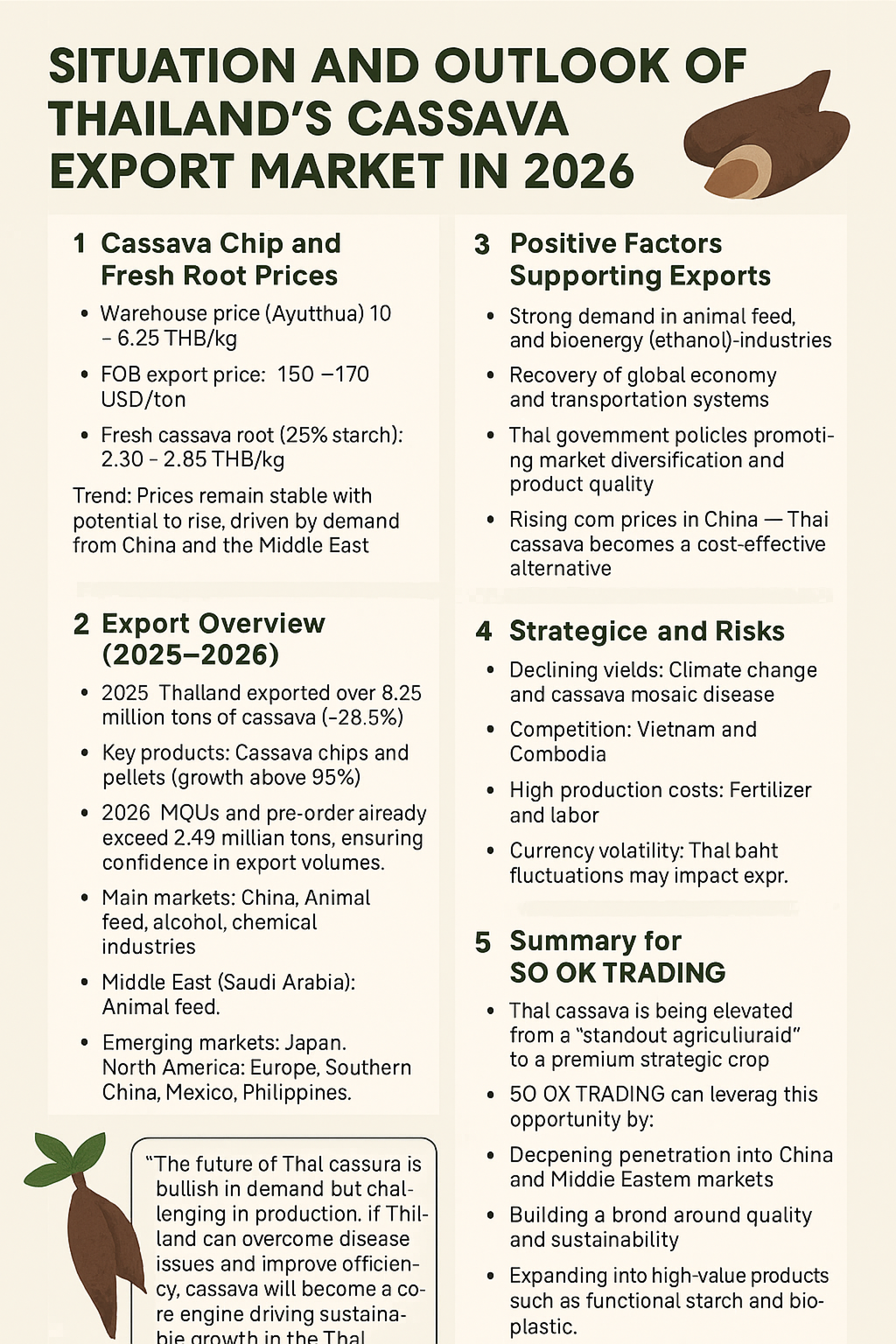
Situation and Outlook of Thailand’s Cassava Export Market in 2026
1. Cassava Chip and Fresh Root Prices
Warehouse price (Ayutthaya): 6.10 – 6.25 THB/kg
FOB export price: 160 – 170 USD/ton
Fresh cassava root (25% starch): 2.30 – 2.85 THB/kg
Trend: Prices remain stable with potential to rise, driven by demand from China and the Middle East
2. Export Overview (2025–2026)
2025: Thailand exported over 8.25 million tons of cassava (+26.53%)
Key products: Cassava chips and pellets (growth above 95%)
2026: MOUs and pre-orders already exceed 2.46 million tons, ensuring confidence in export volumes
Main markets:
China: Animal feed, alcohol, chemical industries
Middle East (Saudi Arabia): Animal feed
Emerging markets: Japan, North America, Europe, Southern China, Mexico, Philippines
3. Positive Factors Supporting Exports
Strong demand in animal feed and bioenergy (ethanol) industries
Recovery of global economy and transportation systems
Thai government policies promoting market diversification and product quality
Rising corn prices in China → Thai cassava becomes a cost-effective alternative
4. Challenges and Risks
Declining yields: Climate change and cassava mosaic disease
Competition: Vietnam and Cambodia
High production costs: Fertilizer and labor
Currency volatility: Thai baht fluctuations may impact exporters’ income
5. Strategic Outlook (2026–2027)
Market diversification: Reduce reliance on China (80–90%) by expanding into Saudi Arabia, Japan, and the EU
Product upgrading:
Functional starch for pharmaceuticals, cosmetics, and health foods
Bioplastic as eco-friendly plastic
Technology-driven production: Precision agriculture and disease-resistant varieties to boost yields
Continued investment: Ethanol, animal feed, chemicals, adhesives, paper
6. Summary by SO OK TRADING
Thai cassava is being elevated from a “standout agricultural product” to a “premium strategic crop.”
SO OK TRADING can leverage this opportunity by:
Deepening penetration into China and Middle Eastern markets
Building a brand around quality and sustainability
Expanding into high-value products such as functional starch and bioplastic
Positioning strategically: from “cassava exporter” to “global value creator in industry”
✨ Key Message
“The future of Thai cassava is bullish in demand but challenging in production. If Thailand can overcome disease issues and improve efficiency, cassava will become a core engine driving sustainable growth in the Thai agricultural economy.”