“Gold prices keep soaring without limits — will they stop at the universe? BY SO OK TRADING”
Last updated: 13 Jan 2026
4144 Views
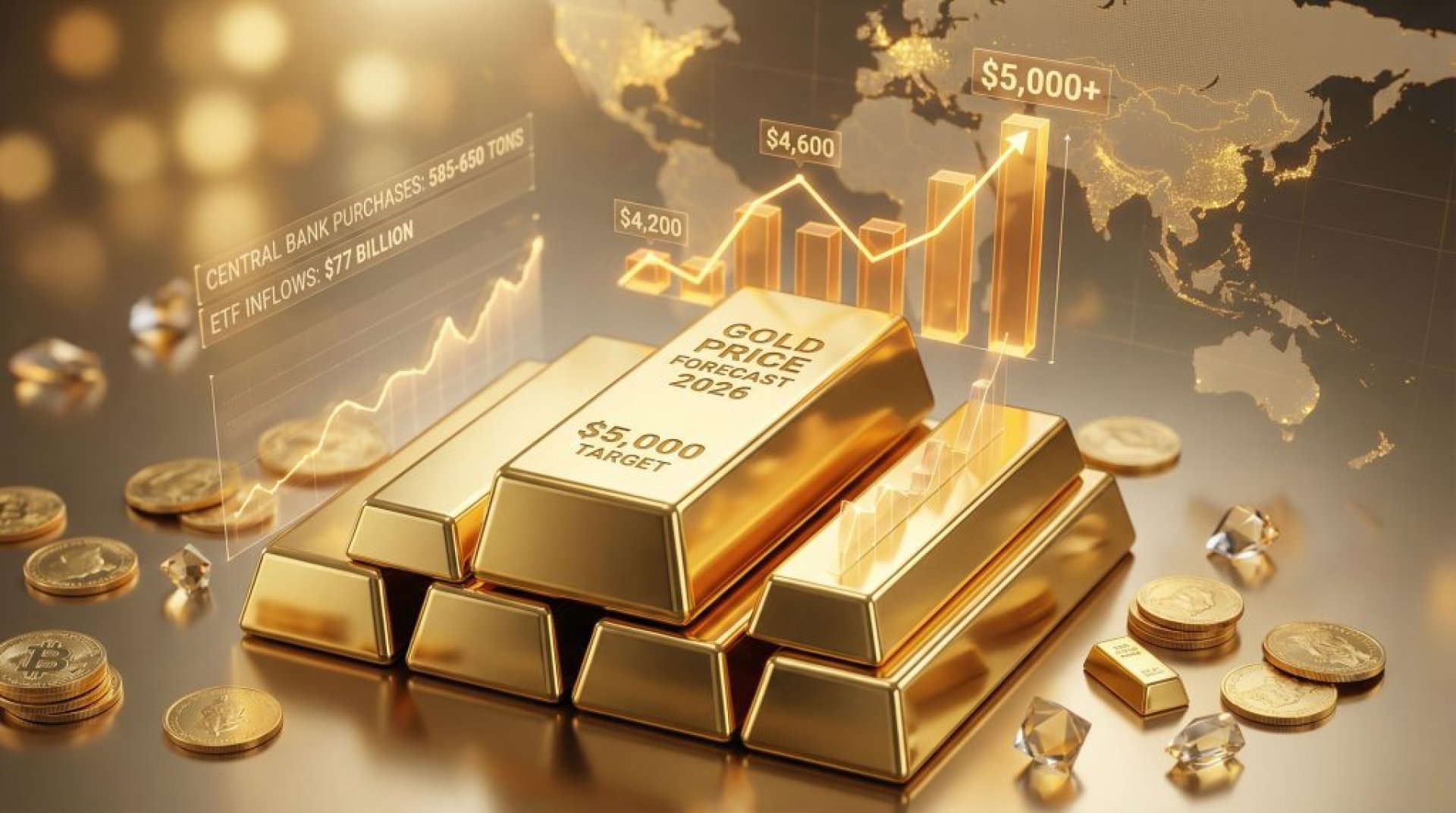
Gold Price Analysis (2015–2025 Trends and Forecast to 2030)
Historical Gold Prices (USD/oz)
2015 – Average ~1,125 USD/oz → Strong US dollar, Fed begins rate hikes
2016 – Average ~1,275 USD/oz → Brexit, rising global economic risks
2017 – Average ~1,290 USD/oz → Strong equity markets, gold relatively stable
2018 – Average ~1,300 USD/oz → US–China trade war begins, market uncertainty increases
2019 – Average ~1,410 USD/oz → Fed rate cuts, economic risks intensify
2020 – Average ~1,815 USD/oz → COVID-19, US QE policy, surge in safe-haven demand
2021 – Average ~1,825 USD/oz → Inflation swings higher, USD weakens, gold begins to rise
2022 – Average ~1,870 USD/oz → Russia–Ukraine war, commodity prices (oil, gold, metals) surge
2023 – Average ~1,985 USD/oz → Global inflation intensifies, Fed continues rate hikes, geopolitical risks persist
2024 – Average ~2,285 USD/oz → Central banks worldwide significantly increase gold purchases (safe-haven asset)
2025 – Average ~3,900 USD/oz → Second wave of inflation, global central banks accumulate gold, de-dollarization trend
Gold Price Outlook (2026–2030)
2026: Goldman Sachs projects ~4,900 USD/oz; other forecasts range ~3,300–3,900 USD/oz
2027–2028: Continued upward trend, potential to reach ~5,500 USD/oz
2029: Strong demand from central banks and investors, price may reach ~6,000–6,500 USD/oz
2030: Conservative forecast places the peak around ~7,200 USD/oz
Positive Drivers
Fed and other central banks expected to cut interest rates
Inflation and global economic uncertainty
Increased gold purchases by central banks (China, India, Russia)
Geopolitical risks, trade policies, rare earth demand in industry
Risk Factors
Rapid global economic recovery with sustained high interest rates → possible gold price correction
US dollar strength or volatility → downward pressure on gold prices
2026 Price Assessment (Probability-Based)
Average forecast: ~4,700 USD/oz
Range: 4,000–5,000 USD/oz
Scenario probabilities:
Base case (45%): 4,500–4,800 USD/oz
Bullish case (35%): 4,800–5,000 USD/oz
Bearish case (20%): 4,200–4,500 USD/oz
Conclusion
Gold prices are expected to remain on an upward trajectory over the next five years. While 2026 may see short-term corrections, the average price is projected around 4,700 USD/oz, with a ceiling near 5,000 USD/oz and a floor around 4,000 USD/oz. By 2030, gold could reach 6,000–7,000 USD/oz, supported by inflationary pressures, monetary easing, and strong central bank demand. Gold remains a critical safe-haven asset and a strategic tool for portfolio diversification.
Would you like me to also prepare a bilingual Thai–English comparison table so you can use it directly in presentations or export documentation?
Historical Gold Prices (USD/oz)
2015 – Average ~1,125 USD/oz → Strong US dollar, Fed begins rate hikes
2016 – Average ~1,275 USD/oz → Brexit, rising global economic risks
2017 – Average ~1,290 USD/oz → Strong equity markets, gold relatively stable
2018 – Average ~1,300 USD/oz → US–China trade war begins, market uncertainty increases
2019 – Average ~1,410 USD/oz → Fed rate cuts, economic risks intensify
2020 – Average ~1,815 USD/oz → COVID-19, US QE policy, surge in safe-haven demand
2021 – Average ~1,825 USD/oz → Inflation swings higher, USD weakens, gold begins to rise
2022 – Average ~1,870 USD/oz → Russia–Ukraine war, commodity prices (oil, gold, metals) surge
2023 – Average ~1,985 USD/oz → Global inflation intensifies, Fed continues rate hikes, geopolitical risks persist
2024 – Average ~2,285 USD/oz → Central banks worldwide significantly increase gold purchases (safe-haven asset)
2025 – Average ~3,900 USD/oz → Second wave of inflation, global central banks accumulate gold, de-dollarization trend
Gold Price Outlook (2026–2030)
2026: Goldman Sachs projects ~4,900 USD/oz; other forecasts range ~3,300–3,900 USD/oz
2027–2028: Continued upward trend, potential to reach ~5,500 USD/oz
2029: Strong demand from central banks and investors, price may reach ~6,000–6,500 USD/oz
2030: Conservative forecast places the peak around ~7,200 USD/oz
Positive Drivers
Fed and other central banks expected to cut interest rates
Inflation and global economic uncertainty
Increased gold purchases by central banks (China, India, Russia)
Geopolitical risks, trade policies, rare earth demand in industry
Risk Factors
Rapid global economic recovery with sustained high interest rates → possible gold price correction
US dollar strength or volatility → downward pressure on gold prices
2026 Price Assessment (Probability-Based)
Average forecast: ~4,700 USD/oz
Range: 4,000–5,000 USD/oz
Scenario probabilities:
Base case (45%): 4,500–4,800 USD/oz
Bullish case (35%): 4,800–5,000 USD/oz
Bearish case (20%): 4,200–4,500 USD/oz
Conclusion
Gold prices are expected to remain on an upward trajectory over the next five years. While 2026 may see short-term corrections, the average price is projected around 4,700 USD/oz, with a ceiling near 5,000 USD/oz and a floor around 4,000 USD/oz. By 2030, gold could reach 6,000–7,000 USD/oz, supported by inflationary pressures, monetary easing, and strong central bank demand. Gold remains a critical safe-haven asset and a strategic tool for portfolio diversification.
Would you like me to also prepare a bilingual Thai–English comparison table so you can use it directly in presentations or export documentation?


Related Content

แคโทดทองแดง (Copper Cathode) คือแผ่นทองแดงความบริสุทธิ์สูงที่ได้จากกระบวนการกลั่นด้วยไฟฟ้า (electrolysis) มีความบริสุทธิ์ตั้งแต่ 99% ขึ้นไป และใช้ผลิตเป็นสายไฟคุณภาพสูง ผลิตภัณฑ์ไฟฟ้า หรือโลหะผสมต่างๆ
กระบวนการผลิต
แผ่นทองแดงที่ไม่บริสุทธิ์จะถูกใช้เป็นขั้วบวก (anode) ในเซลล์อิเล็กโทรไลต์ที่ประกอบด้วยสารละลายกรดซัลฟูริกและคอปเปอร์ซัลเฟต
แผ่นทองแดงที่บริสุทธิ์จะถูกใช้เป็นขั้วลบ (cathode)
เมื่อกระแสไฟฟ้าไหลผ่าน แร่ธาตุที่ไม่บริสุทธิ์จะละลายและกลายเป็นไอออนเข้าสู่สารละลาย จากนั้นไอออนทองแดงจะเคลื่อนที่ไปที่ขั้วลบและตกตะกอนลงบนแผ่นทองแดงบริสุทธิ์
สิ่งเจือปนที่มีค่าต่ำกว่าทองแดง เช่น เหล็กและสังกะสี จะละลายไปพร้อมกับทองแดง แต่สิ่งเจือปนที่มีค่าสูงกว่า เช่น ทองคำและเงิน จะตกตะกอนลงที่ก้นถัง ทำให้ได้ทองแดงบริสุทธิ์สูง
คุณสมบัติและประโยชน์
ความบริสุทธิ์สูง: มีความบริสุทธิ์สูงถึง 99.99% ทำให้มีการนำไฟฟ้าได้ดีเยี่ยม
นำไฟฟ้าได้ดี: ใช้เป็นตัวนำไฟฟ้าในสายไฟ สายเคเบิล และอุปกรณ์ไฟฟ้าต่างๆ
ยืดหยุ่นและทนทาน: สามารถนำไปรีดเป็นเส้นลวดบางๆ หรือแผ่นฟอยล์ได้โดยไม่เปราะขาดง่าย
ทนความร้อน: สามารถนำกระแสไฟฟ้าได้เต็มพิกัดโดยไม่เกิดความร้อนสูงเกินไป
ใช้สร้างโลหะผสม: สามารถนำไปผสมกับโลหะอื่นเพื่อสร้างโลหะผสม เช่น ทองเหลือง (ทองแดง + สังกะสี) และทองสำริด (ทองแดง + ดีบุก)
ทำผลิตภัณฑ์อื่นๆ: ใช้ผลิตเค้กทองแดง แผ่นทองแดง หรือวัสดุอื่นๆ
28 Nov 2025

Battery Recycling = The Moving Gold Mine of the Future
From old batteries to precious resources!
Did you know? Expired car batteries are not waste, but treasure troves of rare metals. More than 90% can be recovered — including lithium, cobalt, nickel, and lead.
Thailand is rapidly becoming the ASEAN hub for EV battery recycling, driven by global automaker investments and the EV 3.5 policy that attracts advanced technologies.
7 Mar 2026

In 2026, the world is fully advancing into the era of clean energy and cutting-edge technology — and Silicon Metal stands at the very heart of this transformation.
From raw quartz mined upstream to becoming a core component in solar panels, electric vehicles (EVs), and semiconductor chips, silicon has evolved into a strategic metal driving the global economy, valued at USD 8.2–8.95 billion.
China continues to dominate the global market, holding the leadership role in both production and consumption. Meanwhile, Laos is emerging as a new upstream supplier, and Thailand has risen as the ASEAN hub for midstream and downstream processing, transforming imported silicon into high-value products across industries such as EVs, solar energy, and silicones.
SO OK TRADING sees tremendous opportunity in this wave of transformation — positioning Thailand at the forefront of the global strategic metals market, supported by strong industrial infrastructure, investments in the Eastern Economic Corridor (EEC), and tax incentives that empower Thai businesses to compete globally.
✨ SO OK TRADING — FAST • SHARP • RELIABLE
Your trusted partner in the future of strategic metals.
5 Sept 2026
