SO OK TRADING'S INSIGHT | Trade, Tariffs & Transformation: Thailand–U.S. ART Agreement 2026 - From Tariff Wars to the Global Supply Chain Battleground and the Reordering of a New Economic Era 18 NOV 2026
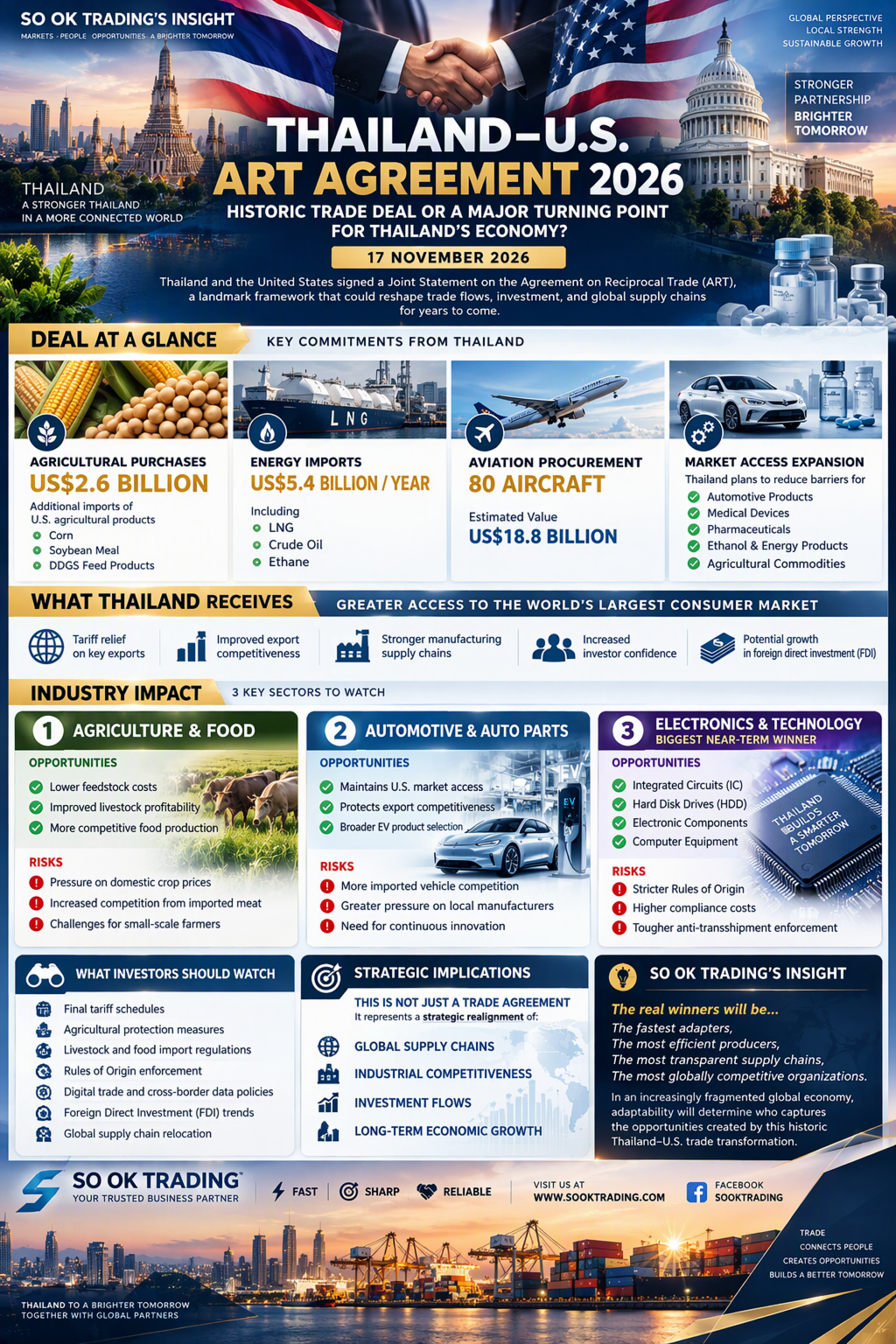
SO OK TRADING'S INSIGHT | Thailand–U.S. Historic Trade Agreement
18 NOV 2026
A New Opportunity for Thai Exports or a Major Turning Point for Domestic Industries?
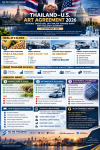
On November 17, 2026, Thailand and the United States signed a Joint Statement on the Agreement on Reciprocal Trade (ART), marking one of the most significant developments in Thai trade policy in recent years.
Although the agreement has not yet entered into force and must still undergo domestic legal procedures, public consultations, and approval by the Thai Parliament, the framework already signals a new chapter in the economic relationship between the two countries.
For investors, industry leaders, and Thai businesses, the implications extend far beyond tariffs. The agreement could influence supply chain realignment, intensify competition from imports, and create new opportunities to access the United States, one of Thailand's most important export destinations.
Key Highlights of the Agreement
Under the framework of the agreement, Thailand has expressed its intention to:
✅ Reduce selected tariffs and non-tariff trade barriers on U.S. products
✅ Increase purchases of U.S. agricultural products by approximately US$2.6 billion
✅ Expand market access for agricultural products, animal feed, automobiles, pharmaceuticals, and medical devices
✅ Increase imports of U.S. energy products, including LNG, crude oil, and ethane
✅ Promote investment and cooperation in advanced technology industries
At the same time, the United States has granted additional tariff benefits to several major Thai export products, covering more than half of Thailand's export value to the U.S. market.
Three Thai Industries Most Affected by the Agreement
1. Agriculture and Food Industry
Different Winners, Different Challenges
The agricultural sector is expected to be one of the industries most directly affected by the agreement.
On the positive side, animal feed producers and large-scale livestock operators could gain access to lower-cost raw materials such as corn, soybean meal, and DDGS from the United States, significantly reducing production costs.
However, domestic crop growers may face increased pricing pressure as imported products compete directly with local agricultural output.
In addition, the opening of the market to U.S. meat and poultry products has raised concerns among Thai livestock producers, particularly smaller operators with higher production costs.
Business Perspective
Companies that can effectively manage costs, improve production standards, and differentiate their products will be better positioned to thrive in an increasingly liberalized trade environment.
2. Automotive and Auto Parts Industry
Preserving Export Markets While Competition Intensifies
The United States remains one of the most important export markets for Thailand's automotive parts industry.
The agreement helps Thai exporters maintain their competitiveness against regional rivals that have already established trade arrangements with the United States.
On the import side, the recognition of U.S. automotive standards could streamline procedures and lower costs for certain imported vehicles, particularly electric vehicles and specialized models.
Business Perspective
Consumers may benefit from a wider range of choices, while Thai manufacturers and suppliers will need to enhance innovation, productivity, and technological capabilities to remain competitive.
3. Electronics and Technology Industry
The Biggest Short-Term Beneficiary
The electronics sector is widely regarded as one of the largest beneficiaries of the agreement.
Key export products include:
• Integrated Circuits (IC)
• Hard Disk Drives (HDD)
• Electronic Components
• Computer Equipment and Related Products
These products continue to receive tariff exemptions, helping Thai manufacturers maintain competitiveness in the U.S. market.
However, compliance with Rules of Origin requirements is expected to become significantly stricter in order to prevent transshipment and circumvention practices through third countries.
Business Perspective
Companies with strong traceability systems and transparent supply chains will have a clear competitive advantage in the years ahead.
What Investors and Businesses Should Watch Closely
While the signing has been presented as a major trade achievement, the actual impact will depend on the details of the final agreement once released.
Key areas to monitor include:
• The final list of products eligible for tariff reductions
• Measures to protect Thai farmers
• Regulations governing meat and food imports
• Rules of Origin requirements and enforcement
• Digital trade and cross-border data transfer provisions
• Impacts on Foreign Direct Investment (FDI)
Conclusion
The Thailand–U.S. ART Agreement could become one of the defining economic milestones for Thailand over the coming decade.
For exporters, it presents an opportunity to preserve and expand access to the world's largest consumer economy.
For agriculture and domestic industries, it serves as a reminder that competitiveness must increasingly be built on productivity, efficiency, and value creation rather than price alone.
As global supply chains continue to be restructured, adaptability will become the decisive factor in determining which businesses emerge as winners and which risk falling behind.
SO OK TRADING believes that this agreement is about far more than tariffs. It represents a strategic rebalancing of trade, investment, and supply chains between Thailand and the United States, with potentially far-reaching implications for the future direction of Thai industry and economic development.
SO OK TRADING
Your Trusted Business Partner
⚡ FAST
SHARP
RELIABLE
VISIT US AT: WWW.SOOKTRADING.COM
FACEBOOK: SOOKTRADING