SO OK TRADING INSIGHT: US–Iran War Ignites Global Energy Crisis, Shakes World Economy — November on Fire
SO OK TRADING INSIGHT: U.S.–Iran Tensions (November 2026)
The conflict between the United States and Iran in November 2026 has escalated into a crisis that risks turning into full-scale war. The U.S. launched military strikes in the Strait of Hormuz, while Iran declared readiness for unlimited retaliation. This situation is compounded by Israeli pressure and the results of the U.S. midterm elections, which may prove decisive in shaping the trajectory of both the war and the global economy.
⚔️ Military Operations
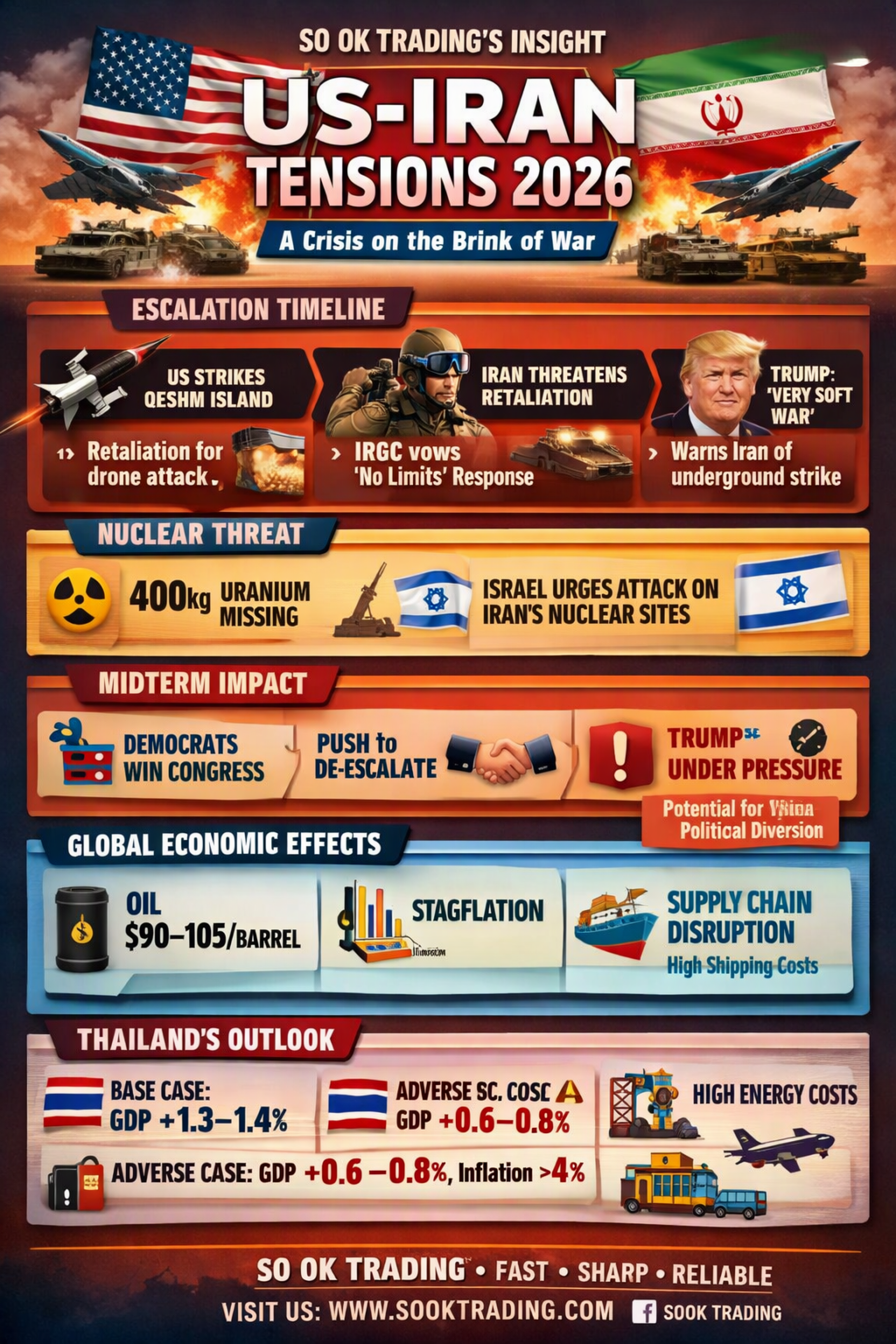
U.S. strikes Qeshm Island: Defensive action after fighter jets were intercepted.
Trump’s stance: Downplayed intensity as a “light war,” but threatened to destroy Iran’s underground nuclear bases.
Iran’s response: IRGC and Supreme Leader Mojtaba Khamenei vowed “unlimited retaliation.”
☢️ Nuclear & Intelligence Issues
Over 400 kg of uranium missing from Fordow facility.
Israel pressed the U.S. to strike nuclear bases immediately after the midterm elections.
Diplomatic Channels
U.S. Vice President JD Vance sent a secret letter to initiate talks.
Iran set clear conditions: lift sanctions, unfreeze assets, and end naval blockade.
U.S. Political Outlook (Midterm Election Factor)
Democrats likely to secure majority: winning multiple districts and states.
Impact on war: If Democrats control Congress, they could block additional military funding, forcing Trump to scale down escalation.
Trump’s position: No immediate new strike plans announced, but risk remains that war could be used as a political distraction.
Global Economy
Brent crude oil forecast: Surge to $90–105 per barrel.
Supply chain disruption: Commercial ships rerouted via Cape of Good Hope, raising freight costs.
Stagflation risk: IMF projects global GDP growth at only 3.0%, with inflation at 4.7%.
Demand destruction: High energy prices erode purchasing power, especially in Europe and developing nations. China accelerates EV transition.
Thai Economy
Base Case: GDP growth 1.3–1.4%, inflation 1.5–2.0%.
Adverse Case: Prolonged war could cut GDP to 0.6–0.8%, inflation rising to 4.0–4.5%.
Energy costs: Thailand imports 57–58% of crude oil from the Middle East.
Exports: Freight rates to Europe up 14–17%, petrochemical raw material costs up over 50%.
Tourism: Higher airfare dampens hotel bookings and travel demand.
Key Players
U.S.: Democratic majority in Congress could restrict military budgets, reducing risk of full-scale war.
Iran: Maintains unlimited retaliation stance, leveraging nuclear issue as bargaining power.
Israel: Continues to pressure U.S. for military action, though midterm results may hinder joint operations.
Global & Thai Economy: Must brace for high energy costs, inflation, and slowing trade.
✍️ Conclusion The U.S.–Iran confrontation in November 2026 carries high risk of escalating into full-scale war. However, the U.S. midterm elections, with Democrats poised to gain majority control, may serve as a “political brake” against major escalation. Still, the economic impact is already evident: soaring energy prices, disrupted supply chains, and slowing growth across both global and Thai economies.
SO OK TRADING: Your Global Business Partner FAST • SHARP • RELIABLE www.sooktrading.com Facebook: SO OK TRADING