SO OK TRADING’S INSIGHT: Australia – Global Mining Powerhouse and the Golden Route of Non-Ferrous Metals Trade
SO OK TRADING’S INSIGHT: Australia – Global Mining Powerhouse and the Golden Route of Non-Ferrous Metals Trade
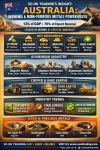
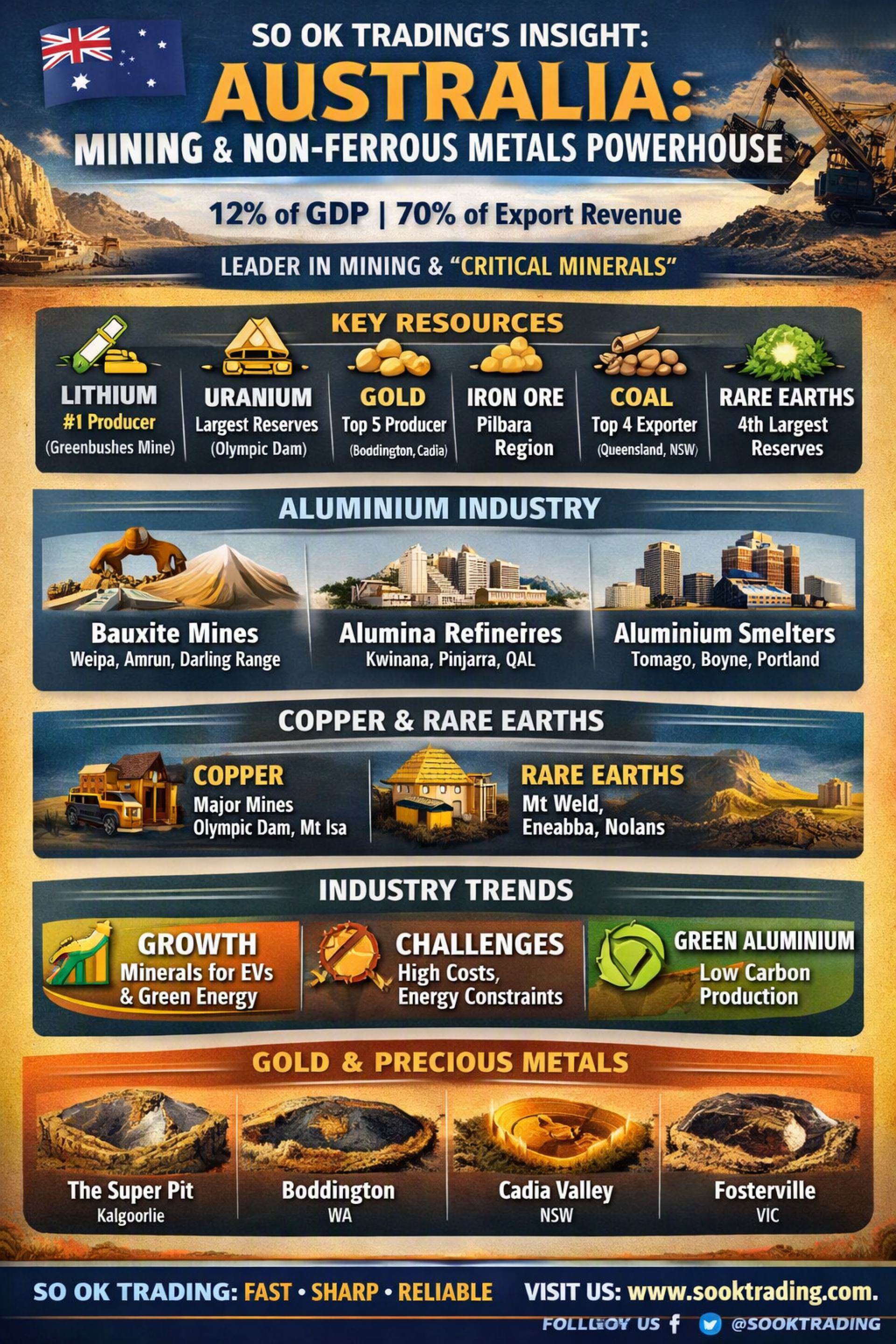
Australia plays a pivotal role in the global mineral market. With abundant natural resources and a fully integrated mining industry — from exploration and extraction to processing and export — the nation has established itself as a global powerhouse in minerals and non-ferrous metals. The mining sector contributes more than 12% of Australia’s GDP and generates 70% of total export revenue, making it a cornerstone of both the national economy and the global supply chain.
1. Key Minerals and Major Production Sites
Lithium: World’s largest producer. Greenbushes Mine (WA) is the largest hard-rock lithium mine.
Uranium: Holds the largest reserves globally. Olympic Dam (SA) is the world’s biggest uranium mine.
Gold: Among the top 5 producers worldwide. Key mines include Boddington, Cadia, Tropicana.
Iron Ore: Australia’s leading export commodity, concentrated in the Pilbara region (WA).
Coal: 4th largest exporter globally. Major deposits in Queensland and New South Wales.
Rare Earths: 5.7 million tonnes in reserves, ranked 4th globally, considered a strategic resource.
2. Aluminium Industry – A Complete Value Chain
Bauxite Mines: Weipa & Amrun (QLD), Darling Range (WA), Gove (NT)
Alumina Refineries: Kwinana, Pinjarra, Wagerup, Worsley (WA), QAL & Yarwun (QLD)
Aluminium Smelters: Tomago (NSW), Boyne (QLD), Portland (VIC), Bell Bay (TAS)
3. Copper and Rare Earths
Copper: Accounts for 13% of global reserves. Olympic Dam (SA) and Mount Isa (QLD) are major hubs.
Rare Earths: Key projects include Mt Weld (Lynas), Eneabba (Iluka), Yangibana (Hastings), Nolans (Arafura), Dubbo (ASM).
4. Industry Trends in Non-Ferrous Metals
Growth Drivers: Copper, Lithium, Rare Earths — boosted by EV demand and clean energy transition.
Stable Commodities: Aluminium, Zinc, Lead — facing challenges from aging mines and the shift to Green Aluminium.
Key Challenges: Rising operational costs, energy constraints, and pressure to meet Net-Zero targets.
5. Gold and Precious Metals
Australia is the world’s second-largest gold producer, with iconic mines such as:
The Super Pit (Kalgoorlie, WA): One of the largest open-pit gold mines.
Boddington (WA): A massive Newmont-operated gold mine.
Cadia Valley (NSW): A major underground gold-copper mine.
Fosterville (VIC): Known as one of the world’s highest-grade gold mines.
✨ Conclusion
Australia is not only a producer of traditional minerals but also a leader in the new era of Critical Minerals, powering the global transition to clean energy and advanced technologies. With diverse resources and a complete industrial value chain, Australia continues to stand as a true global mining and non-ferrous metals powerhouse.
SO OK TRADING: Your Trusted Business Partner FAST • SHARP • RELIABLE Visit us: www.sooktrading.com Facebook: SOOK TRADING