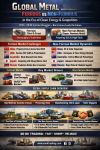
“Metal Revolution 2026–2030: Global Metal Market Dynamics — Ferrous vs Future Metals in the Battlefield of Clean Energy and New Geopolitics” SO OK TRADING Global Perspective: October 23, 2026
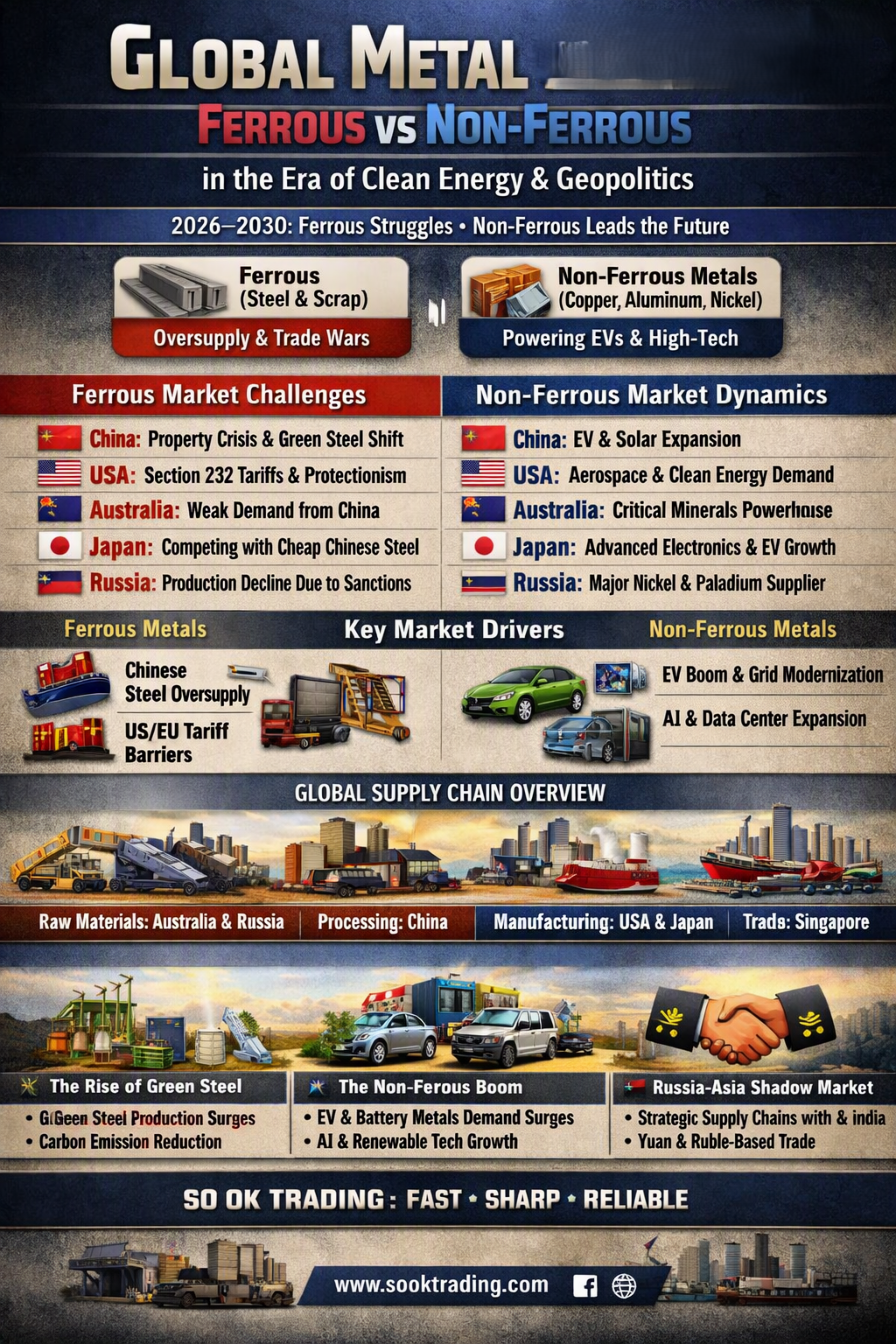
Global Metal Market Dynamics: Ferrous vs Non-Ferrous in the Era of Clean Energy and New Geopolitics
SO OK TRADING | October 23, 2026
1. Introduction
Between 2026–2030, the global metals market is undergoing profound transformations, reflecting both economic and geopolitical shifts.
Ferrous (Steel & Scrap): pressured by oversupply and tariff wars.
Non-Ferrous (Copper, Aluminum, Nickel, etc.): rising as the “heroes” driving future industries such as EVs, AI data centers, and clean energy.
2. Ferrous Market Situation
China: Facing a property crisis leading to steel oversupply, forced into cheap exports while shifting toward Green Steel to reduce carbon emissions.
United States: Section 232 tariffs protect domestic producers, keeping steel prices above global levels, while promoting scrap recycling.
Australia: Iron ore revenues pressured by slowing Chinese demand.
Japan: Produces high-quality automotive steel but competes with cheap Chinese steel, shifting focus to low-carbon steel.
Singapore: Serves as a trading hub, setting benchmark prices and futures contracts.
Russia: Production declines due to sanctions, but exports to Asian markets continue.
3. Non-Ferrous Market Situation
China: The largest producer and consumer, especially of copper and aluminum for EVs and solar, while restricting rare earth exports as a bargaining tool.
United States: Strong demand in aerospace and clean energy, reliant on aluminum imports from Canada.
Australia: Positioning itself as a key supplier of critical minerals such as lithium and nickel to Western allies.
Japan: A high-value non-ferrous market driven by EVs and advanced electronics, diversifying supply chains to reduce dependence on China.
Singapore: A recycling hub for e-waste and precious metals, linking regional trade.
Russia: Despite sanctions, remains a major supplier of nickel and palladium, redirecting exports to China and India.
4. Market Drivers
Ferrous: Prices pressured by cheap Chinese exports and U.S./EU tariff measures.
Non-Ferrous: Rising demand for copper and aluminum from EVs, grid modernization, and AI data centers, with supply tightened by mine closures and export restrictions.
5. Supply Chain Structure
Upstream: Australia and Russia as key raw material suppliers.
Midstream: China as the largest smelting and processing hub.
Downstream: The U.S. and Japan utilizing processed metals in high-value industries.
Trading Hub: Singapore as the center for finance and logistics.
6. Outlook (2026–2030)
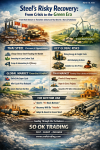
Ferrous: Global steel markets will shift toward Green Steel to meet clean energy goals, while tariff wars fragment regional pricing.
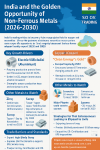
Non-Ferrous: Copper and aluminum enter a “golden era” driven by EVs and digital infrastructure, with Australia emerging as a strategic supplier in the mineral wars.
Russia: Builds parallel supply chains with China and India, creating a shadow market based on yuan and ruble trade.
7. Conclusion
The global metals market is entering an era defined by geopolitical division and the transition to clean energy.
Ferrous: burdened by oversupply and tariff conflicts.
Non-Ferrous: positioned as the “heartbeat” of future industries, powering EVs, AI, and renewable energy.
Six strategic nations (China, United States, Australia, Japan, Singapore, Russia) act as critical gears in the global metals supply chain.
✨ SO OK TRADING — Your trusted partner in the new era of metals FAST • SHARP • RELIABLE www.sooktrading.com | Facebook: SO OK TRADING