“Tuna Transformation: Reinventing Thailand’s Tuna Industry into the Era of Smart Protein & Premium Aluminum Packaging” SO OK TRADING : 18 SEP 2026
“Tuna Transformation: From Canned Tuna to Premium Pet Food and the Shift into the Aluminum Packaging Era” SO OK TRADING : 18 SEPTEMBER 2026
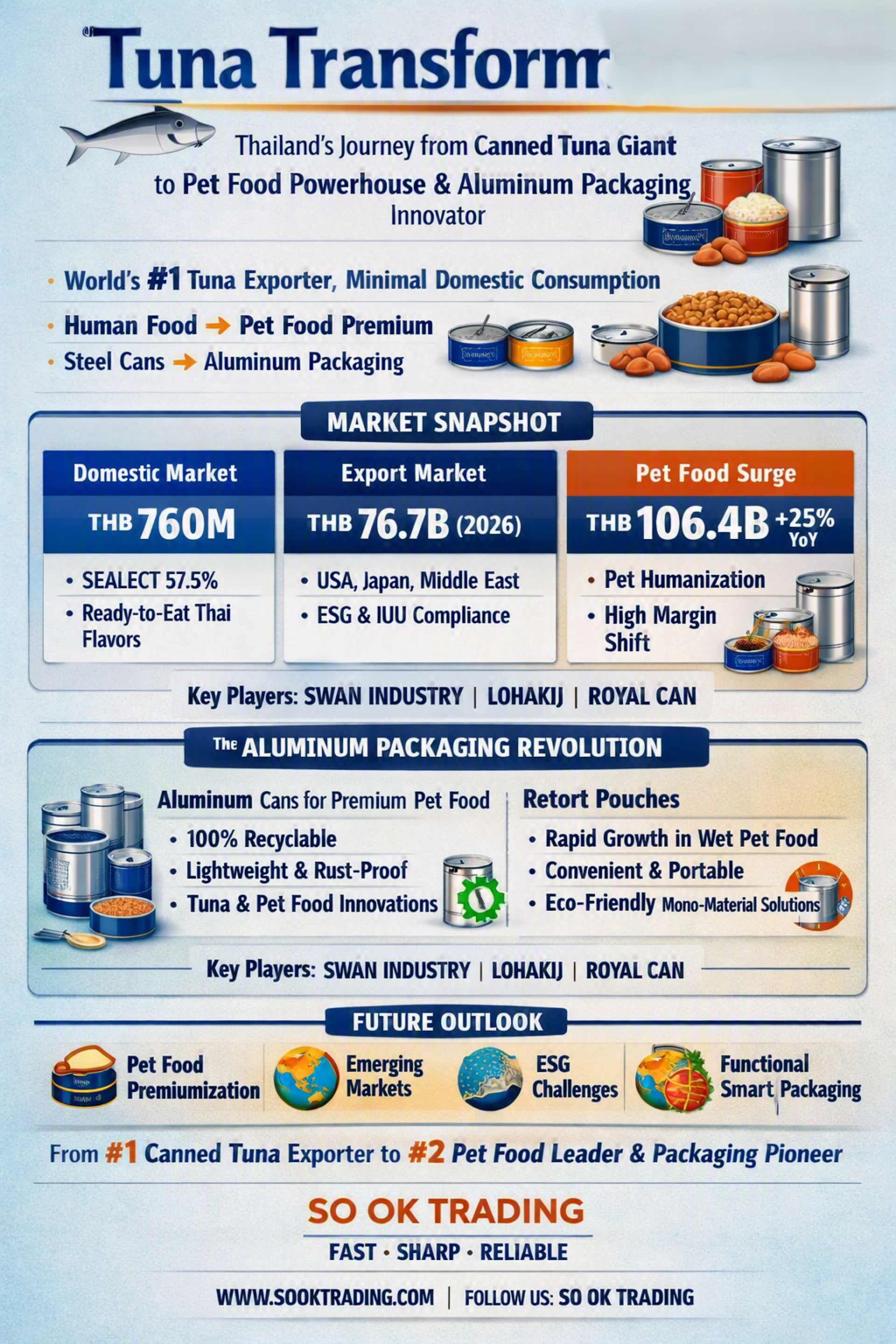
✨ Introduction Thailand continues to hold its position as the world’s leading exporter of canned tuna. Yet, what is striking is that domestic consumption remains minimal compared to the massive export value. This “structural paradox” reflects Thailand’s role in the global supply chain — a nation that serves as the “Kitchen of the World” but is not the primary consumer of its own products.
At the same time, the tuna industry is undergoing a major transformation: From Human Food → Premium Pet Food and from Steel Can → Aluminum Packaging, Thailand is adapting to new global demands focused on sustainability (ESG) and smart packaging innovation.
This transformation is not merely adaptation, but an elevation of Thailand’s industry to a new global role. By embracing Smart Protein, Functional Food, and Circular Economy, the sector is creating real added value and positioning Thailand as a leader in the next era of food and packaging innovation.
Market Outlook: Tuna & Pet Food
Domestic Market
Value: only THB 760 million (small compared to sardine/mackerel canned fish markets worth THB 8–9 billion)
Market leader: SEALECT (TU) with 57.5% share, leveraging the “Smart Protein” strategy
Trend: development of Ready-to-Eat products with Thai flavors (spicy dips, curries) to boost consumption
Export Market
2025 export value: THB 76.7 billion (542,814 tons)
Key destinations: USA (30%), Japan, Australia, Middle East
Challenges: ESG compliance, IUU fishing, tariff barriers, competition from Ecuador and China
Pet Food Market
Export value: THB 106.4 billion (+25% YoY)
Domestic market: expanded to THB 46 billion
Factories shifting production from Human Food → Pet Food due to higher margins
Drivers: Pet Humanization, Tuna Premiumization, strong supply chain synergy
Main export markets: USA, Japan, Australia, Italy, Malaysia Emerging markets: EU, ASEAN, India, Middle East
The Role of Aluminum Packaging
Packaging is not just a container — it is the “Game Changer” that defines product value and brand image.
1. Aluminum Cans
Rapidly replacing steel cans, especially in premium pet food
Advantages: 100% recyclable, lightweight, lower freight costs, rust-free
Human Food: still >70% steel cans, but aluminum adoption rising in premium tuna
Pet Food: small aluminum cans (70–85g) dominate, reflecting consumer willingness to pay for premium, safe, convenient products
2. Retort Pouches (Aluminum Foil / Flexible Packaging)
Fastest-growing packaging format, especially for wet pet food
Human Food: “Tuna Pouch” gaining popularity in USA and Europe
Challenge: traditional multilayer pouches are hard to recycle → innovation in Mono-material Pouch underway
3. Key Players in Thailand
SWAN INDUSTRY, LOHAKIJ, Royal Can Industry
BGC (Bangkok Glass): expanding from glass into flexible packaging and pouches
Future Outlook
Pet Food Premiumization will be the main growth driver of Thailand’s tuna industry
Aluminum Packaging will become the new standard, meeting ESG and convenience demands
Emerging markets (India, ASEAN) will be crucial for diversifying away from US dependency
Functional Food & Smart Packaging will generate higher added value and margins
Conclusion
Thailand’s tuna industry is entering a critical “structural transformation.” From being the world’s #1 canned tuna exporter to becoming the world’s #2 premium pet food exporter, and from Steel Can → Aluminum Packaging, the industry is embracing sustainability and innovation.
This is not just adaptation — it is Thailand’s elevation to a global leadership role in Smart Protein + Smart Packaging.
✨ SO OK TRADING — FAST • SHARP • RELIABLE Your trusted partner driving Thailand’s non-ferrous metals and aluminum packaging industry, ensuring resilience and sustainability in a rapidly changing global landscape.
Visit: www.sooktrading.com Facebook: SO OK TRADING