“The Future of EV Industry 2026 ⚡ Non-Ferrous Metals — The Driving Force of the World | SO OK TRADING: Your Non-Ferrous Partner for the EV Era” : September 9
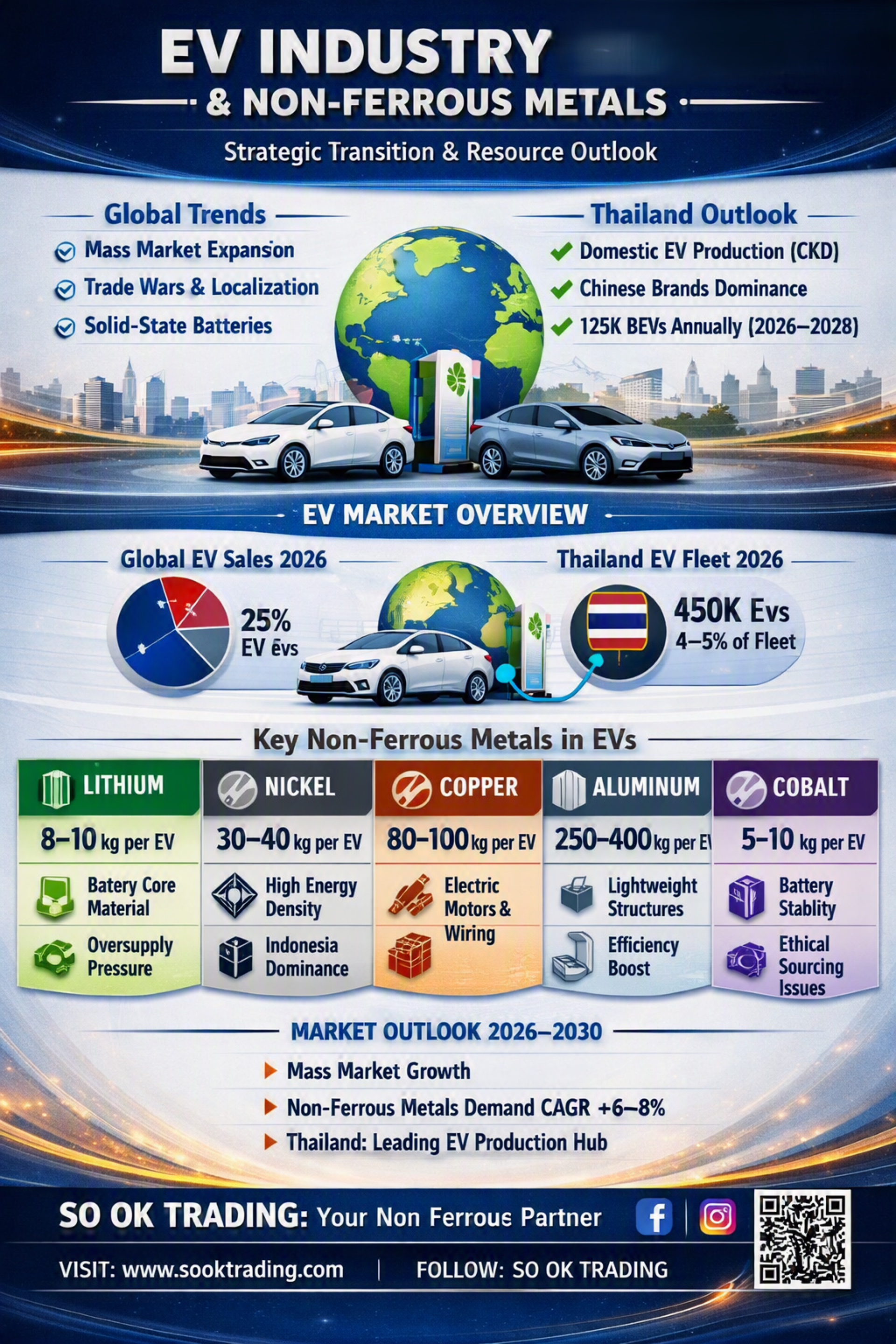
“EV Industry 2026: Strategic Transition and the Future Role of Non-Ferrous Metals” SO OK TRADING — September 9, 2026
Introduction
The year 2026 marks a critical turning point for the electric vehicle (EV) industry both globally and in Thailand. After a period of rapid growth, the market is entering a “strategic adjustment phase” characterized by price competition, localization of production, and geopolitical pressures.
At the same time, demand for industrial and non-ferrous metals — Lithium, Nickel, Copper, Aluminium, and Cobalt — continues to rise. Each EV requires 3–6 times more minerals than a traditional internal combustion engine vehicle, making these resources indispensable.
Outlook and Future Directions
Global Market
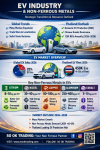
Shift to Mass Market: EV adoption is expanding from early adopters to mainstream consumers, driven by affordable EVs (<$25,000) and the commercialization of solid-state batteries.
Trade Wars & Localization: The U.S. and Europe have imposed high tariffs on Chinese EVs, prompting Chinese automakers to relocate production to Eastern Europe, Mexico, and Southeast Asia.
New Technologies: Solid-state batteries are entering production, while hybrids and plug-in hybrids regain popularity due to incomplete charging infrastructure.
Energy Pressure: EV growth is straining global power grids, leading many countries to invest in energy storage systems (BESS) and ultra-fast charging stations.
Thailand Market
Market Adjustment: After strong growth in 2023, the market slowed due to economic conditions and stricter credit policies. Consumers are concerned about resale value, insurance, and maintenance costs.
Domestic Production (CKD): Starting in 2026, automakers must produce EVs in Thailand under the 30@30 policy. Over 71% of Thai consumers prioritize locally assembled vehicles.
Chinese Brand Dominance: BYD, MG, NETA, DEEPAL, CHERY, and JAECOO continue to lead the Thai EV market.
Future Forecast (2026–2028): With domestic production and expanded charging infrastructure, annual BEV registrations are expected to average 125,000 units.
Vehicle Market Share
Thailand: Total vehicles ~44 million. ICE accounts for 93–94%, BEVs ~450,000 (4–5%), HEV/PHEV ~1%. However, in new car sales, BEV+HEV+PHEV already represent 60–67%.
Global: EVs (BEV+PHEV) account for ~5% of total vehicles, but 25% of new car sales, with China leading the market.
⚡ Non-Ferrous Metals and Their Role in EVs
Lithium: Core of NMC and LFP batteries. 8–10 kg per EV. Oversupply pressures prices but remains a long-term strategic resource.
Nickel: Enhances energy density in NMC batteries. 30–40 kg per EV. Indonesia’s massive production impacts global prices and ESG debates.
Copper: The “lifeblood” of electrical systems. 80–100 kg per EV, 2–4 times more than ICE vehicles. Used in motors, wiring, and charging systems.
Aluminium: Reduces vehicle weight and boosts efficiency. 250–400 kg per EV. Used in body structures, battery housings, and interior parts.
Cobalt: Improves battery stability and safety. 5–10 kg per EV. ESG concerns persist due to African mining practices.
Applications in EVs (Overview):
Battery: Lithium, Nickel, Cobalt, Aluminium
Electrical Systems & Motors: Copper, Aluminium
Lightweight Structures: Aluminium
Charging & Transmission: Copper
Outlook (2026–2030)
EV market will continue expanding at the mass-market level.
Demand for non-ferrous metals will grow at a CAGR of 6–8%, with copper and aluminium as primary drivers.
Thailand has the potential to become a leading EV production hub in ASEAN, provided infrastructure development and consumer confidence keep pace.
SO OK TRADING — Your Trusted Partner in Non-Ferrous Metals FAST | SHARP | RELIABLE
Visit us: www.sooktrading.com Facebook: SO OK TRADING