“Unlocking the Global Metal Trading Hub: From London to Singapore — Golden Hours for Metal Traders, Mastering LME, ShFE, COMEX, and New Perspectives for the Future Economy 2026 by SO OK TRADING”
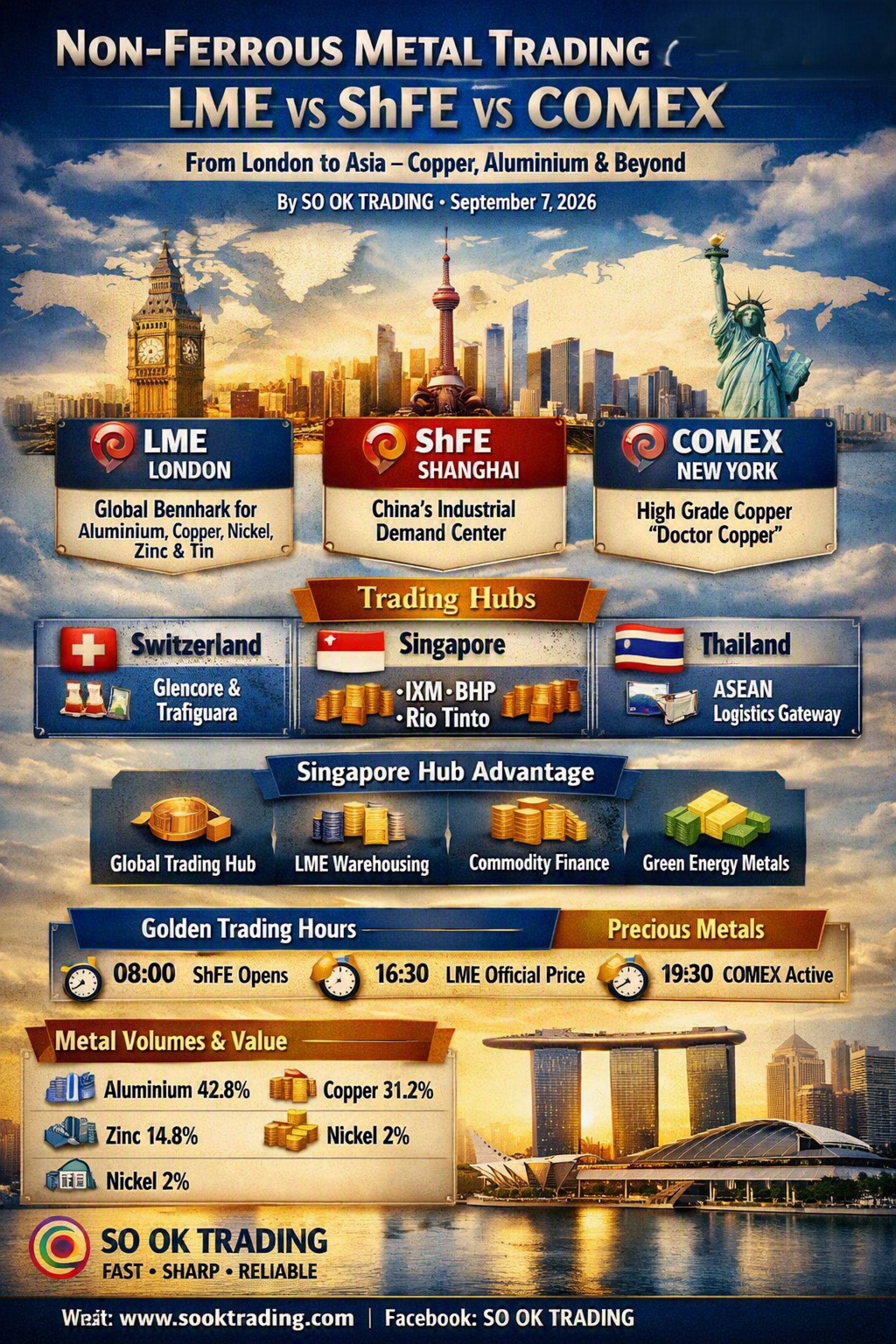
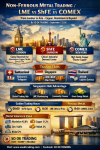
Non-Ferrous Metal Power Play: LME vs ShFE vs COMEX
Metal Trading Hub 2026: From London to Asia — Copper, Aluminium & Beyond By SO OK TRADING • September 7, 2026
Introduction
Non-ferrous metals are not merely industrial raw materials — they are the “lifeblood of the global economy,” reflecting production trends, clean energy transitions, and international investment flows. The global metal trading landscape is shaped by three major power centers: London Metal Exchange (LME), Shanghai Futures Exchange (ShFE), and COMEX (New York). Together, they set prices, manage demand, and drive capital across world markets.
Major Exchanges
LME (London): Global benchmark for industrial metals such as aluminium, copper, nickel, zinc, lead, and tin
ShFE (Shanghai): Mirrors China’s massive demand, consuming more than half of the world’s copper and aluminium
COMEX (New York): Focuses on copper and precious metals, especially the High Grade Copper (HG) contract known as “Doctor Copper”
Physical Trading Hubs
Switzerland: Glencore and Trafigura dominate global physical trading volumes
Singapore: IXM, Trafigura, Glencore, and producers like BHP and Rio Tinto use it as their Asian base
Thailand: A strategic logistics hub in ASEAN
Singapore’s Role
Global Trading House Hub — Headquarters for leading trading companies
LME-Approved Warehousing — Jurong/Tuas as Asia’s key storage facilities
Financing & Risk Management — Singaporean banks excel in commodity trade finance and derivatives
Green & Energy Metals Hub — A rising center for clean energy metals such as lithium, cobalt, and battery-grade nickel
Singapore vs Hong Kong/Shanghai
Singapore: Politically neutral, tax and financial systems favor free trade
Hong Kong/Shanghai: Shanghai sets domestic Chinese prices, while Hong Kong holds LME ownership and channels capital flows in and out of China
COMEX: Western Influence
Copper Futures: The largest trading volume globally
Arbitrage Hub: Exploiting price differences between LME, ShFE, and COMEX
Financial Settlement: Primarily cash-settled rather than physical delivery
Golden Hours for Thai–Singapore Traders
Morning (08:00–11:30 ICT): ShFE opens, LME Select begins → Prices driven by China
Afternoon (16:30–19:30 ICT): Europe opens, LME Ring announces official prices → Global benchmarks set
Evening (19:30–23:00 ICT): LME continues, COMEX becomes active → Maximum liquidity, intense arbitrage
Trading Volume & Value
Base Metals
Aluminium → 42.8% of LME Index
Copper → 31.2% of LME Index
Zinc → 14.8% of LME Index
Lead → 8.2% of LME Index
Nickel → 2.0% of LME Index
Tin → 1.0% of LME Index
Precious Metals
Gold → Highest global trading value, ultimate safe haven
Silver → Hybrid of precious and industrial use (electronics, solar cells)
Outlook
Energy Transition: Demand for copper, nickel, cobalt, and lithium will surge due to EVs and clean energy
Geopolitics: Rising tensions between China and the West make Singapore a neutral and secure hub
Arbitrage Opportunities: Price spreads among LME, ShFE, and COMEX remain profitable
Sustainability & Digitalization: Traceability and low-carbon standards will become mandatory
Conclusion
For traders in Thailand and Singapore, understanding the Golden Hours and the structure of global metal trading is the key to effective risk management and profit opportunities across three continents.
SO OK TRADING — Your trusted partner in the non-ferrous metals business FAST • SHARP • RELIABLE www.sooktrading.com Facebook: SO OK TRADING