“Indonesia Rising: Transforming Economy and Mining Resources — From ASEAN Power to Global Future” SO OK TRADING | 23 AUG 2026
Indonesia’s Economy and Mining Resources Overview : SO OK TRADING : August 23, 2026
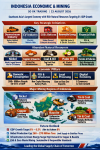
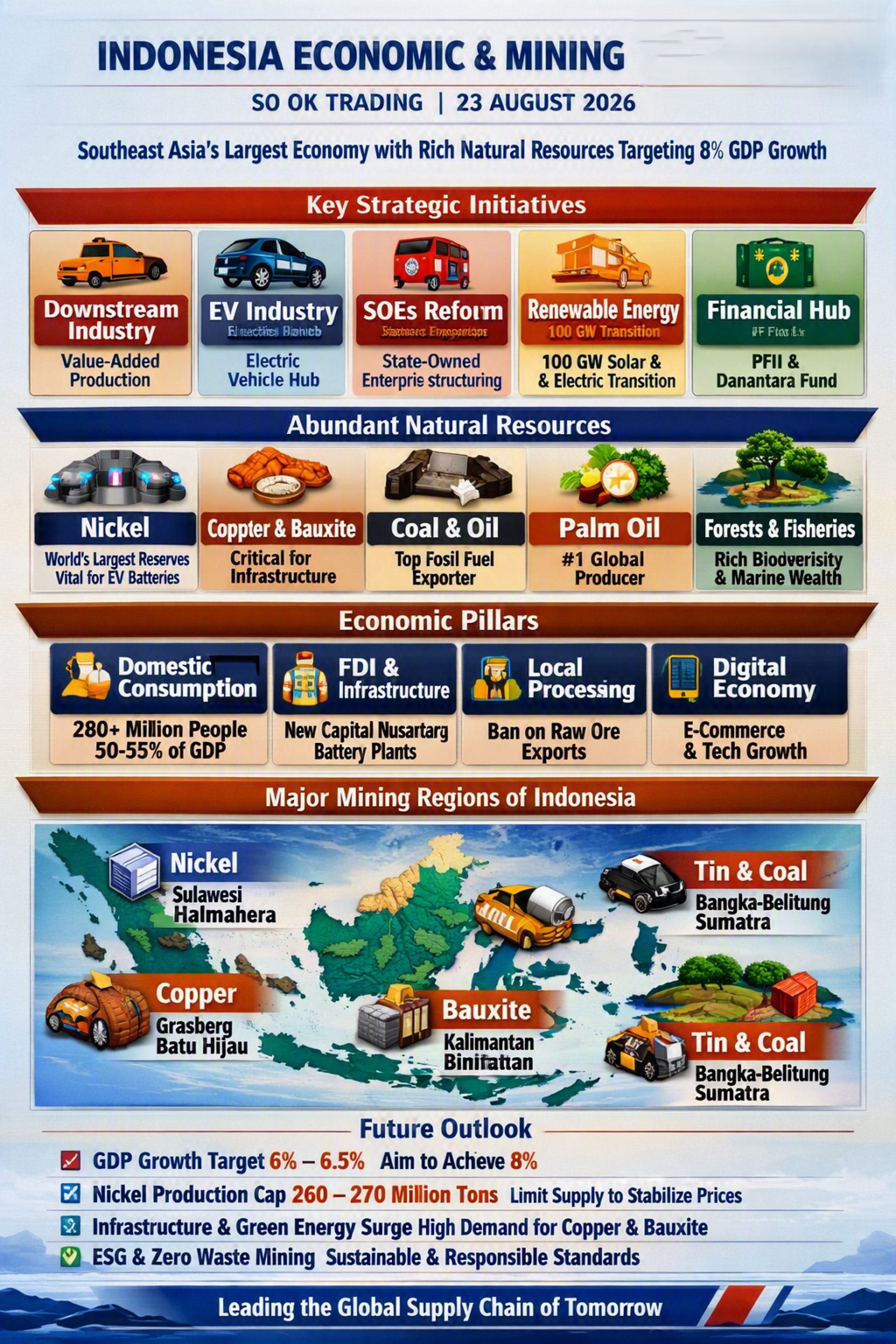
Indonesia is the largest economy in ASEAN, with abundant natural resources as its foundation. The government is accelerating strategic reform policies to enhance competitiveness and achieve sustainable growth. The long-term goal is to push GDP growth to 8%, though challenges remain from external pressures and foreign investor confidence.
Economic Direction and Key Policies
Downstream Industry: Shift from raw material exports to domestic processing to increase value.
EV Industry: Aim to become the regional hub for battery and electric vehicle production.
SOE Reform: Consolidate or close loss-making enterprises to improve efficiency.
Renewable Energy: Target 100 GW of solar power generation and electrify public transport.
Financial Hub: Establish PFII and the Danantara Fund to attract foreign investment.
Challenges: Despite average growth of 5%, fiscal discipline and structural risks remain.
Natural Resources and Key Commodities
Nickel: Indonesia holds the world’s largest reserves, vital for EV batteries.
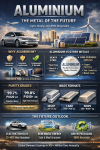
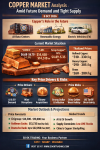
Copper and Bauxite: Support infrastructure and aluminum production.
Fossil Fuels: Major coal exporter, with abundant oil and natural gas.
Palm Oil: World’s top producer, used for exports and bioenergy.
Forests and Fisheries: Vast tropical rainforests and rich marine resources.
Four Pillars of the Economy
Domestic Consumption: Over 280 million people, household consumption accounts for 50–55% of GDP.
Downstream Processing: Ban on raw ore exports, mandatory domestic smelters.
Foreign Direct Investment (FDI): Mega projects like the new capital Nusantara and battery plants attract capital.
Digital Economy: Fastest-growing internet market in ASEAN, boosting e-commerce, fintech, and MSMEs.
Major Mining Areas and Resource Hubs
Nickel: Sulawesi (Sorowako, Morowali) and Halmahera.
Copper: Grasberg (Papua) and Batu Hijau (Sumbawa).
Bauxite: West Kalimantan and Bintan Island (Riau Islands).
Tin: Bangka-Belitung Islands.
Coal: Kalimantan and Sumatra.
Gold and Silver: Papua, North Sulawesi, North Sumatra.
Outlook: Economy and Mining Resources
Economic Outlook: Government targets GDP growth of 6–6.5%, above World Bank’s forecast (4.7–5.2%). Fiscal deficit to be reduced to 1.8–2.4% of GDP.
Mining Outlook:
Nickel: Production capped at 260–270 million tons to stabilize prices and prevent oversupply.
Imports: Some smelters import over 22 million tons of nickel from the Philippines.
Copper and Bauxite: Strong demand from infrastructure and green energy.
ESG & Zero Waste Mining: Environmental standards upgraded to meet Western market requirements.
✅ Summary
Indonesia is leveraging its mining resources and large population base to create new economic conditions. Rather than focusing on rapid extraction growth, the strategy emphasizes price stability and systematic investment in domestic processing, positioning the country as a global hub for advanced supply chains.
SO OK TRADING : Your Business Partner SO OK TRADING : FAST SHARP RELIABLE VISIT US AT : WWW.SOOKTRADING.COM FACEBOOK : SO OK TRADING