“Hormuz War 2026: Global Energy in Turmoil – Oil, Fertilizer, Naphtha & Aluminum Shaking the World Economy” SO OK TRADING | 18 August 2026
Middle East War 2026: The Hormuz Time Bomb – Oil, Fertilizer, Naphtha, and Aluminum Shake the World
SO OK TRADING : August 18, 2026
Situation Overview
The 60‑day ceasefire MoU between the United States and Iran expired on August 17, pushing tensions to their peak:
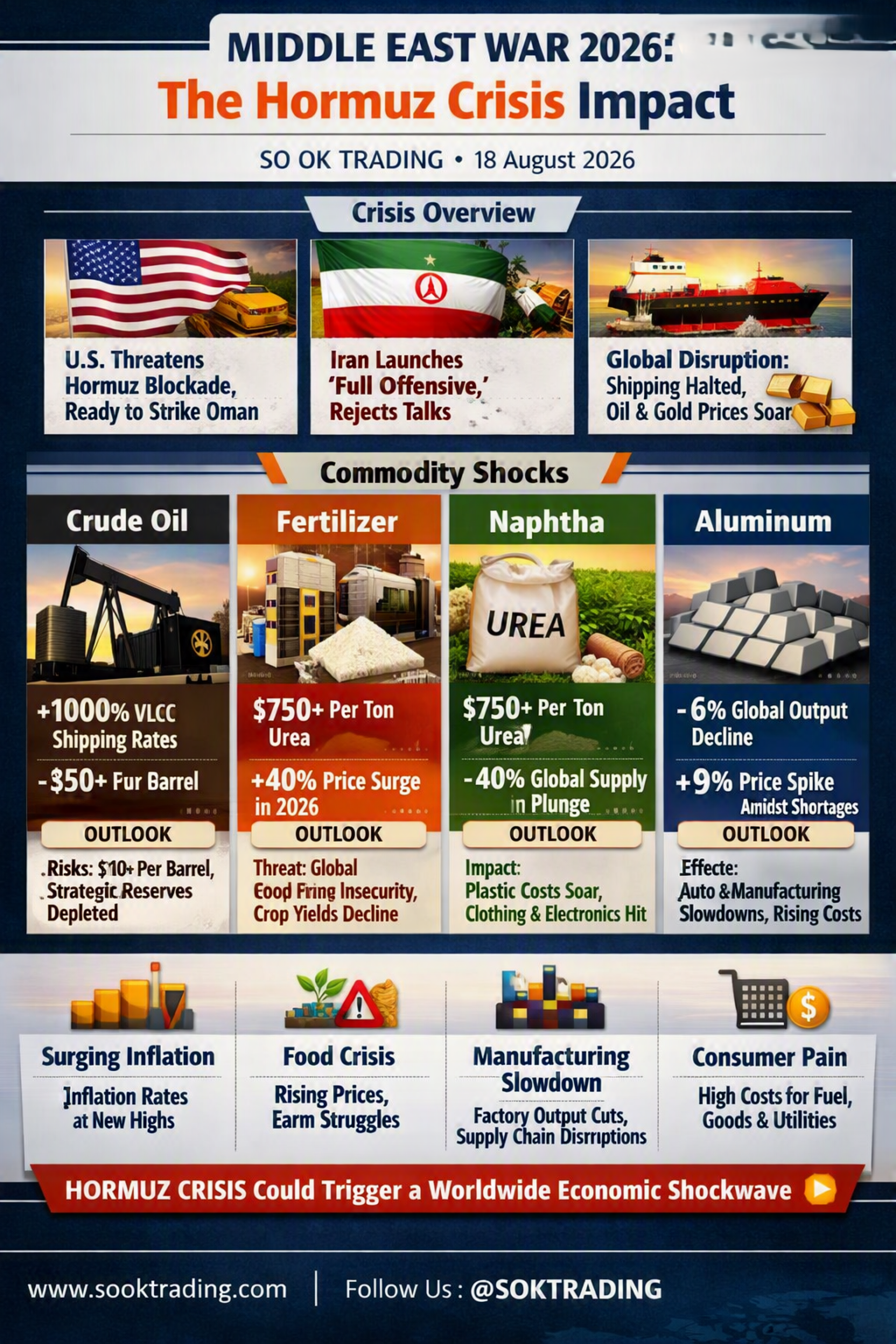
United States: Refused to extend the ceasefire, threatened to control the Strait of Hormuz, and warned of strikes on Oman if it cooperates with Iran
Iran: Shifted strategy to “full offensive,” rejected secret talks, and advanced agreements with Oman
Global Economy: Shipping nearly halted, oil and gold prices surged, global energy trade structure at severe risk
Impact by Commodity
⛽ Crude Oil
VLCC charter rates surged 10× → Costs up $5 per barrel
Brent crude broke $90 → Global inflation reignited
Outlook: If the Strait of Hormuz remains blocked, oil prices may exceed $100 per barrel, forcing many nations to exhaust their reserves.
Naphtha
Spot price: $747.24/ton (+34.78% YoY)
Global supply down 40% → Petrochemical plants in Asia and Europe cut output to 70%
Outlook: Rising costs for plastics and textiles → Consumer goods such as packaging, clothing, and electronics will become more expensive worldwide.
Chemical Fertilizer (Urea)
Thai import prices soared to 24,000–25,000 THB/ton
Average fertilizer prices in 2026 expected to rise 40% YoY
Outlook: Global agriculture faces higher costs and reduced yields → Food insecurity intensifies, especially in developing countries.
Aluminum
UAE’s EGA plant operating at only 18% after attack
Bahrain’s Alba plant cut output by 20%
Global production capacity down 5% → Prices instantly rose +8%
Outlook: Industries reliant on aluminum—automotive, electronics, packaging—face higher costs and supply shortages.
Impact on Thailand
Farmers: Struggling with soaring urea fertilizer costs → Lower profits
Consumers: Confronting “high prices, stagnant wages” → Electricity, fuel, food, and daily necessities all more expensive
✅ Outlook for H2 2026
Oil: Global inflation remains high, transport costs rise
Naphtha: Consumer goods more expensive, factories cut production
Fertilizer: Agricultural yields fall, food prices rise
Aluminum: Metals and manufacturing industries risk shortages
As long as the Strait of Hormuz remains unresolved and no new ceasefire is reached, these four commodities will continue to act as an “economic time bomb,” pressuring global living costs throughout the second half of 2026.
SO OK TRADING : Your Trusted Business Partner FAST | SHARP | RELIABLE www.sooktrading.com Facebook: SO OK TRADING